
Ezra 2:40-42 is about the specific number of Levites and Nethinim who returned to Jerusalem after the exile, highlighting the importance of the roles they played in the religious and social life of the community.
40 The Levites: the sons of Jeshua and Kadmiel, of the sons of Hodaviah, 74.
41 The singers: the sons of Asaph, 128.
42 The sons of the gatekeepers: the sons of Shallum, the sons of Ater, the sons of Talmon, the sons of Akkub, the sons of Hatita, and the sons of Shobai, in all 139.
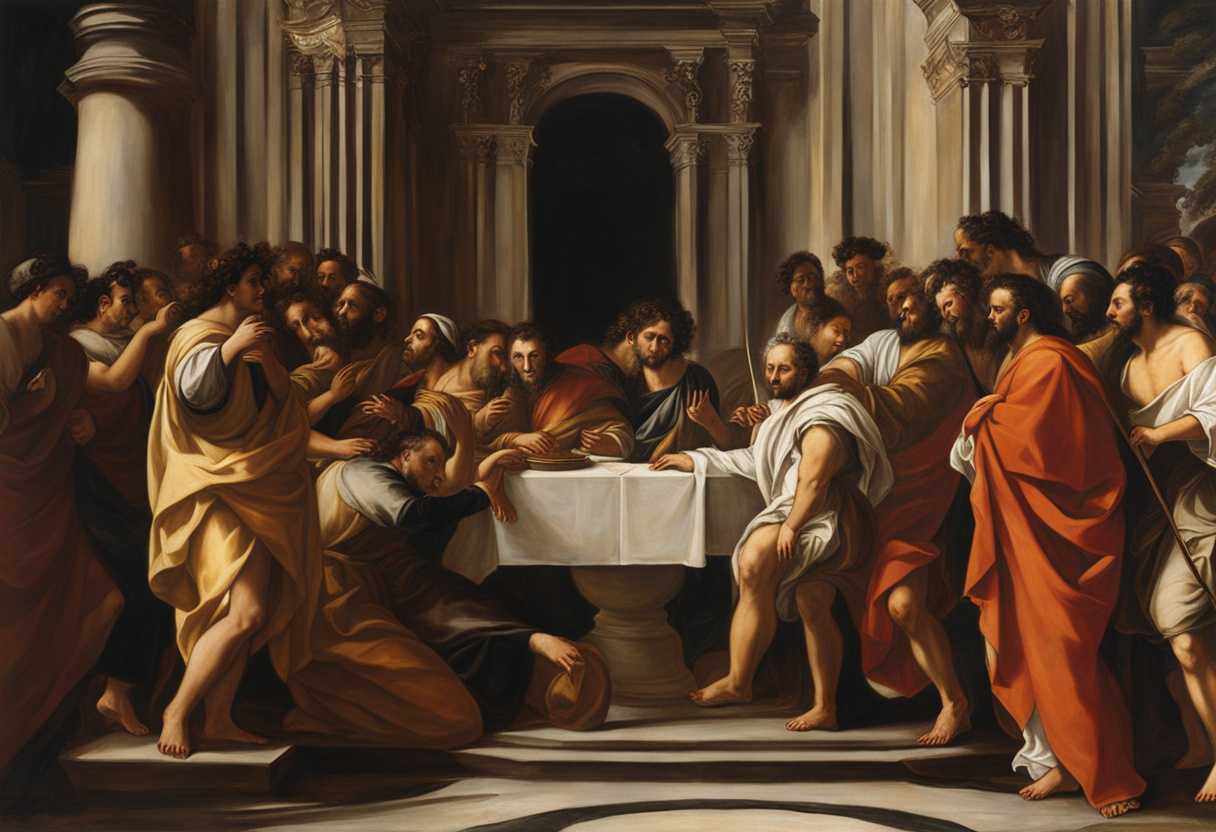
Setting the Scene for Ezra 2:40-42
In Ezra chapter 2, we find a scene set in the ancient city of Jerusalem shortly after the Israelites have returned from exile in Babylon. The city is in a state of both ruin and rebuilding, with the returned exiles working diligently to restore the temple and the city walls. The sun beats down on the dusty streets as the sound of hammers and chisels echo through the air.
Among the returned exiles are the families of Immer, Pashhur, and Harim, mentioned in Ezra 2:40-42. These families, along with many others, have made the long and arduous journey back to their homeland, driven by a deep desire to see Jerusalem restored to its former glory. Immer, Pashhur, and Harim, along with their wives, children, and servants, are gathered together in a makeshift camp outside the city walls, their tents pitched in the shadow of the ruined temple.
As evening falls, the families of Immer, Pashhur, and Harim come together for a meal, sharing stories of their journey and giving thanks for their safe return. The flickering light of the campfire dances across their faces as they recount the trials and triumphs of their long trek back to Jerusalem. Despite the challenges that lie ahead, there is a sense of hope and determination among the returned exiles, a belief that with faith and perseverance, they can rebuild their beloved city and once again worship in the temple of their ancestors.
What is Ezra 2:40-42 about?
The mention of Levites and singers returning from exile in Babylon in Ezra 2:40-42 is significant. These verses reveal the restoration of worship and religious practices among the Israelites after their exile. The Levites were responsible for performing religious ceremonies and maintaining the temple, while the singers played a vital role in leading worship and praising God through music.
It is fascinating to see how even in the midst of adversity and displacement, the Israelites prioritized the restoration of their religious traditions. The return of the Levites and singers symbolizes a reconnection to their faith and heritage, demonstrating their resilience and commitment to God. This passage serves as a reminder of the importance of worship and community in times of hardship, showing that even in exile, the Israelites did not lose sight of their spiritual identity. Let us reflect on these verses as we consider how we prioritize our faith and traditions in challenging times. Just like the Levites and singers returning from exile, may we remain steadfast in our worship and praise, seeking strength and comfort in our spiritual practices.
Understanding what Ezra 2:40-42 really means
The Book of Ezra provides a glimpse into the return of Jewish exiles from Babylon and the rebuilding of the Temple in Jerusalem. In Ezra 2, a detailed list of the returning exiles, including priests, Levites, and temple servants, is presented. Verses 40-42 specifically highlight the roles of the Levites, singers, and gatekeepers, emphasizing their significance in the restored community. The Levites, as members of the tribe of Levi, were designated for religious duties, symbolizing the restoration of proper worship and religious order. The singers led worship through music, underlining the importance of praise and worship in the community. The gatekeepers were responsible for guarding the temple, representing the protection and sanctity of the place of worship.
In Nehemiah 7:43-45, a similar list of Levites, singers, and gatekeepers is provided, reinforcing their essential roles in the community. 1 Chronicles 9:17-27 offers more insights into the duties of gatekeepers, highlighting their crucial role in maintaining the sanctity of the temple. Psalm 84:10 expresses the honor of serving as a gatekeeper in the house of God, emphasizing the significance of such a role. These passages collectively underscore the importance of community, individual roles, worship, and protection in spiritual life.
The relevance of Ezra 2:40-42 extends to people today through themes of restoration, community, and worship. Just as the exiles returned to rebuild the temple, individuals can find hope in the possibility of restoration and renewal in their own lives. The passage emphasizes the importance of each person’s role in a community, whether in worship, service, or protection. Worship and praise are highlighted through the inclusion of singers, emphasizing their role in spiritual expression.
Consider a scenario where a small church faces devastation from a natural disaster. The congregation unites to rebuild, with each person contributing according to their abilities. Musicians lead in worship, volunteers assist in construction, and others ensure the safety and sanctity of the new building. This mirrors the return of the exiles and the roles mentioned in Ezra 2:40-42, illustrating the vital contribution of each individual to the community’s restoration.
In conclusion, Ezra 2:40-42 serves as a poignant reminder of the significance of community, individual roles, worship, and protection in our spiritual lives. It prompts us to discover our place in the community and actively contribute to its restoration and growth.
How can we support and uplift fellow believers?
We can support and uplift fellow believers by being attentive to their needs and offering our assistance in times of difficulty. Certain priests, Levites, gatekeepers, musicians, and temple servants rallied together for a common purpose, just as the verse describes. We can help alleviate the burdens that our fellow believers may be facing by showing kindness, offering help, and extending a helping hand.
Additionally, we can uplift our fellow believers by offering words of encouragement and prayers for their well-being. We can inspire and motivate others through our actions and the words we speak, just as the verse mentions those who dedicated themselves to serving the Lord wholeheartedly. We can contribute to fostering a supportive and uplifting community of believers by expressing gratitude for the good qualities we see in our brothers and sisters in faith and by praying for their continued success and spiritual growth.
Furthermore, we can support our fellow believers by creating a culture of unity, respect, and love within our communities. We can help to strengthen the bonds of fellowship and create a sense of belonging for everyone by fostering an environment where all individuals feel valued, accepted, and appreciated. We can work towards building a community where every individual feels cared for and uplifted in their faith journey, just as the various groups of people mentioned in the verse came together in unity to support one another.
Application
Let’s dig deep into our hearts like a modern-day accountant examining our commitment at work. Just as every detail is meticulously noted in our career, let’s offer our whole selves to serve our divine purpose wholeheartedly. Are you ready to reflect on your dedication to your spiritual path and pledge your unwavering commitment to your purpose today?

Reverend Michael Johnson is an experienced Church Minister with a profound expertise in spirituality and guidance. With a serene presence and a compassionate heart, he has faithfully served his congregation for over 20 years, leading them on a spiritual journey towards inner peace and enlightenment. Reverend Johnson’s extensive knowledge of religious philosophies and profound understanding of human nature have made him a trusted confidant and mentor to many, as he seamlessly weaves his profound wisdom into life teachings. Reverend Johnson’s calming demeanor and empathetic nature continue to uplift and heal souls, nurturing a sense of unity and tranquility within his community.