
Ezra 9:5-9 is about Ezra’s deep sorrow and confession for the sins of the people of Israel, recognizing the severity of their disobedience and the need for repentance and turning back to God.
5 And at the evening sacrifice I rose from my fasting, with my garment and my cloak torn, and fell upon my knees and spread out my hands to the Lord my God,
6 saying: “O my God, I am ashamed and blush to lift my face to you, my God, for our iniquities have risen higher than our heads, and our guilt has mounted up to the heavens.
7 From the days of our fathers to this day we have been in great guilt. And for our iniquities we, our kings, and our priests have been given into the hand of the kings of the lands, to the sword, to captivity, to plundering, and to utter shame, as it is today.
8 But now for a brief moment favor has been shown by the Lord our God, to leave us a remnant and to give us a secure hold within his holy place, that our God may brighten our eyes and grant us a little reviving in our slavery.
9 For we are slaves. Yet our God has not forsaken us in our slavery, but has extended to us his steadfast love before the kings of Persia, to grant us some reviving to set up the house of our God, to repair its ruins, and to give us protection in Judea and Jerusalem.
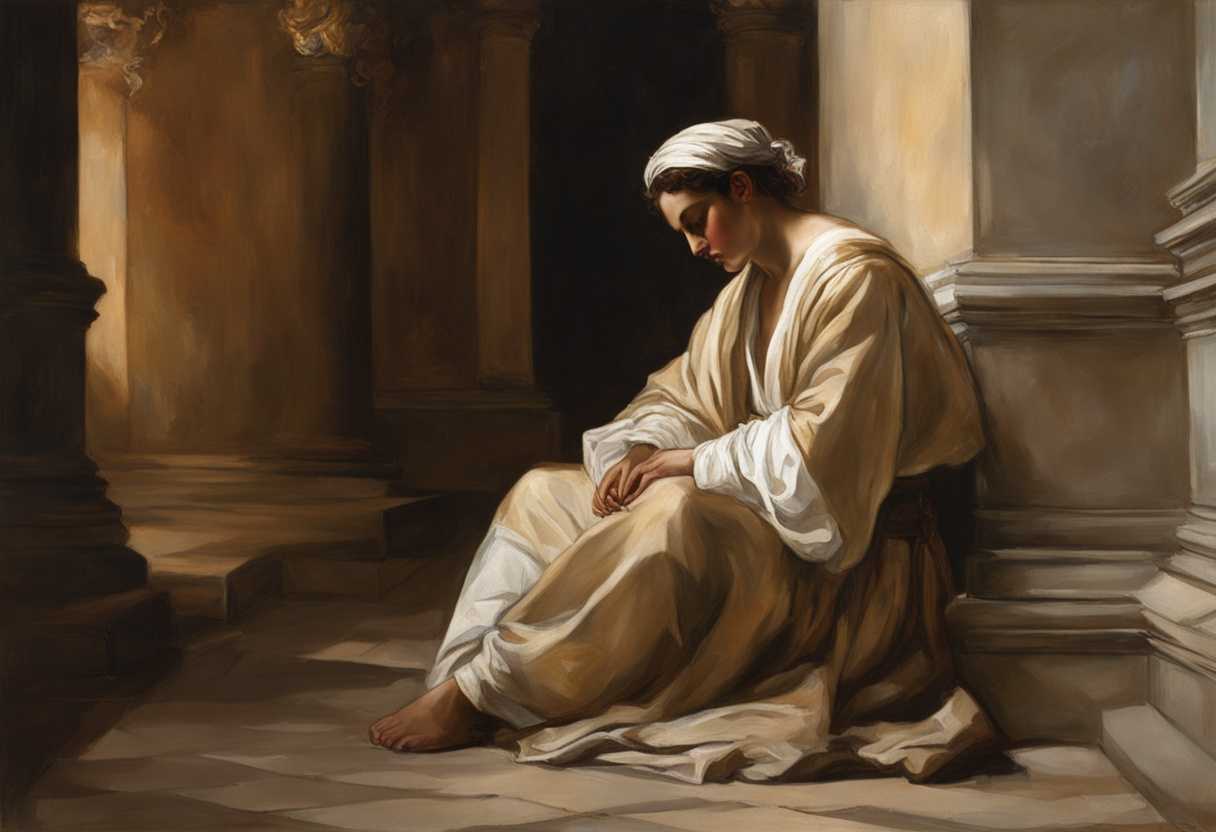
Setting the Scene for Ezra 9:5-9
In Ezra chapter 9, we find Ezra, a scribe and priest, leading a group of exiles who had returned to Jerusalem from Babylon. The scene takes place in the courtyard of the temple in Jerusalem. The group had gathered to seek forgiveness from God for intermarrying with the surrounding pagan nations, which was strictly forbidden by the Mosaic law.
Ezra, deeply troubled by the people’s disobedience, falls to his knees in the courtyard, tearing his garment and pulling hair from his head and beard in a sign of mourning and repentance. The people who had gathered with him were also greatly distressed and began to weep bitterly, realizing the gravity of their sin.
As the sun began to set over the temple, the scene was filled with a sense of solemnity and urgency as Ezra led the people in a prayer of confession and repentance, acknowledging their transgressions and seeking God’s mercy and forgiveness. The courtyard was filled with the sound of weeping and the fragrance of incense as the people humbled themselves before the Lord, seeking reconciliation and restoration.
What is Ezra 9:5-9 about?
Imagine standing before a powerful ruler, confessing all of your wrongdoings and flaws in hopes of obtaining forgiveness and a chance at redemption. This is exactly the scene we witness in the book of Ezra, as Ezra bravely takes on the responsibility of confessing the sins of Israel before the Lord. Through his heartfelt plea, Ezra demonstrates humility, recognizing the collective faults of his people and expressing genuine remorse for their actions. His act of confession not only shows tremendous courage but also serves as a powerful reminder of the importance of acknowledging our mistakes and seeking forgiveness. Ezra exemplifies the earnest desire for spiritual renewal and transformation by seeking God’s mercy and grace for forgiveness and restoration. His plea reflects a deep sense of faith and trust in God’s ability to forgive and restore His people, despite their shortcomings. Through Ezra’s actions, we are reminded of the importance of humility, repentance, and seeking God’s grace in times of need. This verse serves as a poignant reminder that forgiveness is always within reach for those who come before God with a contrite heart, seeking reconciliation and restoration.
Understanding what Ezra 9:5-9 really means
Ezra 9:5-9 captures a poignant moment in the life of Ezra, a priest and scribe, who is deeply troubled by the Israelites’ disobedience to God’s commandments regarding intermarriage with foreign women. This passage is situated in the context of the Israelites’ return from Babylonian exile, a period marked by the nation’s efforts to re-establish their identity and covenant relationship with God. In a heartfelt prayer of confession, Ezra rises from his self-abasement at the evening sacrifice, symbolizing profound humility and repentance by tearing his tunic and cloak, falling on his knees, and spreading his hands out to the Lord his God.
Despite the people’s transgressions, Ezra acknowledges God’s grace in leaving a remnant and providing a sanctuary for worship. The phrase “He has granted us new life to rebuild the house of our God and repair its ruins” underscores God’s active role in restoration and protection. This theme of restoration and divine intervention resonates throughout the passage, emphasizing God’s mercy and faithfulness even in the face of human failings.
Parallel passages in Nehemiah 1:4-11 and Daniel 9:4-19 echo Ezra’s prayer of confession, highlighting the biblical emphasis on collective repentance and seeking God’s mercy. The interconnectedness of these narratives underscores the timeless relevance of humility, repentance, and reliance on God’s grace for believers today. The call to humble ourselves, seek forgiveness, and trust in God’s ability to rebuild and protect is a universal message that transcends time and culture.
In a world marked by fragmentation and discord, Ezra’s prayer serves as a poignant reminder of the importance of community, identity, and restoration. Just as the Israelites sought to rebuild not only the physical temple but also their spiritual and communal life, believers today are encouraged to find their identity in their relationship with God and uphold the values of their faith community. The passage challenges us to reflect on our own lives, acknowledge our shortcomings, and seek God’s forgiveness and restoration.
Imagine a community facing adversity—economic challenges, natural disasters, and social unrest—coming together to acknowledge their struggles and seek a path forward. Through collective acknowledgment of issues and a unified effort to seek restoration, this community experiences renewal and protection. Similarly, Ezra’s prayer exemplifies the transformative power of repentance, humility, and communal restoration under God’s guidance. It serves as a timeless lesson for believers to humble themselves, seek God’s mercy, and trust in His ability to rebuild and protect their lives.
How can we repent and seek forgiveness sincerely?
To repent and seek forgiveness sincerely, we must first acknowledge our wrongdoing and feel genuine remorse for our actions. This involves recognizing our sins and taking responsibility for them without trying to justify or minimize them. We should approach God with humility, understanding the seriousness of our transgressions and seeking His forgiveness with a sincere heart.
True repentance also involves a commitment to change our ways and strive to avoid repeating the same mistakes in the future. This may require making amends for any harm caused by our actions and actively seeking to improve ourselves through self-reflection, prayer, and seeking guidance from religious teachings. We demonstrate our sincerity and dedication to living in accordance with God’s will by seeking forgiveness with a genuine heart and a desire to rectify our behavior.
Application
Imagine your life as a busy office, with tasks piling up and deadlines looming. Just as clearing your desk gives you room to breathe and focus, humbling yourself and seeking forgiveness clears your heart and mind. It’s time to delete the clutter of past mistakes and update your spiritual software. Repentance is the reboot your soul needs. Will you press the reset button and renew your commitment to God’s will?

Reverend Michael Johnson is an experienced Church Minister with a profound expertise in spirituality and guidance. With a serene presence and a compassionate heart, he has faithfully served his congregation for over 20 years, leading them on a spiritual journey towards inner peace and enlightenment. Reverend Johnson’s extensive knowledge of religious philosophies and profound understanding of human nature have made him a trusted confidant and mentor to many, as he seamlessly weaves his profound wisdom into life teachings. Reverend Johnson’s calming demeanor and empathetic nature continue to uplift and heal souls, nurturing a sense of unity and tranquility within his community.