
17 After his return from the defeat of Chedorlaomer and the kings who were with him, the king of Sodom went out to meet him at the Valley of Shaveh (that is, the King’s Valley).
18 And Melchizedek king of Salem brought out bread and wine. He was priest of God Most High.
19 And he blessed him and said, “Blessed be Abram by God Most High, Possessor of heaven and earth;
20 and blessed be God Most High, who has delivered your enemies into your hand!” And Abram gave him a tenth of everything.
21 And the king of Sodom said to Abram, “Give me the persons, but take the goods for yourself.”
22 I will take nothing but what the young men have eaten, and the share of the men who went with me. Let Aner, Eshcol, and Mamre take their share.
23 that I would not take a thread or a sandal strap or anything that is yours, lest you should say, ‘I have made Abram rich.’
24 I will take nothing but what the young men have eaten, and the share of the men who went with me. Let Aner, Eshcol, and Mamre take their share.”
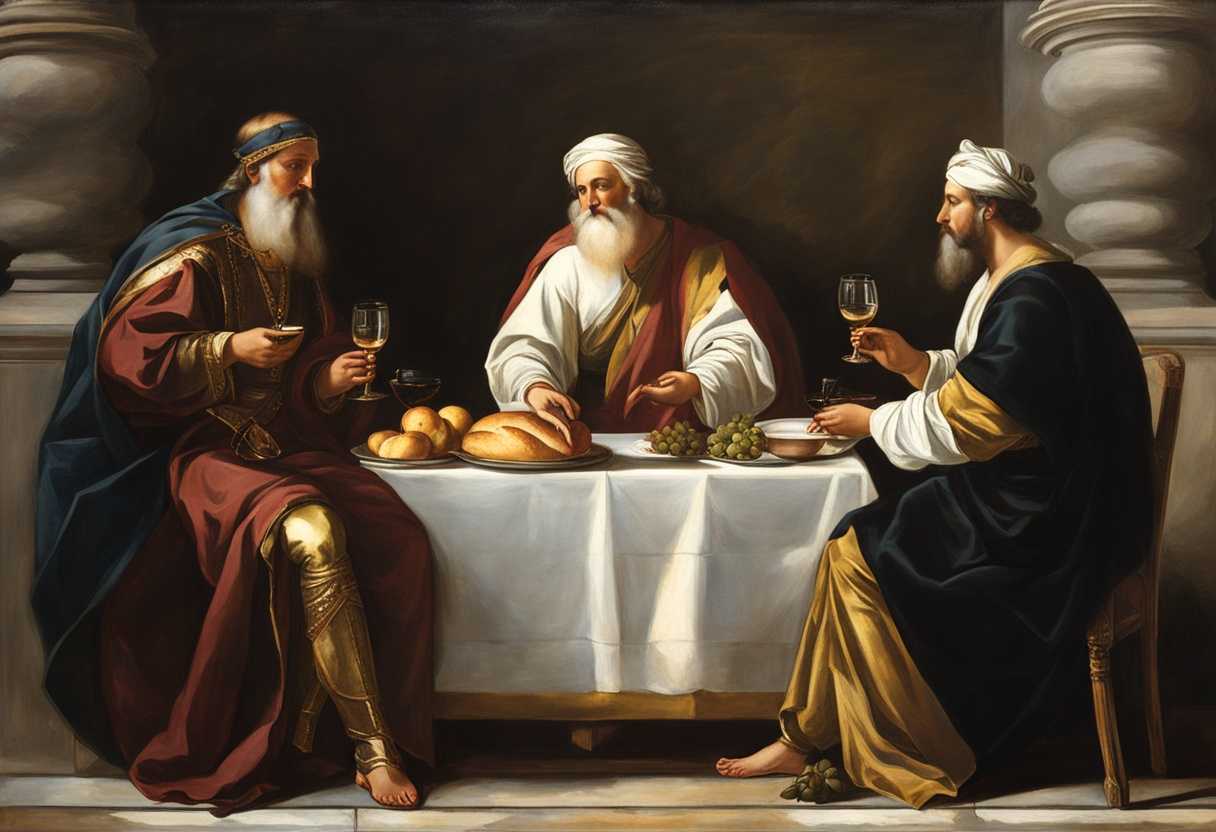
Setting the Scene for Genesis 14:17-24
In Genesis chapter 14, we find Abram, later known as Abraham, returning from a victorious battle where he rescued his nephew Lot who had been captured by enemy kings. As Abram is returning, he is met by the king of Salem, Melchizedek, who is also described as a priest of God Most High. Melchizedek brings out bread and wine to bless Abram and his men, acknowledging God’s role in Abram’s victory.
The scene is set in the peaceful and serene valley of the King’s Valley, where Melchizedek comes out to meet Abram. The valley is surrounded by rolling hills and lush greenery, providing a stark contrast to the recent battlefield where Abram had fought to rescue Lot. The meeting between Abram and Melchizedek is a significant moment, as Melchizedek blesses Abram and receives a tithe from him, recognizing his authority and the favor of God upon Abram.
Abram is accompanied by his men, who are likely weary from battle but filled with gratitude for their victory and the safe return of Lot. Melchizedek’s presence brings a sense of calm and reverence to the scene, as he blesses Abram and acknowledges God’s hand in the events that have transpired. The encounter between Abram and Melchizedek serves as a reminder of God’s faithfulness and provision, even in the midst of conflict and chaos.
What is Genesis 14:17-24 about?
This verse in the Bible, Genesis 14:20, where Abram meets Melchizedek and gives him a tenth of everything is a significant moment in the biblical narrative. It illustrates the concept of tithing, the practice of giving a portion of one’s earnings or possessions as an offering to God. Abram’s action symbolizes his acknowledgment of God’s sovereignty and provision in his life, and his willingness to express gratitude and obedience through giving in this context. Abram demonstrates his faith and trust in God’s blessings over worldly possessions by refusing the king’s reward and choosing to give to Melchizedek instead. This act also highlights the importance of honoring spiritual leaders and recognizing their role in guiding and supporting believers on their journey of faith. It encourages us to reflect on how we prioritize our resources and show our gratitude towards God and those who serve Him faithfully. We are challenged to examine our own attitudes towards giving, gratitude, and obedience in our relationship with God as we ponder on this verse. Are we willing to trust in God’s provision and prioritize Him above all else? Do we recognize the spiritual leaders who guide and support us on our faith journey? Abram’s example prompts us to consider how we can emulate his faith and generosity in our own lives, trusting in the blessings that come from honoring God and His servants.
Understanding what Genesis 14:17-24 really means
Commentary Structure
- Context and Summary
- Key Phrases and Their Meanings
- Related Passages
- Relevance Today
- Anecdote
Commentary
Context and Summary
Genesis 14:17-24 details Abram’s encounter with Melchizedek, king of Salem, and the king of Sodom after a victorious battle. This passage holds significance as it introduces Melchizedek, a mysterious figure who blesses Abram and receives a tithe from him. The king of Sodom offers Abram the recovered goods, but Abram refuses, citing a vow to God. Understanding the context here is key; Abram has just successfully rescued his nephew Lot and defeated several kings, demonstrating his faith and God’s favor upon him.
Key Phrases and Their Meanings
The phrase “Melchizedek king of Salem” immediately draws interest. Melchizedek is both a king and a priest, a dual role that is rare in the Bible. His name means “king of righteousness,” and Salem translates to “peace.” His offering of bread and wine symbolizes hospitality and, in Christian terms, prefigures the Eucharist.
“Blessed be Abram by God Most High” and “Blessed be God Most High” highlight the divine favor upon Abram. Melchizedek’s blessing indicates God’s active role in Abram’s success. It shows a mutual acknowledgment and respect between Melchizedek and Abram, signifying the significance of divine intervention in human endeavors.
The refusal of the “goods” offered by the king of Sodom speaks volumes about Abram’s integrity. He wishes to ensure that no one but God can claim responsibility for his wealth. Abram’s vow, “I have lifted my hand to the LORD, God Most High,” underlines his commitment to relying solely on God.
Related Passages
Hebrews 7 links Melchizedek to Jesus, emphasizing Melchizedek’s priesthood as a precursor to the eternal priesthood of Christ. Psalm 110:4 also mentions Melchizedek, reinforcing the idea of everlasting priesthood.
Proverbs 3:9-10 speaks to honoring God with one’s substance, resonating with Abram’s tithe to Melchizedek. Matthew 6:24 juxtaposes loyalty to God versus wealth, paralleling Abram’s decision to reject the goods from the king of Sodom.
Relevance Today
This passage remains highly relevant today as it highlights themes of integrity, faith, and divine blessing. For modern readers, Abram’s unwavering commitment to God despite worldly temptations serves as a model of faithfulness. It prompts us to consider the sources of our own prosperity and to attribute our blessings appropriately. Abram’s actions call us to re-evaluate our priorities in a world where material success often overshadows spiritual integrity. Are we willing to attribute our successes to God and act with integrity, even when easier, more rewarding options present themselves?
Anecdote
I recall a time when a member of our congregation, John, faced a moral dilemma at work. He was offered a promotion but knew it was partly due to a colleague being unfairly treated. Like Abram, John chose integrity over immediate gain. He refused the promotion, advocating for fair treatment instead. His decision, although initially costly, eventually gained him greater respect and a promotion achieved on just terms.
Through John’s story, we see a modern reflection of Abram’s refusal to accept the king of Sodom’s goods. It underscores how God honors those who stay true to their values and depend on Him. Genesis 14:17-24 isn’t just a story of ancient transactions but a timeless lesson on faith, integrity, and recognizing God’s hand in our lives. Ask yourself as you meditate on this passage: Are you willing to put God first, even if it means turning down worldly gains?
How can we honor God with our possessions?
We can honor God with our possessions by giving back to Him a portion of what He has blessed us with. This includes tithing, which is giving a tenth of our earnings to support the work of God’s kingdom. We demonstrate our trust in God and our willingness to obey His commands regarding our possessions by acknowledging that all that we have belongs to Him. We can honor God with our possessions by being good stewards of what He has entrusted to us, in addition to tithing. This means using our resources wisely and generously to help those in need and to further the work of God on earth. When we use our possessions in ways that align with God’s values and priorities, we show that we value His kingdom above all else. Honoring God with our possessions ultimately depends on the heart. It involves recognizing that everything we have comes from Him and is meant to be used for His glory. When we give sacrificially, generously, and joyfully, we demonstrate our love and obedience to God, and we invite His blessing and favor into our lives.
Application
Think about how you invest your time and energy at work and with your family. Just as Melchizedek blessed Abram, you are called to bless others with your resources. Imagine how it feels to truly honor God with what you have. Step up and give generously, trusting that your efforts will be multiplied. Isn’t it time to make a difference in both your life and others by being generous and faithful?

Reverend Michael Johnson is an experienced Church Minister with a profound expertise in spirituality and guidance. With a serene presence and a compassionate heart, he has faithfully served his congregation for over 20 years, leading them on a spiritual journey towards inner peace and enlightenment. Reverend Johnson’s extensive knowledge of religious philosophies and profound understanding of human nature have made him a trusted confidant and mentor to many, as he seamlessly weaves his profound wisdom into life teachings. Reverend Johnson’s calming demeanor and empathetic nature continue to uplift and heal souls, nurturing a sense of unity and tranquility within his community.