
18 So Abram moved his tent and came and settled by the oaks of Mamre, which are at Hebron, and there he built an altar to the Lord.
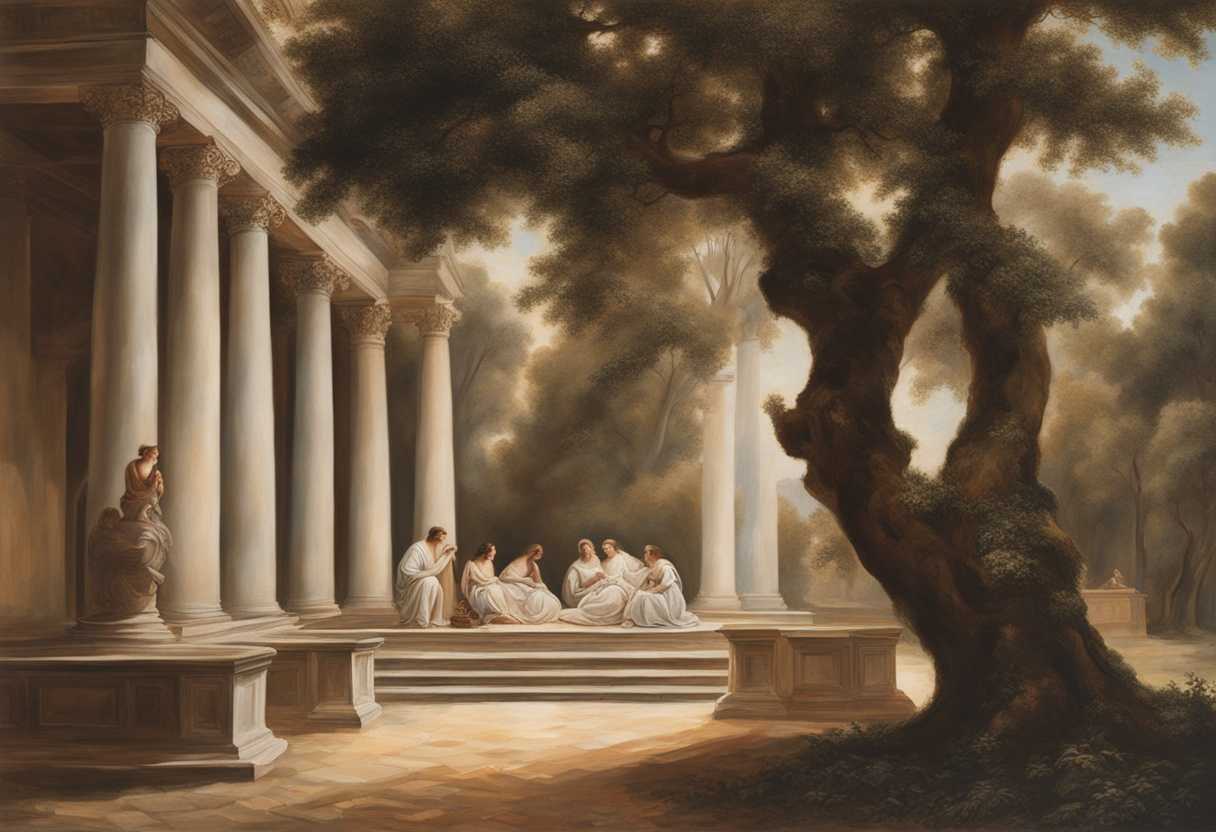
Setting the Scene for Genesis 16:18
In Genesis chapter 16, we find Hagar, the Egyptian maidservant of Sarai, the wife of Abram (later known as Abraham). Sarai, who was unable to bear children, suggested to Abram that he have a child with Hagar so that they could build a family through her. Hagar became pregnant with Abram’s child, which caused tension and jealousy between her and Sarai.
The scene in Genesis 16:18 likely takes place in the desert where Hagar fled after facing mistreatment from Sarai. As she sat by a spring of water, an angel of the Lord appeared to her and instructed her to return to Sarai and submit to her authority. The angel also promised Hagar that her descendants would be numerous, and she was encouraged to name her son Ishmael, which means “God hears.”
In this poignant moment, Hagar, a vulnerable and pregnant woman, encounters the divine presence of the angel who provides her with guidance, comfort, and assurance for the future. The scene captures the complexity of human relationships, the consequences of decisions made in desperation, and the compassion of God towards those who are marginalized and oppressed.
What is Genesis 16:18 about?
This verse from Genesis holds a profound significance in its depiction of God’s compassion and presence in our lives, even when we may feel abandoned or alone. Hagar, a maidservant who was mistreated and rejected by her mistress Sarai, found solace in a life-changing encounter with God. God not only saw her but also comforted her in her moment of distress, showing that His love and care extend to all, regardless of their status or circumstances. Hagar named God “El Roi,” which means “the God who sees me,” acknowledging the divine encounter she had and recognizing the all-seeing nature of God’s presence in her life. This act of naming reflects a deep sense of intimacy and personal connection with the Almighty, demonstrating that God is not a distant figure but a loving and compassionate being who is actively involved in the lives of His creation. Hagar’s experience serves as a reminder that even in our darkest moments, God sees us, knows our struggles, and offers us comfort and support beyond our understanding. As we reflect on this verse, let us consider the profound implications of God’s ability to see and comfort us in our times of need. How does the concept of “El Roi” challenge our understanding of God’s nature and His relationship with us? How can we draw strength and reassurance from the knowledge that we are seen and known by the Creator of the universe? May we find comfort in the fact that even when we feel invisible or forgotten, God is always there, ready to provide us with the peace and consolation that we seek.
Understanding what Genesis 16:18 really means
Structure for Commentary:
- Introduction to the Verse
- Context and Background
- Key Phrases and Meanings
- Related Bible Passages
- Relevance to Modern Life
- Anecdote and Personal Reflection
- Call to Reflection and Action
Commentary:
Introduction to the Verse
Genesis 16:18 isn’t an actual verse in the Bible as Genesis 16 comprises only 16 verses. So, it seems there’s a mistake with the reference. Let’s still delve into the message present within Genesis 16 and its implications for us today.
Context and Background
Genesis 16 narrates the story of Abram (later Abraham), Sarai (later Sarah), and Hagar. Sarai, unable to bear children, gives her maidservant Hagar to Abram to conceive an heir. Hagar’s resulting pregnancy creates tensions, leading her to flee. This chapter is essential for understanding themes of faith, human struggle, and God’s providence.
Key Phrases and Meanings
Let’s break down some pivotal phrases in Genesis 16.
– “Sarai, Abram’s wife, took her Egyptian servant Hagar and gave her to her husband” (Genesis 16:3): This act highlights the desperation and impatience in human decisions, diverging from waiting on God’s timing.
– “The angel of the Lord found Hagar” (Genesis 16:7): Even in her distress, God’s presence finds her. This emphasizes God’s omnipresence and compassion.
– “You are the God who sees me” (Genesis 16:13): Hagar names God, El Roi, acknowledging His omniscience and caring nature.
Related Bible Passages
Reflecting on Hagar’s encounter with the divine, Psalm 139:7-10 reinforces the idea that God is always with us: “Where can I go from Your Spirit? Where can I flee from Your presence?” Additionally, Proverbs 3:5-6 speaks to the reliance on God’s wisdom rather than our understanding, echoing the lesson Abram and Sarai had to learn.
Relevance to Modern Life
Today, many face uncertainties and may take matters into their own hands due to impatience or fear. Often, like Sarai and Abram, we try to force outcomes rather than trusting in God’s timing. This tendency can lead to unnecessary complications and heartache. Trusting God’s plan, even when it’s unclear, maintains faith and allows divine wisdom to work in our lives. Linda, a woman who desperately wanted a child, considered the story. Years of waiting led her to consider adoption. However, just when Linda least expected it, she became pregnant. Her story reminds us that God’s timing, though mysterious, is always perfect. Like Hagar, who was seen in her distress, Linda realized she was never out of God’s sight.
Call to Reflection and Action
Reflect on situations where you’ve taken control rather than waiting on God. Are there areas in your life where impatience has led to unnecessary complications? Take time to pray, seeking God’s guidance and reaffirming your trust in His plan. God sees you and cares for you, just as He did for Hagar. Revisit passages like Psalm 139 and Proverbs 3:5-6 to strengthen your faith in His omniscience and omnipresence.
These reflections are crucial for nurturing a deeper reliance on God’s wisdom and timing, encouraging us to trust Him in every circumstance.
How can we seek God’s presence in our wilderness?
Seeking God’s presence is crucial in times of wilderness or difficulty. Just as Hagar encountered God in her wilderness, we too can find solace and guidance by turning to Him. The wilderness serves as a place where we can draw closer to God, as it often strips away distractions and allows us to focus on Him alone. We can understand that God is ever-present, even in our most desolate moments, by reflecting on the meaning of the verse in Genesis 16:18. It encourages us to seek Him diligently and trust in His provision in the wilderness. When we seek His presence in our difficult seasons, we can find comfort, strength, and a renewed sense of purpose, just as Hagar did when she encountered God in her own wilderness. God will guide us through the wilderness to a place of blessing and provision, even in the midst of our trials, because He is with us always.
Application
In our busy lives, the profound message of Genesis 16:18 echoes a constant truth: you are never alone. Like a guiding compass, God’s enduring love and care are yours to lean on, especially when the road gets tough. Use this promise as your anchor, your boost of confidence in both personal and professional challenges. Stand firm, take that leap of faith, and rely on His promises. Isn’t it time you moved forward, trusting He’s always by your side?

Reverend Michael Johnson is an experienced Church Minister with a profound expertise in spirituality and guidance. With a serene presence and a compassionate heart, he has faithfully served his congregation for over 20 years, leading them on a spiritual journey towards inner peace and enlightenment. Reverend Johnson’s extensive knowledge of religious philosophies and profound understanding of human nature have made him a trusted confidant and mentor to many, as he seamlessly weaves his profound wisdom into life teachings. Reverend Johnson’s calming demeanor and empathetic nature continue to uplift and heal souls, nurturing a sense of unity and tranquility within his community.