
16 Then the men set out from there, and they looked down toward Sodom. And Abraham went with them to set them on their way.
17 The Lord said, “Shall I hide from Abraham what I am about to do,
18 seeing that Abraham shall surely become a great and mighty nation, and all the nations of the earth shall be blessed in him?
19 For I have chosen him, that he may command his children and his household after him to keep the way of the Lord by doing righteousness and justice, so that the Lord may bring to Abraham what he has promised him.”
20 Then the Lord said, “Because the outcry against Sodom and Gomorrah is great and their sin is very grave,
21 I will go down to see whether they have done altogether according to the outcry that has come to me.
22 So the men turned from there and went toward Sodom, but Abraham still stood before the Lord.
23 Then Abraham drew near and said, “Will you indeed sweep away the righteous with the wicked?
24 Suppose there are fifty righteous within the city. Will you then sweep away the place and not spare it for the fifty righteous who are in it?
25 Far be it from you to do such a thing, to put the righteous to death with the wicked, so that the righteous fare as the wicked! Far be that from you! Shall not the Judge of all the earth do what is just?”
26 And the Lord said, “If I find at Sodom fifty righteous in the city, I will spare the whole place for their sake.”
27 Abraham answered and said, “Behold, I have undertaken to speak to the Lord, I who am but dust and ashes.
28 Suppose five of the fifty righteous are lacking. Will you destroy the whole city for lack of five?” And he said, “I will not destroy it if I find forty-five there.”
29 He spoke to him yet again and said, “Suppose forty are found there.” He answered, “For the sake of forty I will not do it.”
30 Then he said, “Oh let not the Lord be angry, and I will speak. Suppose thirty are found there.” He answered, “I will not do it, if I find thirty there.”
31 He said, “Behold, I have undertaken to speak to the Lord. Suppose twenty are found there.” He answered, “For the sake of twenty I will not destroy it.”
32 Then he said, “Oh let not the Lord be angry, and I will speak again but this once. Suppose ten are found there.” He answered, “For the sake of ten I will not destroy it.”
33 And the Lord went his way, when he had finished speaking to Abraham, and Abraham returned to his place.
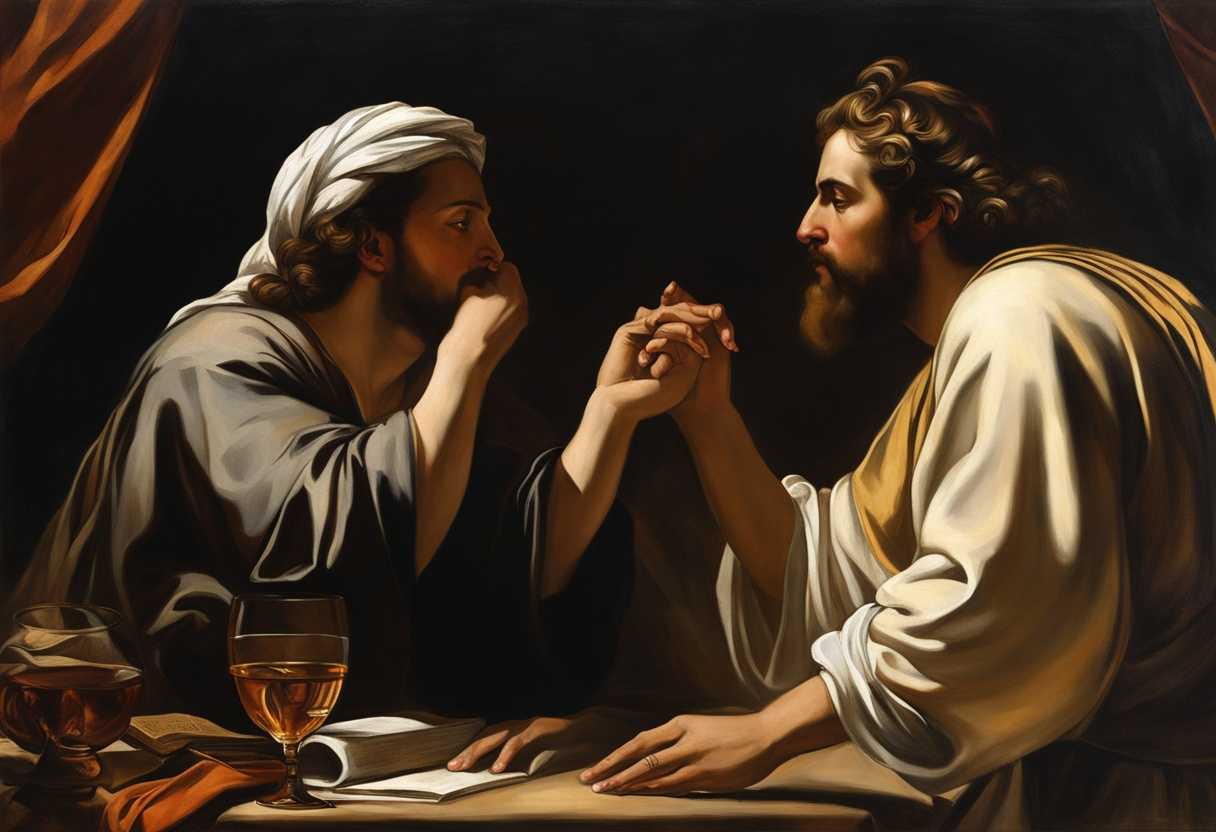
Setting the Scene for Genesis 18:16-33
In Genesis chapter 18, we find Abraham sitting at the entrance of his tent during the heat of the day. As he looks up, he sees three men standing nearby. These men are actually angels of the Lord, but Abraham does not know this yet. He runs to greet them and offers them hospitality, asking them to rest and have some water to wash their feet. Abraham then instructs Sarah, his wife, to prepare a meal for their guests.
As they sit under the shade of the trees, the conversation turns to the promise of a son for Abraham and Sarah. Sarah, who is listening from inside the tent, laughs at the idea of bearing a child in her old age. The Lord, who is among the three visitors, hears her laughter and questions Abraham about it. The scene is filled with a mix of hospitality, surprise, and divine intervention as the Lord reveals His plan to Abraham and Sarah. The setting is a peaceful and humble tent in the desert, with Abraham and Sarah being visited by heavenly messengers, unaware of the significance of the moment unfolding before them.
What is Genesis 18:16-33 about?
Abraham’s compassion and concern for others is a profound example seen in this verse. Despite knowing the wickedness of Sodom and Gomorrah, he still boldly approaches God to advocate on their behalf. This message teaches us about the power of intercession and the importance of empathy towards those in need. It prompts us to reflect on our own roles in supporting and advocating for those around us, even in the face of great challenges.
Have you ever found yourself in a situation where you felt compelled to speak up for others, even when it was difficult? How did it make you feel to stand up for justice or show mercy to those who may not deserve it? Abraham’s actions in this verse serve as a powerful reminder of the impact we can have when we choose to show compassion and fight for what is right, even in the midst of darkness and wrongdoing. Abraham’s example inspires us to strive to be voices of mercy and justice in our own communities and beyond.
Understanding what Genesis 18:16-33 really means
Sure! Let’s dive into Genesis 18:16-33 by following a structured approach to better understand its significance and relevance for us today.
1. Introduction and Context
This passage focuses on a powerful interaction between Abraham and God concerning the fate of Sodom and Gomorrah. Right after sharing a meal with Abraham, God reveals His plan to investigate the sinfulness of these cities, which sets the stage for Abraham’s intercession.
2. Central Theme Analysis
The central theme here is justice intertwined with mercy. God’s decision to judge Sodom and Gomorrah highlights His righteousness. At the same time, Abraham’s bold intercession underscores the importance of mercy. These two attributes of God—justice and mercy—are harmoniously revealed.
3. Key Phrases and Meanings
“Will you sweep away the righteous with the wicked?”
Abraham’s question here emphasizes the moral dilemma: should the righteous suffer the same fate as the wicked? This is a profound inquiry into divine justice and fair treatment for every individual.
“What if there are fifty righteous people in the city?”
Abraham starts his plea for mercy by arguing that even a small number of righteous people should not share in the city’s destruction. This specific intercessory count illustrates hope for redemption based on righteousness within a broader context of sin.
4. Connecting Other Biblical Passages
This passage resonates with several other scriptures. For instance, in Ezekiel 22:30, God looks for someone to “stand in the gap” to intercede for the land. Similarly, in John 8, Jesus demonstrates mercy when He tells the adulterous woman, “Neither do I condemn you; go and sin no more.” These narratives echo the concern for justice and mercy seen in Abraham’s dialogue with God.
5. Relevance Today
This narrative speaks volumes to modern readers about the power of intercessory prayer and God’s willingness to listen. It reassures us that God is just and merciful and that our prayers can make a difference. This encourages us to stand up for others through prayer and action, trusting in God’s character in a contemporary setting.
6. Anecdote for Reflection
Imagine a small community facing economic hardship due to the unethical actions of a few individuals. A local pastor prays earnestly, asking God to restore justice while showing mercy to those who are innocent. Over time, positive changes take place, showing the community the power of prayer and intervention. This parallels how Abraham’s intercession highlights the significant impact of praying for collective mercy and righteousness.
7. Conclusion and Call to Action
This passage invites us to reflect on how we can embody the balance of justice and mercy in our own lives. Are we willing to intercede for others, even those we don’t know personally? Let’s be inspired by Abraham’s example to pray and act justly while showing mercy, trusting in God’s righteous character as we consider this. We have seen how breaking down the passage from Genesis 18:16-33 ties into broader biblical themes and retains profound relevance for us today. May it inspire us to approach God boldly, intercede for our communities, and act with justice and mercy.
How can we intercede for others in prayer?
We can intercede for others in prayer by approaching God with humility and boldness, just like Abraham did in Genesis 18. We can bring specific requests and needs before God on behalf of others, showing our compassion and concern for their well-being. We can plead with God, acknowledging His power and righteousness, asking Him to show mercy, grace, and compassion to those we are praying for.
When we intercede for others in prayer, we demonstrate our love for them and our desire to see God’s will done in their lives. Just as Abraham stood in the gap for the people of Sodom and Gomorrah, we can stand in the gap for our loved ones, friends, neighbors, and even our enemies. Through our prayers, we can ask God to intervene, guide, protect, heal, and transform the lives of those we are interceding for. Our prayers can be powerful and effective, bringing comfort, hope, and help to those in need. We can trust in God’s infinite wisdom and goodness as we intercede for others in prayer. We can be confident that He hears our prayers and will answer them according to His perfect will. Our intercession can bring about miraculous changes and blessings in the lives of those we are praying for, ultimately bringing glory to God and fulfilling His purposes on earth.
Application
Think of Genesis 18:16-33 like your job or caring for family; persistence pays off. Abraham’s bold prayers show us that we shouldn’t hesitate to intercede for those in need. When you stand up for others in prayer, you bring them the justice and mercy they need. Let’s unite and pray for our communities and world. Will you take that step today?

Reverend Michael Johnson is an experienced Church Minister with a profound expertise in spirituality and guidance. With a serene presence and a compassionate heart, he has faithfully served his congregation for over 20 years, leading them on a spiritual journey towards inner peace and enlightenment. Reverend Johnson’s extensive knowledge of religious philosophies and profound understanding of human nature have made him a trusted confidant and mentor to many, as he seamlessly weaves his profound wisdom into life teachings. Reverend Johnson’s calming demeanor and empathetic nature continue to uplift and heal souls, nurturing a sense of unity and tranquility within his community.