
1 And the Lord appeared to him by the oaks of Mamre, as he sat at the door of his tent in the heat of the day.
2 He lifted up his eyes and looked, and behold, three men were standing in front of him. When he saw them, he ran from the tent door to meet them and bowed himself to the earth.
3 He said, “O Lord, if I have found favor in your sight, do not pass by your servant.
4 Let a little water be brought, and wash your feet, and rest yourselves under the tree,
5 And I will bring a morsel of bread, that you may refresh yourselves, and after that you may pass on—since you have come to your servant.” So they said, “Do as you have said.”
6 And Abraham went quickly into the tent to Sarah and said, “Quick! Three seahs of fine flour! Knead it, and make cakes.”
7 And Abraham ran to the herd and took a calf, tender and good, and gave it to a young man, who prepared it quickly.
8 He took curds and milk and the calf that he had prepared, and set it before them. And he stood by them under the tree while they ate.
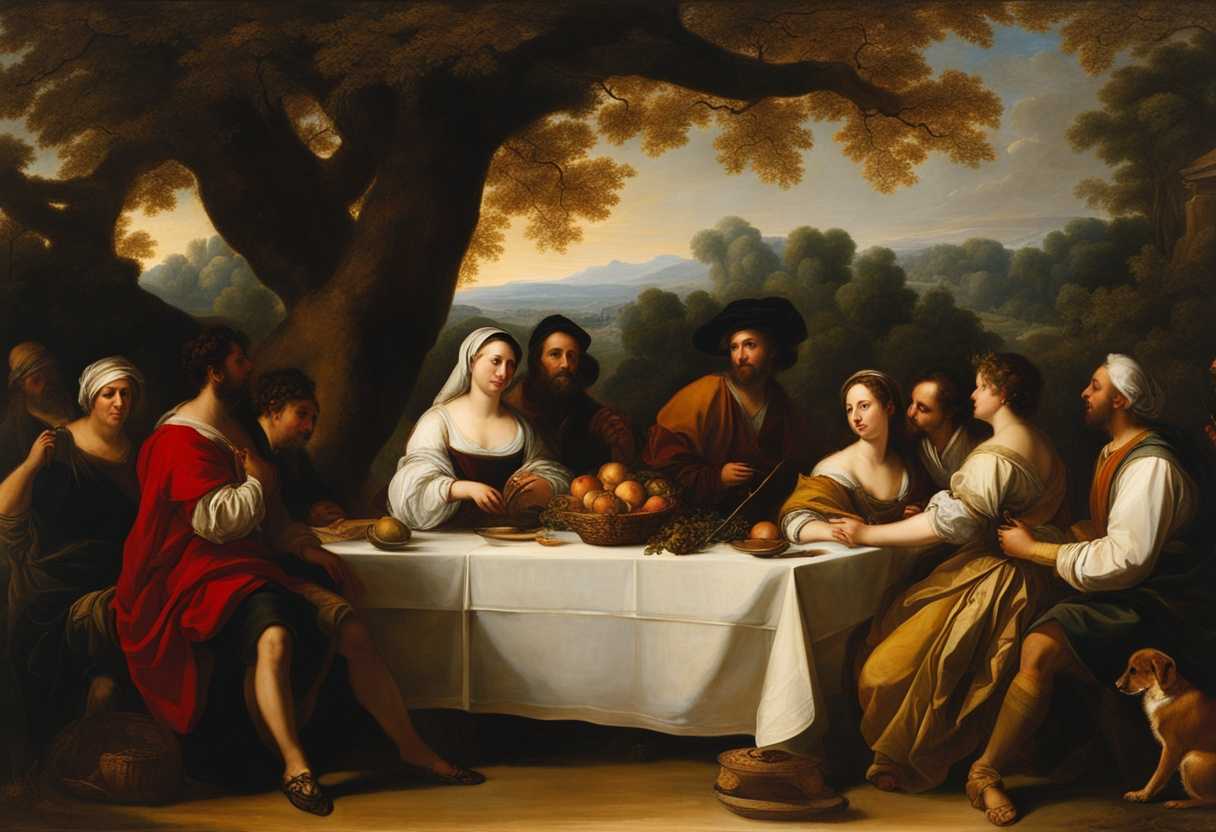
Setting the Scene for Genesis 18:1-8
In Genesis chapter 18, we find Abraham sitting at the entrance of his tent during the heat of the day. As he looks up, he sees three men standing nearby. These men are actually angels of the Lord, but Abraham does not know this yet. Being a hospitable host, Abraham runs to greet them and invites them to rest under the shade of a tree while he prepares a meal for them.
Abraham quickly instructs Sarah, his wife, to prepare cakes from fine flour, and he also asks his servant to prepare a tender calf for the guests. The scene is set in the desert, with the scorching sun beating down on the sandy landscape. The tent of Abraham is a simple yet welcoming structure, providing a cool respite from the heat outside. The atmosphere is one of hospitality and warmth as Abraham eagerly attends to his guests, not realizing the significance of their visit just yet.
What is Genesis 18:1-8 about?
Abraham’s act of hospitality towards the three visitors in this verse is significant because it demonstrates the value of welcoming strangers. Abraham displays kindness and generosity by inviting the visitors into his tent, providing food and drink, and offering them a place to rest, setting an example for us to follow. This act of hospitality is not just a historical event but a timeless lesson on the importance of showing kindness and compassion to those we encounter, especially to strangers who may be in need of help.
Have you ever thought about the impact a small act of kindness, like offering a meal or a place to rest, could have on someone’s life? Abraham’s actions in this verse remind us that even the simplest gestures of hospitality can make a meaningful difference in someone else’s day. Just imagine the world we could create if we all followed Abraham’s example and made an effort to welcome and care for those we encounter, regardless of who they are or where they come from. So, next time you have the opportunity to show hospitality to a stranger, remember the lesson from this verse and consider how your actions can help make the world a kinder and more compassionate place.
Understanding what Genesis 18:1-8 really means
Structure for Commentary:
- Introduction and Context
- Detailed Analysis of Key Phrases
- Supporting Scriptural References
- Relevance to Modern Life
- Anecdote to Illustrate the Message
- Abraham receives divine visitors near the great trees of Mamre in Genesis 18:1-8, marking a pivotal moment in his life. This passage offers rich insights into the themes of hospitality, divine encounter, and humble service. We can unearth profound teachings relevant to both the ancient context and our present-day lives by examining these themes closely.
Detailed Analysis of Key Phrases
The passage begins with “The LORD appeared to Abraham,” seamlessly merging the human and divine realms. This divine visitation underscores the concept of God’s immanence—His presence in the everyday lives of His people. How often do we recognize God’s presence in our daily routine?
Next, Abraham’s immediate response is noteworthy. He “hurried from the entrance of his tent to meet them and bowed low to the ground.” His eagerness and humility set a powerful example. Abraham doesn’t question God’s visitation but embraces it. “Let a little water be brought,” he says, prioritizing service. This highlights the importance of hospitality, a virtue that remains timeless. Do we rush to serve others, especially when they are in need?
Supporting Scriptural References
Hebrews 13:2 echoes the call for hospitality, stating, “Do not forget to show hospitality to strangers, for by so doing some people have shown hospitality to angels without knowing it.” This reinforces the idea portrayed in Genesis 18, urging us to see divine potential in every person we encounter.
Additionally, Jesus’ parable of the Sheep and the Goats in Matthew 25:35-40 extends this principle. “For I was hungry and you gave me something to eat, I was thirsty and you gave me something to drink, I was a stranger and you invited me in.” Jesus affirms that acts of kindness to the least among us are acts of kindness to Him.
Relevance to Modern Life
Hospitality in today’s context might not always mean inviting someone into our physical home, especially given modern societal dynamics. It can also mean showing kindness, understanding, and aid to those in our communities. This passage challenges us to open our hearts and lives to others in an age where isolation and self-centeredness are rampant. How are we practicing hospitality in our communities today? The story of a woman in a bustling city, who every day passed by a homeless man on her way to work, illustrates the message. One day, she decided to bring an extra sandwich and offered it to him. Gradually, this act of kindness turned into a friendship, and through her small but consistent acts of service, his life began to change. This mirrors Abraham’s hospitality and reminds us that no act of kindness is too small. Let us consider how we can embody Abraham’s eagerness and humility in our lives as we reflect on Genesis 18:1-8. Are there moments when we can serve others more diligently, recognizing that in serving them, we are also serving God? How can we make space in our busy lives to be more hospitable and open-hearted? This passage invites us to recognize God’s presence in the ordinary and challenges us to practice radical hospitality, starting within our own communities. We should strive to be vessels of God’s love, embodying the lessons from Abraham’s encounter under the great trees of Mamre.
How can we show hospitality to strangers like Abraham?
We can show hospitality to strangers by being attentive and welcoming, just like Abraham was to the three visitors who came to him. We can greet strangers warmly, offer them food and drink, and make them feel comfortable and cared for in our homes. We create a welcoming and inclusive atmosphere that embodies the spirit of hospitality that Abraham demonstrated by showing kindness and generosity to those we don’t know.
Additionally, we can also take the time to listen to the needs and concerns of strangers, just as Abraham listened to the visitors before offering them hospitality. We can create meaningful connections and demonstrate our willingness to help and support others by being attentive and showing empathy towards strangers. This act of listening and understanding can go a long way in making strangers feel valued and respected, just as Abraham made his visitors feel important and honored. We can extend our hospitality beyond just meeting basic needs by going above and beyond to ensure that strangers feel truly welcomed and cared for. This can include offering our time, assistance, and resources to help make their stay more enjoyable and comfortable. We fulfill the duty of hospitality and cultivate a sense of community and goodwill that can enrich our own lives and the lives of others by going the extra mile to show kindness and support to strangers.
Application
Just like juggling work and family, we can’t forget the importance of kindness. Picture Abraham eagerly welcoming strangers into his home. That’s your reminder to be open-hearted and extend a helping hand. Today, don’t ignore those needing your support. How will you show love and hospitality to others right now?

Reverend Michael Johnson is an experienced Church Minister with a profound expertise in spirituality and guidance. With a serene presence and a compassionate heart, he has faithfully served his congregation for over 20 years, leading them on a spiritual journey towards inner peace and enlightenment. Reverend Johnson’s extensive knowledge of religious philosophies and profound understanding of human nature have made him a trusted confidant and mentor to many, as he seamlessly weaves his profound wisdom into life teachings. Reverend Johnson’s calming demeanor and empathetic nature continue to uplift and heal souls, nurturing a sense of unity and tranquility within his community.