
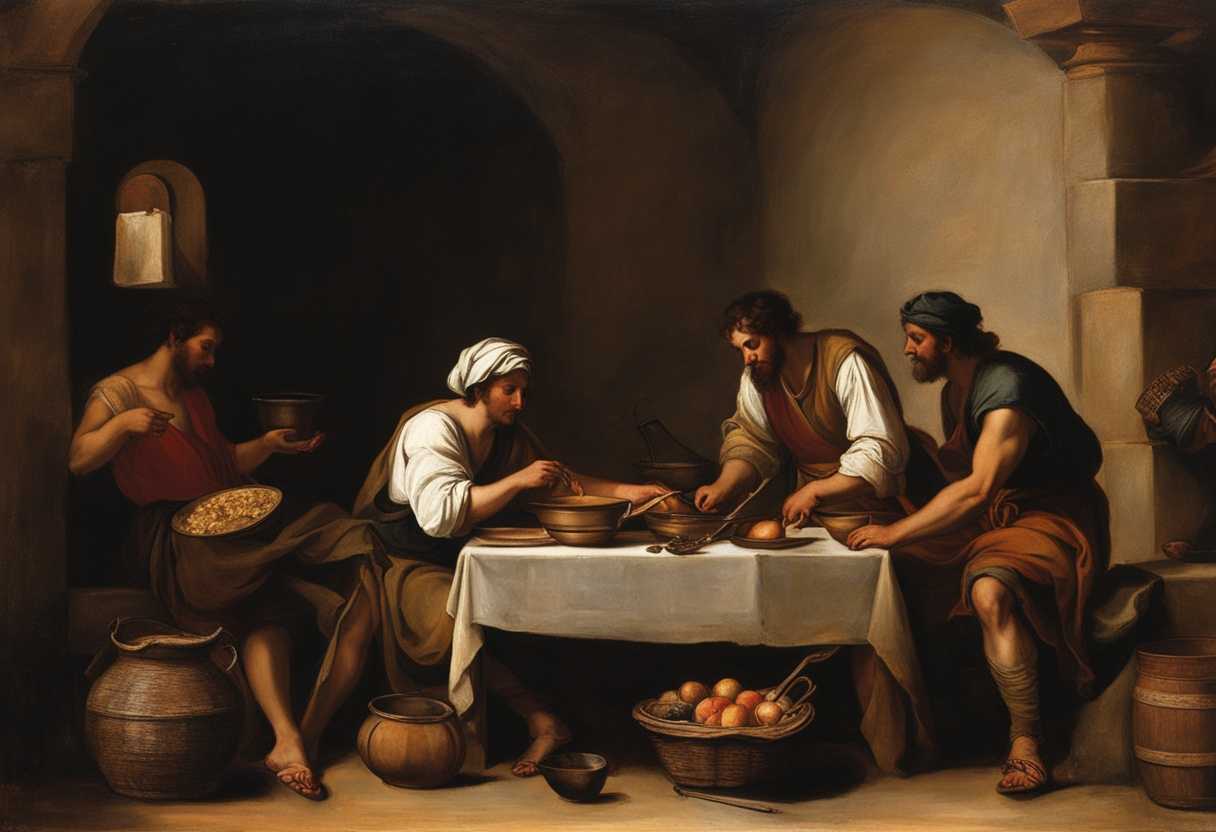
29 Once when Jacob was cooking stew, Esau came in from the field, and he was exhausted.
Setting the Scene for Genesis 25:29
In Genesis chapter 25, we find the scene where Esau, the older twin son of Isaac and Rebekah, returns from the field famished. His younger twin brother, Jacob, is cooking a stew when Esau enters. The aroma of the food fills the tent, enticing Esau, who is exhausted and hungry from his time hunting in the field. Esau, being impulsive and driven by his immediate needs, asks Jacob for some of the red stew he is cooking.
The setting is a simple tent in the wilderness, where Isaac and Rebekah’s family resides. The tent is filled with the warmth of the cooking fire and the savory scent of the stew. Jacob, known for his cunning nature, seizes the opportunity presented by Esau’s hunger and proposes a deal: he offers Esau a bowl of stew in exchange for his birthright as the firstborn son. Esau, driven by his physical needs and not valuing his birthright, agrees to the trade, sealing his fate and setting the stage for future events in their family’s history.
What is Genesis 25:29 about?
This verse from the Bible highlights a moment where Esau, the older brother, willingly gives up his birthright to Jacob, the younger brother, in exchange for a simple bowl of stew. This action shows the impulsiveness of Esau and the cunning nature of Jacob. It also serves as a lesson about the significance of birthright and the consequences of making hasty decisions without considering the long-term effects.
Imagine the emotions and thoughts running through Esau’s mind in that moment. Why was he so quick to trade something as important as his birthright for a momentary satisfaction of his hunger? Jacob’s strategic thinking and how he took advantage of the situation should be considered in contrast. What does this teach us about making decisions in times of desperation or vulnerability? Reflect on the values of patience, foresight, and the importance of honoring commitments that this story conveys.
Understanding what Genesis 25:29 really means
Structure for the Commentary:
- Introduction to the Verse
- Context and Background
- Key Phrases and Their Meanings
- Relevance to Other Biblical Passages
- Modern-Day Application
- Anecdote to Illustrate Relevance
- Conclusion and Reflection
**1. Esau and Jacob are involved in a straightforward yet profoundly significant event in Genesis 25:29. This moment lays the groundwork for a larger narrative about priorities, values, and decisions. Let’s delve into what this scene reveals and its implications for our lives today.
2. Context and Background:
This verse sits within the larger story of Jacob and Esau, twin brothers who are very different in temperament and priorities. Esau, a skilled hunter, returns famished one day to find Jacob preparing a stew. Esau’s hunger leads to a pivotal decision: he trades his birthright for a simple meal. The context emphasizes a unique transaction that has long-lasting consequences.
3. Key Phrases and Their Meanings:
- “Jacob was cooking some stew”: This phrase sets a mundane scene but hints at an underlying tension. Jacob is portrayed as someone who is at home, more calculating and perhaps more strategic compared to his brother.
- “Esau came in from the open country, famished”: Esau’s physical hunger is a metaphor for impulsive desires and a lack of forethought. It underscores his immediate vulnerability and need.
4. Relevance to Other Biblical Passages:
This story mirrors other biblical narratives about choosing temporal satisfaction over lasting spiritual inheritance. Hebrews 12:16 warns against being like Esau, who “for a single meal sold his inheritance rights as the oldest son.” Jesus faced similar temptations in the wilderness (Matthew 4:1-11), emphasizing spiritual priorities over physical needs.
5. Modern-Day Application:
Today, we are frequently faced with decisions that pit immediate gratification against long-term benefits. This story serves as a reminder to evaluate our priorities in a world rife with consumerism, instant information, and quick fixes. Are we, like Esau, sacrificing meaningful, long-term rewards for temporary relief?
6. Anecdote to Illustrate Relevance:
Imagine a young professional named John, who is offered a well-paying job that requires compromising his principles. The immediate gain would solve his financial woes, much like Esau’s stew, but it could cost him his integrity and peace of mind in the long run. Like Esau, John faces a choice between an easy fix and a path that aligns with his deeper values.
7. Conclusion and Reflection:
Esau’s decision to trade his birthright for a meal is more than a moment of weakness; it’s a cautionary tale for all of us. Reflect on this verse as you consider what “stew” you might be tempted to exchange for something far more valuable. How can we align our daily choices with our ultimate goals and spiritual commitments?
This story invites us to be more like Jacob in our foresight but to use it for righteous ends, always keeping in mind the greater narrative that God is weaving in our lives.
What does it mean to value spiritual blessings?
Valuing spiritual blessings means giving importance to the things that are eternal and of the spirit rather than just focusing on material or immediate desires. It involves seeking growth in faith, character, and a deeper connection with the divine. Acknowledging the significance of inner peace, joy, love, wisdom, and the presence of God in one’s life is done by prioritizing spiritual blessings.
This verse highlights how Esau, in his actions, showed a disregard for spiritual blessings by prioritizing his immediate physical needs over his birthright. His decision reflected a lack of appreciation for the deeper spiritual significance and inheritance associated with the birthright. Valuing spiritual blessings would have meant recognizing the long-term benefits of the birthright and the blessings that come from honoring God’s promises. This passage serves as a reminder to prioritize spiritual blessings in our lives over temporary gains or desires.
Application
Imagine your life like juggling both work and family. Each action you take, just like Esau and Jacob’s choices, shapes your future. When you honor God in your daily decisions, you’re not just checking off a box; you’re building a stronger, more fulfilling life. Will you take that extra step to align your choices with God’s teachings, making every moment count?

Reverend Michael Johnson is an experienced Church Minister with a profound expertise in spirituality and guidance. With a serene presence and a compassionate heart, he has faithfully served his congregation for over 20 years, leading them on a spiritual journey towards inner peace and enlightenment. Reverend Johnson’s extensive knowledge of religious philosophies and profound understanding of human nature have made him a trusted confidant and mentor to many, as he seamlessly weaves his profound wisdom into life teachings. Reverend Johnson’s calming demeanor and empathetic nature continue to uplift and heal souls, nurturing a sense of unity and tranquility within his community.