
7 then the Lord God formed the man of dust from the ground and breathed into his nostrils the breath of life, and the man became a living creature.
8 And the Lord God planted a garden in Eden, in the east, and there he put the man whom he had formed.
9 And out of the ground the Lord God made to spring up every tree that is pleasant to the sight and good for food. The tree of life was in the midst of the garden, and the tree of the knowledge of good and evil.
10 A river flowed out of Eden to water the garden, and there it divided and became four rivers.
11 The name of the first is the Pishon. It is the one that flowed around the whole land of Havilah, where there is gold.
12 The gold of that land is good; bdellium and onyx stone are there.
13 The name of the second river is the Gihon. It is the one that flowed around the whole land of Cush.
14 The name of the third river is the Tigris, which flows east of Assyria. And the fourth river is the Euphrates.
15 The Lord God took the man and put him in the garden of Eden to work it and keep it.
16 And the Lord God commanded the man, saying, “You may surely eat of every tree of the garden,
17 but of the tree of the knowledge of good and evil you shall not eat, for in the day that you eat of it you shall surely die.”
18 Then the Lord God said, “It is not good that the man should be alone; I will make him a helper fit for him.”
19 Now out of the ground the Lord God had formed every beast of the field and every bird of the heavens and brought them to the man to see what he would call them. And whatever the man called every living creature, that was its name.
20 The man gave names to all livestock and to the birds of the heavens and to every beast of the field.
21 So the Lord God caused a deep sleep to fall upon the man, and while he slept took one of his ribs and closed up its place with flesh.
22 And the rib that the Lord God had taken from the man he made into a woman and brought her to the man.
23 Then the man said, “This at last is bone of my bones and flesh of my flesh; she shall be called Woman, because she was taken out of Man.”
24 Therefore a man shall leave his father and his mother and hold fast to his wife, and they shall become one flesh.
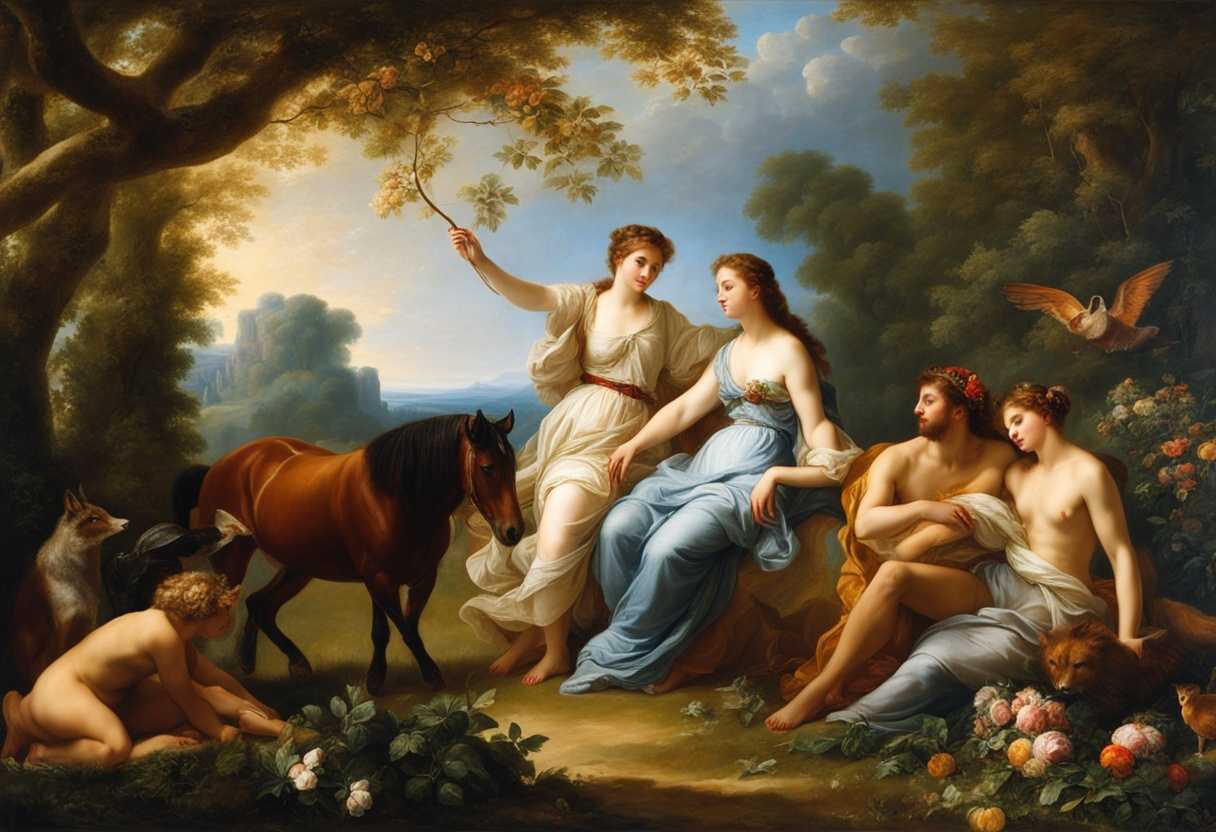
Setting the Scene for Genesis 2:7-24
In Genesis chapter 2, we find ourselves in the Garden of Eden, a lush paradise filled with vibrant vegetation and flowing rivers. The scene is set with Adam, the first man created by God, standing in awe of his surroundings. He is alone, surrounded by the beauty of God’s creation, yet he longs for companionship.
God, in His infinite wisdom, decides to create a suitable partner for Adam. He causes a deep sleep to fall upon Adam and from his rib, He forms Eve, the first woman. As Adam awakens, he is filled with joy and gratitude at the sight of Eve, his perfect counterpart. Together, they walk hand in hand through the Garden of Eden, exploring the wonders of creation and basking in the love and companionship that God has blessed them with.
The scene is one of harmony and unity, as Adam and Eve revel in the beauty of their surroundings and the love that binds them together. It is a moment of pure bliss and innocence, before the fall of man and the introduction of sin into the world.
What is Genesis 2:7-24 about?
This verse illustrates the divine origin and design of marriage according to the Christian faith. It emphasizes that human beings, both men and women, are created by God and have a special connection and purpose in their relationship with one another. The act of forming woman from man’s rib symbolizes the deep bond and unity intended between husband and wife, highlighting the complementary nature of their roles in marriage.
Reflecting on this verse prompts us to consider the sacredness and significance of marriage as an institution established by God. It challenges us to think about the value of commitment, love, and mutual respect within the marital relationship. We are encouraged to honor and uphold the sanctity of marriage as a foundational institution in society by acknowledging the origin of marriage in divine creation. What deeper meanings and implications can we draw from the imagery of God creating man from dust and woman from man’s rib? How does understanding the origin of marriage shape our attitudes and behaviors towards this sacred covenant? Let’s contemplate how this verse can guide our understanding and practice of marriage today by delving into its profound truths and implications.
Understanding what Genesis 2:7-24 really means
Let’s break down specific themes and phrases in Genesis 2:7-24 to delve into it for a clearer understanding. This passage is rich with meaning and profoundly impacts our understanding of humanity, relationships, and our connection with God.
Creation of Man and Woman (Verses 7-8 and 21-23)
We begin with “the LORD God formed the man,” a powerful phrase indicating personal care. Unlike the rest of creation, man is intricately fashioned from “the dust of the ground.” This signifies our humble origins but also the intimacy of God’s touch. God then “breathed into his nostrils the breath of life,” which is not only a physical act but a spiritual one—showing that life itself is a divine gift. This breath transforms dust into a living being, symbolizing the infusion of the spiritual into the physical. Contrast this with Genesis 1:26-27, where mankind is created in God’s own image. Both passages highlight our unique status in creation.
The Garden of Eden and Human Responsibility (Verses 8-15)
God places man in the Garden of Eden “to work it and keep it.” This suggests that work is not a result of the fall but an integral part of our identity and purpose. It is a stewardship role, reminding us that the world is a gift we are to cultivate, not exploit. This idea is expanded in Colossians 3:23-24, where we are advised to work heartily, as for the Lord. Today, this can reshape our view of daily tasks, urging us to see them as acts of worship and stewardship.
The Command and Human Free Will (Verses 16-17)
God’s command not to eat from the tree of the knowledge of good and evil introduces the concept of moral choice. The existence of the tree underscores the importance of free will in our relationship with God. Without the possibility of disobedience, obedience has no meaning. It emphasizes our need to trust God’s wisdom over our own understanding, aligning with Proverbs 3:5-6: “Trust in the LORD with all your heart.” This is ever-relevant today as we navigate moral complexities, reminding us to seek divine guidance.
The Creation of Woman and Partnership (Verses 18-24)
The phrase “It is not good for the man to be alone” marks the first time God declares something “not good,” highlighting the importance of relationships. The creation of woman from man’s rib signifies equality, mutual respect, and unity. The expression, “bone of my bones and flesh of my flesh,” speaks to an intrinsic connection, meant to mirror the divine relationship within the Trinity. Paul expands on this in Ephesians 5:31-32, comparing the marital bond to the relationship between Christ and the Church, emphasizing love, sacrifice, and unity.
Relevance Today
This passage is remarkably relevant in our era of individualism and disconnectedness. It calls us back to a life of purpose—embracing our God-given roles, engaging in meaningful work, making ethical choices, and valuing relationships.
I recall a man from our congregation who found immense fulfillment in daily acts of kindness at his office. He saw his work and relationships as his garden to tend. Inspired by this passage, he transformed his workplace into a community through small, yet consistent, acts of stewardship and love.
How might you view your daily grind differently if you saw it as a divine assignment? What changes in your life if every relationship is a sacred partnership?
Through Genesis 2:7-24, we are reminded of our divine origin, purpose, and the beauty of our interdependence. The challenge and joy of life lie in living out these truths daily. Let’s strive to nurture the breath of life within us and each other as we reflect on these verses.
How can understanding our interconnectedness with others guide us?
Understanding our interconnectedness with others can guide us to treat each person with respect and care, realizing that we are all part of the same human family. Just as Eve was created from Adam’s rib, we are all interconnected and dependent on each other in various ways. This interconnectedness calls for compassion, empathy, and understanding towards one another, recognizing that our actions can have a ripple effect on those around us. We can cultivate stronger relationships and foster a sense of unity and cooperation within our communities by recognizing our interconnectedness. When we view others as extensions of ourselves, we are more inclined to act in ways that promote harmony and understanding. This understanding can lead us to be more considerate in our words and actions, fostering a more supportive and inclusive environment for all.
Furthermore, acknowledging our interconnectedness can also guide us to collaborate and work together towards common goals. Just as Adam and Eve were meant to be companions and partners in the creation story, we can achieve more when we come together, pooling our strengths and resources for the benefit of all. This awareness of our interconnectedness can inspire us to work towards collective growth and well-being, knowing that we are all interconnected and interdependent in the tapestry of life.
Application
Think of God’s creation of Adam and Eve as the ultimate teamwork. Just like in your job or family, each person plays a vital role. God designed marriage as a partnership of equals, reflecting His perfect plan. Today, cherish your spouse or loved ones with that same reverence. Look at your relationships as the bedrock of your life’s project. How will you invest in them and make them thrive today?

Reverend Michael Johnson is an experienced Church Minister with a profound expertise in spirituality and guidance. With a serene presence and a compassionate heart, he has faithfully served his congregation for over 20 years, leading them on a spiritual journey towards inner peace and enlightenment. Reverend Johnson’s extensive knowledge of religious philosophies and profound understanding of human nature have made him a trusted confidant and mentor to many, as he seamlessly weaves his profound wisdom into life teachings. Reverend Johnson’s calming demeanor and empathetic nature continue to uplift and heal souls, nurturing a sense of unity and tranquility within his community.