
Genesis 2:8-12 is about the Garden of Eden, symbolizing the perfect and harmonious relationship between humanity and God, emphasizing the abundance and beauty of creation, and showcasing the initial state of peace and goodness before sin entered the world.
8 And the Lord God planted a garden in Eden, in the east, and there he put the man whom he had formed.
9 And out of the ground the Lord God made to spring up every tree that is pleasant to the sight and good for food. The tree of life was in the midst of the garden, and the tree of the knowledge of good and evil.
10 A river flowed out of Eden to water the garden, and there it divided and became four rivers.
11 The name of the first is the Pishon. It is the one that flowed around the whole land of Havilah, where there is gold.
12 The gold of that land is good; bdellium and onyx stone are there.
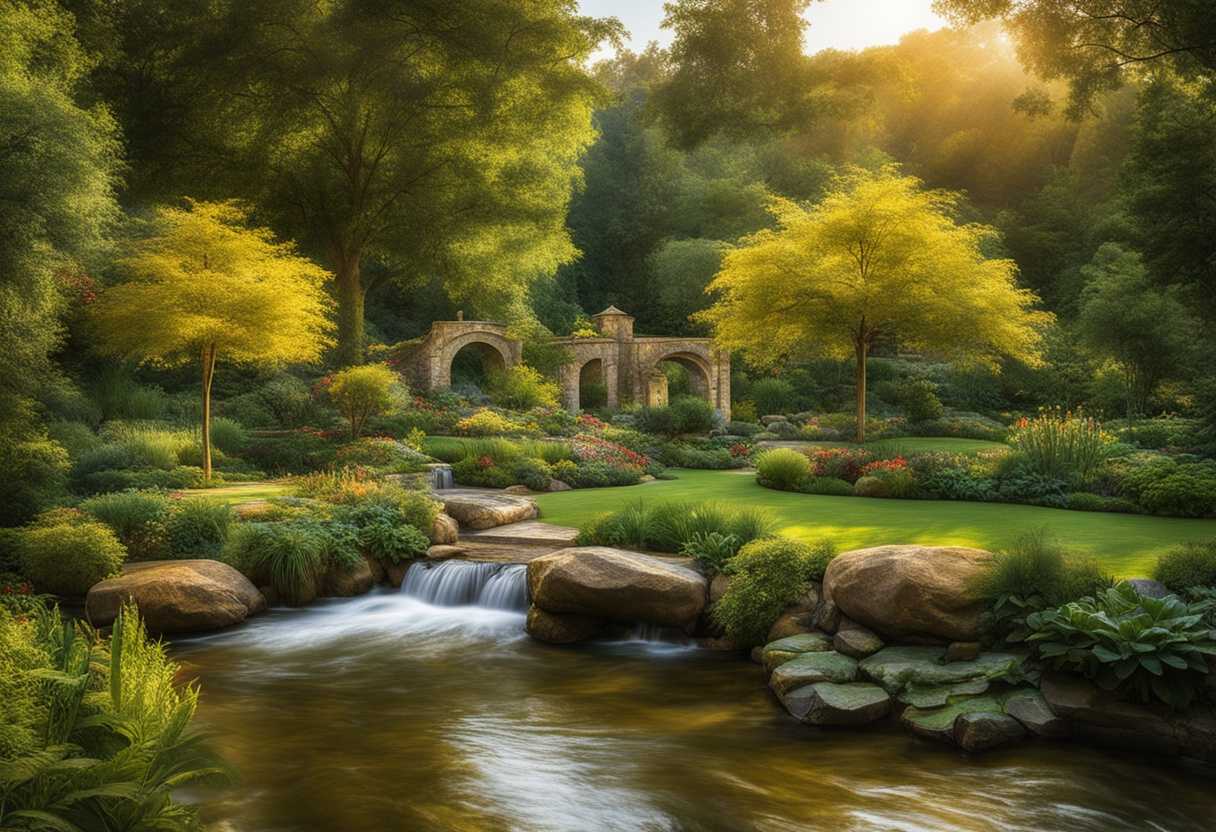
Setting the Scene for Genesis 2:8-12
In the lush Garden of Eden, a paradise created by God, we find Adam, the first man formed by the hand of the Almighty. Adam is standing in awe of the beauty surrounding him, with vibrant flowers, towering trees, and crystal-clear rivers flowing through the garden. The air is filled with the sweet scent of blossoms, and the sound of birds chirping in harmony creates a peaceful atmosphere.
God had planted a variety of trees in the garden, each one more magnificent than the last. The Tree of Life stands tall and majestic in the center, symbolizing eternal life and divine presence. Nearby, the Tree of the Knowledge of Good and Evil looms, its forbidden fruit tempting and mysterious. Adam is tasked with tending to the garden, a responsibility he takes seriously as he explores the wonders of creation and marvels at the intricate design of the world around him.
As Adam walks through the garden, he encounters animals of every kind, from graceful deer to playful monkeys. He names each creature, establishing his dominion over them as a steward of God’s creation. The sun shines warmly overhead, casting a golden light over the garden and filling Adam’s heart with gratitude for the blessings bestowed upon him. In this idyllic setting, Adam’s relationship with God is pure and unblemished, a bond that will be tested in the days to come.
What is Genesis 2:8-12 about?
This verse from the Bible describes the creation story in the book of Genesis, where God creates a beautiful garden called Eden, filled with trees and rivers. This garden is often seen as a symbol of paradise, a perfect place where everything is in harmony and abundance. The image of a lush garden with flowing rivers evokes feelings of peace, tranquility, and connection to nature. We may wonder about the significance of God creating such a magnificent garden as we reflect on this verse. What does it teach us about God’s creativity and love for beauty? How does the image of Eden inspire us to care for the natural world and appreciate the wonders of creation? We can ponder on the importance of living in harmony with nature and cultivating a sense of awe and wonder for the world around us by imagining ourselves in this garden, surrounded by trees and rivers. This verse ultimately invites us to consider the beauty and intricacy of the world we live in, reminding us of the importance of stewardship and reverence for the environment. We are called to nurture and protect the earth, ensuring that future generations can also experience the blessings of nature, just as God planted a garden in Eden. Let us seek to emulate God’s care for creation and strive to create our own “gardens” of peace, harmony, and beauty in our lives and communities.
Understanding what Genesis 2:8-12 really means
Genesis 2:8-12 unveils the creation of the Garden of Eden, a divine paradise where God placed the first man, Adam. This passage vividly portrays the splendor and richness of God’s creation, setting the stage for the ideal state of human existence before the fall. “The Lord God planted a garden in Eden, in the east,” signifies God’s deliberate act in crafting a perfect dwelling place for humanity, showcasing His intention for a harmonious relationship with His creation. The phrase, “Out of the ground the Lord God made to spring up every tree that is pleasant to the sight and good for food,” underscores God’s meticulous provision, ensuring that every necessity for sustenance and beauty was abundantly available.
Moreover, the mention of “A river flowed out of Eden to water the garden, and there it divided and became four rivers,” symbolizes the abundance and life-giving essence of God’s creation, as water is fundamental for sustaining life. This imagery of flourishing vegetation and flowing waters paints a picture of God’s bountiful provision and care for His creation. Drawing parallels, Revelation 22:1-2 describes the river of the water of life, symbolizing eternal life and the restoration of Eden in the New Jerusalem, while Psalm 1:3 likens a righteous person to a fruitful tree planted by streams of water, echoing the lush and fruitful Garden of Eden.
In today’s fast-paced world, where stress and scarcity often prevail, Genesis 2:8-12 serves as a poignant reminder of God’s original design for humanity – to dwell in harmony with Him and His creation. It prompts reflection on the abundance and beauty that God graciously provides, offering hope and reassurance that He is a caring provider deeply invested in His creation. Consider a bustling city’s community garden, where volunteers unite to cultivate a green oasis of peace and nourishment. This modern-day parallel to the Garden of Eden exemplifies a place of provision, beauty, and community, showcasing how we can still experience a glimpse of God’s intended harmony and abundance in our contemporary lives.
In conclusion, Genesis 2:8-12 stands as a profound testament to God’s provision and the magnificence of His creation. It beckons us to contemplate the harmony and abundance that God originally intended for humanity, urging us to seek ways to encounter and share that abundance in our daily lives. Let this passage inspire us to appreciate God’s abundant provision, to nurture harmony with His creation, and to strive for a world where His intended beauty and abundance are reflected in our actions and interactions.
How can we tend to and care for God’s creation?
God’s creation is described as a beautiful garden with abundant resources in Genesis 2:8-12. This passage highlights the importance of caring for the environment and being responsible stewards of the earth. We, as beings created in God’s image, are called to take care of and protect the world around us. It is our duty to ensure that we conserve and preserve God’s creation for future generations.
One way we can tend to and care for God’s creation is by being mindful of our consumption and waste. We can take steps to reduce, reuse, and recycle to minimize our impact on the environment. We can help protect the earth and reduce pollution by being conscious of our choices and the resources we use. Additionally, we can support and advocate for sustainable practices that prioritize the well-being of the planet and all its inhabitants.
Furthermore, caring for God’s creation also involves being good stewards of the natural world and its inhabitants. This includes showing respect and compassion for animals, plants, and ecosystems. We can work towards preserving biodiversity, protecting endangered species, and promoting conservation efforts. We can contribute to a healthier and more sustainable planet by valuing and respecting all aspects of God’s creation.
Application
Let’s look at Genesis 2:8-12 as a blueprint for cherishing our home – Earth. It’s a call to safeguard the delicate balance of nature, just like we protect our work and cherish our families. We must take action now to nurture and preserve our planet, so it thrives for our children and their children. How can you contribute to this global legacy?

Reverend Michael Johnson is an experienced Church Minister with a profound expertise in spirituality and guidance. With a serene presence and a compassionate heart, he has faithfully served his congregation for over 20 years, leading them on a spiritual journey towards inner peace and enlightenment. Reverend Johnson’s extensive knowledge of religious philosophies and profound understanding of human nature have made him a trusted confidant and mentor to many, as he seamlessly weaves his profound wisdom into life teachings. Reverend Johnson’s calming demeanor and empathetic nature continue to uplift and heal souls, nurturing a sense of unity and tranquility within his community.