
Genesis 37:34 is about Jacob tearing his clothes, putting on sackcloth, and mourning for his son Joseph after being shown Joseph’s coat covered in blood, symbolizing his deep grief and anguish over the loss of his favored son.
34 Then Jacob tore his garments and put sackcloth on his loins and mourned for his son many days.
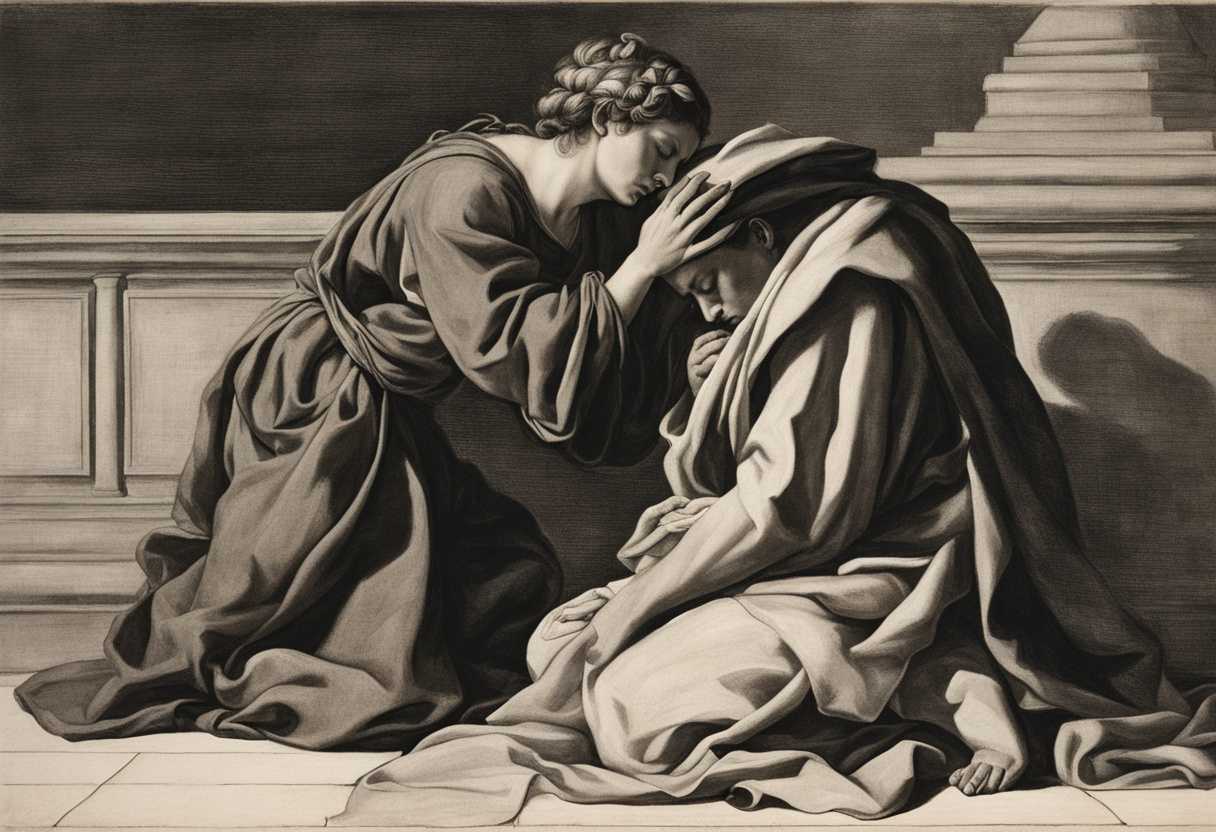
Setting the Scene for Genesis 37:34
In the scene from Genesis 37:34, we find Joseph, one of the twelve sons of Jacob, in a moment of deep despair and anguish. Joseph’s brothers, fueled by jealousy and resentment towards him, have just sold him into slavery to a passing caravan. As a cruel deception, they dip Joseph’s ornate coat in goat’s blood and present it to their father, Jacob, making him believe that Joseph was devoured by a wild animal.
The setting is a desolate and rocky terrain, with the sun setting in the distance casting long shadows. Jacob, heartbroken and inconsolable, clutches the blood-stained coat of many colors, a symbol of his favorite son’s apparent demise. The air is heavy with tension and sorrow as Jacob mourns the loss of Joseph, his beloved son. Meanwhile, Joseph is being taken away to Egypt, unsure of his fate but holding onto his faith in God’s plan for him.
The betrayal and deception within this family have set the stage for a series of events that will ultimately lead to Joseph’s rise to power in Egypt and the fulfillment of God’s divine purpose. This pivotal moment marks the beginning of Joseph’s journey, filled with trials and triumphs, as he navigates through the challenges orchestrated by his own flesh and blood.
What is Genesis 37:34 about?
Imagine the depth of sorrow and grief that must have consumed Jacob when he mourned for his beloved son, Joseph. The pain of losing a child is one that cuts deep and lingers in the heart. Jacob’s anguish reflects the universal experience of a parent’s worst nightmare coming true. The image of Joseph being torn by a wild animal adds a layer of brutality and tragedy to the situation, intensifying Jacob’s suffering even further.
Have you ever felt the weight of loss so heavy that it feels like a part of you is missing? Can you empathize with Jacob’s deep sense of despair and hopelessness? Despite the darkness of Jacob’s situation, this verse highlights the raw and powerful emotions that come with grief and the unbreakable bond between a parent and child. It serves as a poignant reminder of the fragility of life and the pain that can come with it.
Understanding what Genesis 37:34 really means
Genesis 37:34 captures a poignant moment in the biblical narrative of Joseph, where Jacob, upon hearing the false news of his son’s demise, reacts with profound grief. The tearing of his clothes and wearing of sackcloth were customary actions in ancient Hebrew culture to signify mourning, reflecting the depth of Jacob’s sorrow. This emotional response humanizes Jacob, portraying him not just as a patriarch but as a father experiencing the anguish of losing a beloved child.
In parallel to Jacob’s mourning in Genesis, other biblical figures like Job and David also express deep sorrow in times of loss. Job’s tearing of his robe and shaving his head, as well as David and his men mourning the deaths of Saul and Jonathan, illustrate the universality of grief and the communal nature of mourning. These passages emphasize that grief is a natural and shared experience, transcending time and culture.
The verse in Matthew 5:4, “Blessed are those who mourn, for they will be comforted,” offers solace and hope to those grappling with loss. It reassures individuals that their mourning is not in vain and that comfort will eventually come. This beatitude from Jesus underscores the importance of acknowledging and processing grief, highlighting the eventual promise of solace and healing.
In today’s world, where loss and grief are prevalent, Genesis 37:34 remains relevant as it validates the intensity of human emotions in times of bereavement. People facing loss can find reassurance in knowing that even revered biblical figures like Jacob experienced profound sorrow, reminding them that it is acceptable to mourn deeply and authentically.
Imagine a contemporary scenario where someone is navigating the loss of a loved one. By reflecting on Jacob’s grief in Genesis 37:34, individuals can find a sense of connection and understanding in their own mourning process. For instance, a parent mourning the loss of a child may draw comfort from knowing that their sorrow mirrors that of Jacob, a testament to the shared human experience of grief.
The symbolic actions of tearing clothes, wearing sackcloth, and mourning for an extended period in Genesis 37:34 serve as powerful reminders of the depth and endurance of grief. These actions not only convey the intensity of Jacob’s emotions but also provide a framework for individuals to express and navigate their own feelings of loss. Understanding these nuances can offer solace and validation to those grappling with grief, showing that the Bible acknowledges and honors the complexity of human emotions in times of sorrow.
How can we trust in God during suffering?
Trusting in God’s plan and purpose can be difficult in times of suffering. However, reflecting on this verse reminds us that even in the face of great hardship and pain, God is present and working behind the scenes for our good. We too may experience deep sorrow and anguish during trials and tribulations, just as Jacob mourned for Joseph. However, by trusting in God’s sovereignty and believing in His faithfulness, we can find comfort and hope knowing that He is with us in our suffering and will ultimately bring about a greater purpose from our pain.
This verse encourages us to turn to God in our times of suffering, to seek solace in His presence, and to find strength in His promises. We acknowledge that He is in control and can provide comfort and peace even in the midst of our suffering by surrendering our burdens and grief to Him. Through prayer, faith, and a firm belief in God’s goodness, we can trust that He will sustain us through the trials we face and bring about healing and restoration in due time.
Application
Embrace the power of forgiveness in your own life, just as Joseph did with his brothers. Let go of past hurts and allow healing to enter your relationships, just like a skilled craftsman mends broken pieces back together. Will you choose to extend a hand of forgiveness and seek reconciliation, paving the way for a brighter and more peaceful future?

Reverend Michael Johnson is an experienced Church Minister with a profound expertise in spirituality and guidance. With a serene presence and a compassionate heart, he has faithfully served his congregation for over 20 years, leading them on a spiritual journey towards inner peace and enlightenment. Reverend Johnson’s extensive knowledge of religious philosophies and profound understanding of human nature have made him a trusted confidant and mentor to many, as he seamlessly weaves his profound wisdom into life teachings. Reverend Johnson’s calming demeanor and empathetic nature continue to uplift and heal souls, nurturing a sense of unity and tranquility within his community.