
24 These are the sons of Zibeon: Aiah and Anah; he is the Anah who found the hot springs in the wilderness, as he pastured the donkeys of Zibeon his father.
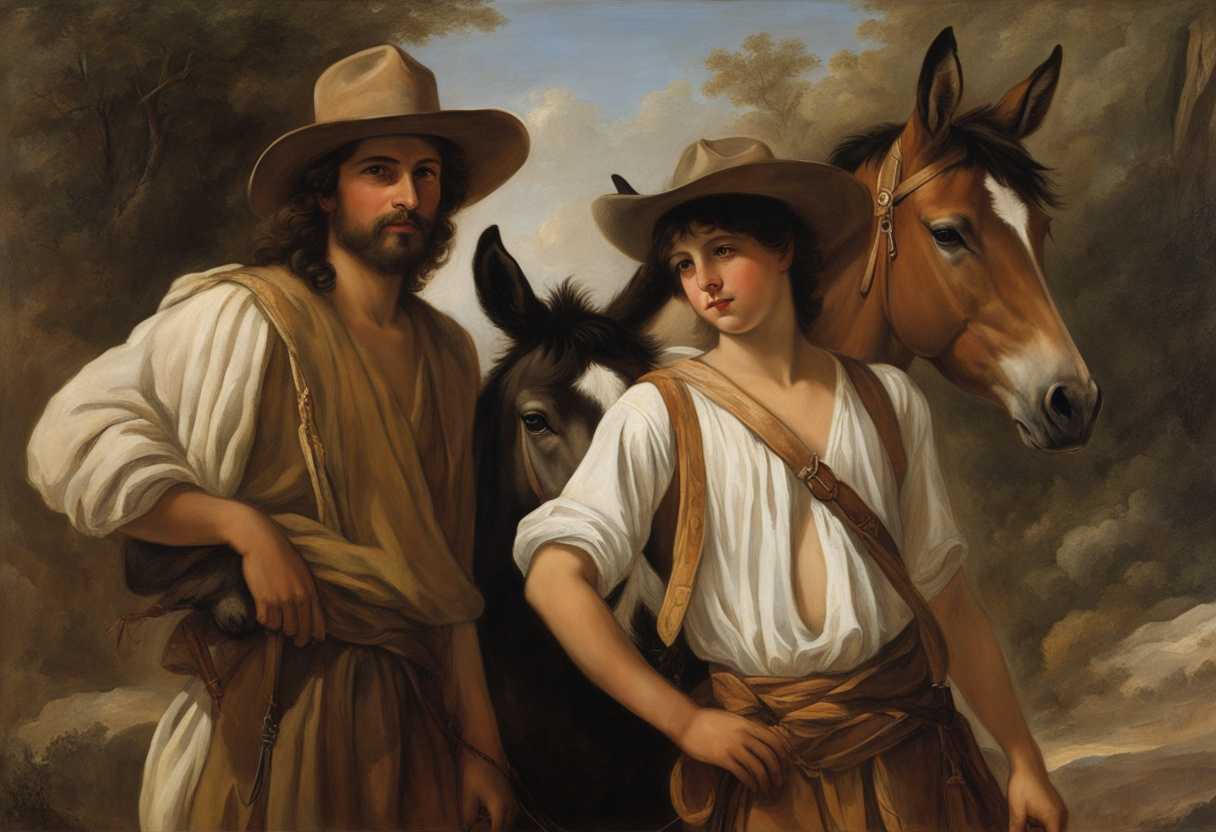
Setting the Scene for Genesis 36:24
In Genesis chapter 36, we find a detailed genealogy of Esau, the brother of Jacob. The verse 24 specifically mentions a man named Anah, who discovered hot springs in the wilderness while he was pasturing his father’s donkeys. This scene takes place in the rugged and arid landscape of Edom, where Anah was tending to the animals.
Anah, a descendant of Seir the Horite, was likely a young man at the time, responsible for the daily care of his father’s livestock. As he led the donkeys through the wilderness, searching for patches of greenery and water sources, he stumbled upon a surprising find – hot springs bubbling up from the earth. The discovery must have been both unexpected and fascinating, as hot springs were not a common sight in the desert terrain.
Surrounded by rocky cliffs and sparse vegetation, Anah’s discovery of the hot springs would have been a significant event in his life. The scene likely involved him marveling at the natural phenomenon, perhaps even testing the temperature of the water with his hand. This unexpected encounter with the hot springs would have left a lasting impression on Anah, becoming a memorable moment in the midst of his routine duties as a shepherd.
What is Genesis 36:24 about?
Genesis 36:24 provides a detailed ancestry of a specific individual, Zibeon, who was a chief of the Horite people. This verse is part of a genealogical record found in the Bible, which serves a few important purposes. Firstly, genealogies were significant in ancient times for establishing lineage, inheritance rights, and social status. They were a way to trace one’s heritage and connect individuals to their ancestors. The text is highlighting Zibeon’s position and significance within his community by including his lineage.
Additionally, genealogies in the Bible are often used to show the fulfillment of God’s promises and the continuation of His plan throughout generations. They demonstrate how each individual plays a part in the larger narrative of salvation history. The verse emphasizes the importance of every individual in God’s plan by including Zibeon in the genealogy. It prompts us to consider how each person, no matter their background or role, can contribute to the greater story of faith and redemption.
Understanding what Genesis 36:24 really means
Structural Outline for Commentary:
- Introduction: Context and Overview
- Phrases of Focus
- Explanation and Underlying Meaning
- Biblical Cross-References
- Relevance to Modern Life
- Anecdote for Application
- Conclusion and Reflection
Commentary:
1. Introduction: Context and Overview
Genesis 36:24 underscores the genealogy of Esau, particularly noting the descendants of Seir the Horite. This passage fits within a broader chapter that details the lineage of Esau, the brother of Jacob and son of Isaac. Understanding genealogies can sometimes seem tedious, but they hold valuable insights into the heritage and fulfillment of God’s promises.
2. Phrases of Focus
The verse mentions specific individuals, highlighting “Anah” and “the hot springs in the wilderness.” These details may seem minor at first glance, but each carries weight in the tapestry of biblical history.
3. Explanation and Underlying Meaning
“Anah” is noted for a particular discovery, which might appear to be a trivial detail. Discovering resources like hot springs would be significant in the context of ancient nomadic life. These resources were essential for survival and prosperity. This can be perceived as a nod to the importance God places on every individual and their contributions, no matter how small they may appear.
4. Biblical Cross-References
Other passages like Genesis 25:23 (“Two nations are in your womb…”) echo the significance of genealogical records as part of God’s larger narrative. Additionally, Hebrews 12:16-17 warns against Esau’s disregard for his birthright, contrasting Esau’s lineage with the spiritual heritage offered in Christ. These cross-references help to illuminate that while human storylines may seem mundane, they have heavenly implications.
5. Individuals in today’s fast-paced world often overlook the “small” details or the “less significant” roles. However, Genesis 36:24 reminds us that everyone has a part in God’s grand design. Like Anah discovering the hot springs, sometimes our seemingly small actions can have significant, long-term impacts.
6. A janitor working in a church might think their efforts go unnoticed. However, one evening, a parishioner stumbles upon a verse that was accidentally marked in a Bible the janitor had cleaned. This verse leads to a journey of faith and transformation. Discovering a resource in the wilderness may seem insignificant but can lead others to sustenance and growth in a similar manner.
7. Reflect on this verse as you ponder the “small” roles and choices in your life. How might God be using these to fulfill His greater plan? Understand that every detail in Scripture, much like every action we take, holds potential significance. Let this be an encouragement to faithfully perform the tasks God places before you, trusting that He weaves them into His divine narrative. How can you recognize and honor the seemingly small roles in your community that contribute to a larger purpose? Reflect on your daily routines and see them as part of a larger plan orchestrated by God.
What lessons can we learn from Esau’s lineage?
Esau’s lineage in Genesis 36 teaches us the importance of perseverance and resilience in the face of challenges. Despite facing conflicts and struggles, Esau’s descendants continued to thrive and develop their own communities. This can serve as a reminder for us to stay determined and steadfast in pursuit of our goals, even when faced with hardships or setbacks.
Furthermore, Esau’s lineage also emphasizes the significance of honoring family heritage and maintaining a connection to one’s roots. Esau’s descendants preserved their identity and traditions throughout generations by tracing their lineage and identifying with their ancestors. This highlights the value of holding on to our cultural inheritance and passing it down to future generations.
Additionally, the story of Esau’s lineage can teach us the importance of forgiveness and reconciliation. Despite the past rivalry and conflicts between Esau and his brother Jacob, their descendants eventually found a way to coexist and even thrive alongside each other. This demonstrates the power of forgiveness in healing relationships and fostering unity within families and communities.
Application
Think about the legacy of Hobab, Moses’ loyal companion from Genesis 36:24. Like Hobab, you can be a cornerstone in the lives of your family and friends, offering unwavering support and guidance. Let your actions speak volumes, providing lasting encouragement and faithfulness to those around you. Will you step up and be that dependable figure in their journey?

Reverend Michael Johnson is an experienced Church Minister with a profound expertise in spirituality and guidance. With a serene presence and a compassionate heart, he has faithfully served his congregation for over 20 years, leading them on a spiritual journey towards inner peace and enlightenment. Reverend Johnson’s extensive knowledge of religious philosophies and profound understanding of human nature have made him a trusted confidant and mentor to many, as he seamlessly weaves his profound wisdom into life teachings. Reverend Johnson’s calming demeanor and empathetic nature continue to uplift and heal souls, nurturing a sense of unity and tranquility within his community.