
9 These are the generations of Esau the father of the Edomites in the hill country of Seir.
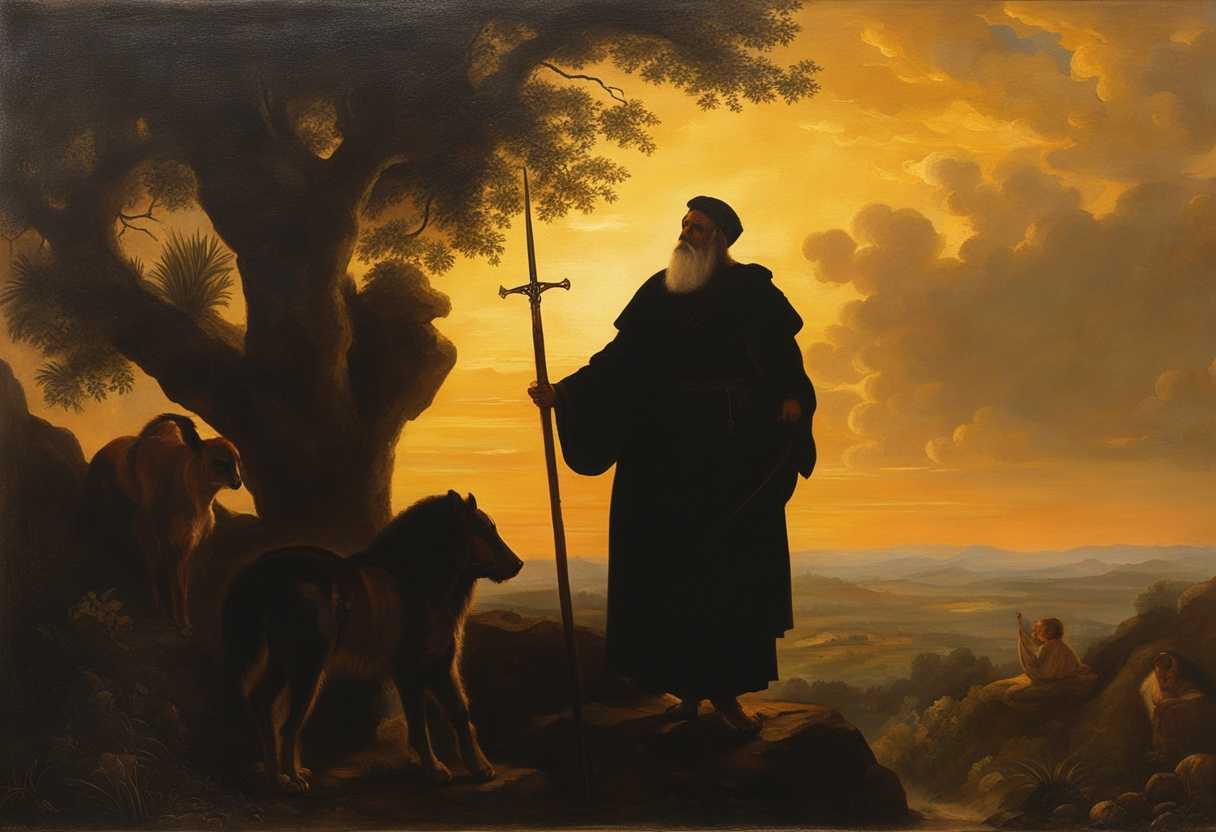
Setting the Scene for Genesis 36:9
In Genesis chapter 36, we find a detailed account of the genealogy of Esau, also known as Edom. The verse Genesis 36:9 specifically mentions the sons of Esau’s wife Oholibamah, the daughter of Anah and granddaughter of Zibeon the Hivite. The scene unfolds in the land of Edom, a region known for its rocky terrain and desert landscapes.
In this particular moment, Esau, the elder twin brother of Jacob, is surrounded by his family and descendants. Oholibamah, his wife, is present along with their sons and daughters. The atmosphere is likely filled with a sense of familial connection and heritage as they recount their lineage and history. The setting may be a tent or a gathering place where the family has come together to discuss their ancestry and the legacy of Esau.
As the names of the sons of Esau and Oholibamah are listed, the scene paints a picture of a proud patriarch surrounded by his offspring, each one representing a branch of the family tree that will continue to grow and flourish in the land of Edom. The mention of Oholibamah’s lineage serves to highlight the interconnectedness of the families in the region and the importance of preserving their heritage for future generations.
What is Genesis 36:9 about?
This verse from Genesis is significant because it sheds light on the historical settlement of Esau’s descendants in the hill country of Seir. Esau, the brother of Jacob, was a prominent figure in the Old Testament, known for his impulsive nature and his exchange of his birthright for a bowl of lentil stew. The fact that his descendants settled in the hill country of Seir signifies the fulfillment of God’s promises to Esau and his lineage.
Have you ever stopped to consider the impact of ancestral land and the importance of being rooted in a specific place? The settling of Esau’s descendants in the hill country of Seir highlights the connection between heritage and geography, showcasing how the land plays a crucial role in shaping identity and heritage. This verse invites us to reflect on our own roots and the significance of our ancestral lands in shaping who we are today. It prompts us to ponder the ways in which our past influences our present circumstances and how our ancestors’ choices continue to impact our lives.
Understanding what Genesis 36:9 really means
Structure for Commentary
- Introduction to the Passage
- Explanation and Context
- Relevant Cross-References
- Application to Modern Life
- Anecdote for Better Understanding
- Closing Reflection
Commentary
1. Introduction to the Passage
The verse we’re exploring today forms part of the genealogical records in Genesis, specifically concerning Esau, the brother of Jacob. It is important to understand how each lineage speaks to God’s broader plan.
2. Explanation and Context
The relevance of this passage is set within the greater narrative of Esau’s descendants. This record is not just a list of names but showcases the development of nations and how God’s promise to Abraham extends beyond Israel. Here, we see Esau, also known as Edom, establishing his own lineage in the hill country of Seir.
3. Relevant Cross-References
Connecting this to other passages, we find in Deuteronomy 23:7 a directive from God not to despise an Edomite, “for he is your brother.” This emphasizes that, despite the divisions and conflicts that would arise, they share a common ancestry through Isaac. Similarly, Malachi 1:2-3 reflects on the love-hate relationship between Jacob and Esau’s descendants. These references remind us of the enduring complexity and sovereign grace in God’s plans.
4. Application to Modern Life
Today, this lineage is a reminder that God’s promises span beyond individual failings and extend to future generations. The interplay between Esau and Jacob demonstrates that God’s grace is not limited to just one lineage or nation. It teaches us in our daily lives to look beyond immediate conflicts and realize the broader scope of God’s grace and promise.
5. Anecdote for Better Understanding
Imagine a family reunion where old feuds still linger among cousins, yet they gather to mark a grandparent’s legacy, which binds them in ways they might not fully appreciate. Similarly, understanding the genealogies in Scripture helps us see the broader narrative at play. Just as family stories remind us of shared roots and futures, these records in Genesis encourage us to recognize how even our divisions are woven into God’s cohesive plan.
**6. Reflect on how this verse paints a picture of God’s inclusive grace. Esau’s lineage is acknowledged and respected, confirming that God’s promises are vast and encompassing. It invites us to evaluate our own lives: Are we seeing others through the lens of immediate conflicts, or do we respect the broader, divine narrative at work? This verse calls us to embrace a vision as expansive as God’s promises, loving and respecting others, knowing we all play a role in His unfolding story.
How can we ensure our descendants follow God faithfully?
To ensure that our descendants follow God faithfully, we must set a strong example of faith and devotion ourselves. We need to live a life that reflects our values and beliefs, showing through our actions the importance of following God’s teachings. We can inspire our descendants to walk in the path of God and uphold their faith by being a role model for them. Teaching our descendants about the ways of God and the significance of maintaining a relationship with Him is crucial. We should pass down the stories of faith, the lessons from scriptures, and the moral teachings that have been entrusted to us. We can help our descendants develop a strong foundation rooted in faith by instilling this knowledge and understanding of God in them from a young age. We must ultimately pray for the guidance and protection of our descendants, asking God to watch over them and lead them on the right path. Through prayer and trust in God’s plan, we can seek His help in ensuring that our descendants remain faithful and devoted to Him throughout their lives, passing down the legacy of faith from generation to generation.
Application
Think of your life as a powerful email, constantly forwarded to future generations. Genesis 36:9 challenges you to reflect on what message you’re passing down. Are you just passing on DNA, or are you sharing values that matter? Show your family and those around you God’s love, grace, and mercy. Transform your legacy into a beacon of faith. Are you ready to hit send on a spiritual inheritance that endures?

Reverend Michael Johnson is an experienced Church Minister with a profound expertise in spirituality and guidance. With a serene presence and a compassionate heart, he has faithfully served his congregation for over 20 years, leading them on a spiritual journey towards inner peace and enlightenment. Reverend Johnson’s extensive knowledge of religious philosophies and profound understanding of human nature have made him a trusted confidant and mentor to many, as he seamlessly weaves his profound wisdom into life teachings. Reverend Johnson’s calming demeanor and empathetic nature continue to uplift and heal souls, nurturing a sense of unity and tranquility within his community.