
25 Then they sat down to eat. And looking up they saw a caravan of Ishmaelites coming from Gilead, with their camels bearing gum, balm, and myrrh, on their way to carry it down to Egypt.
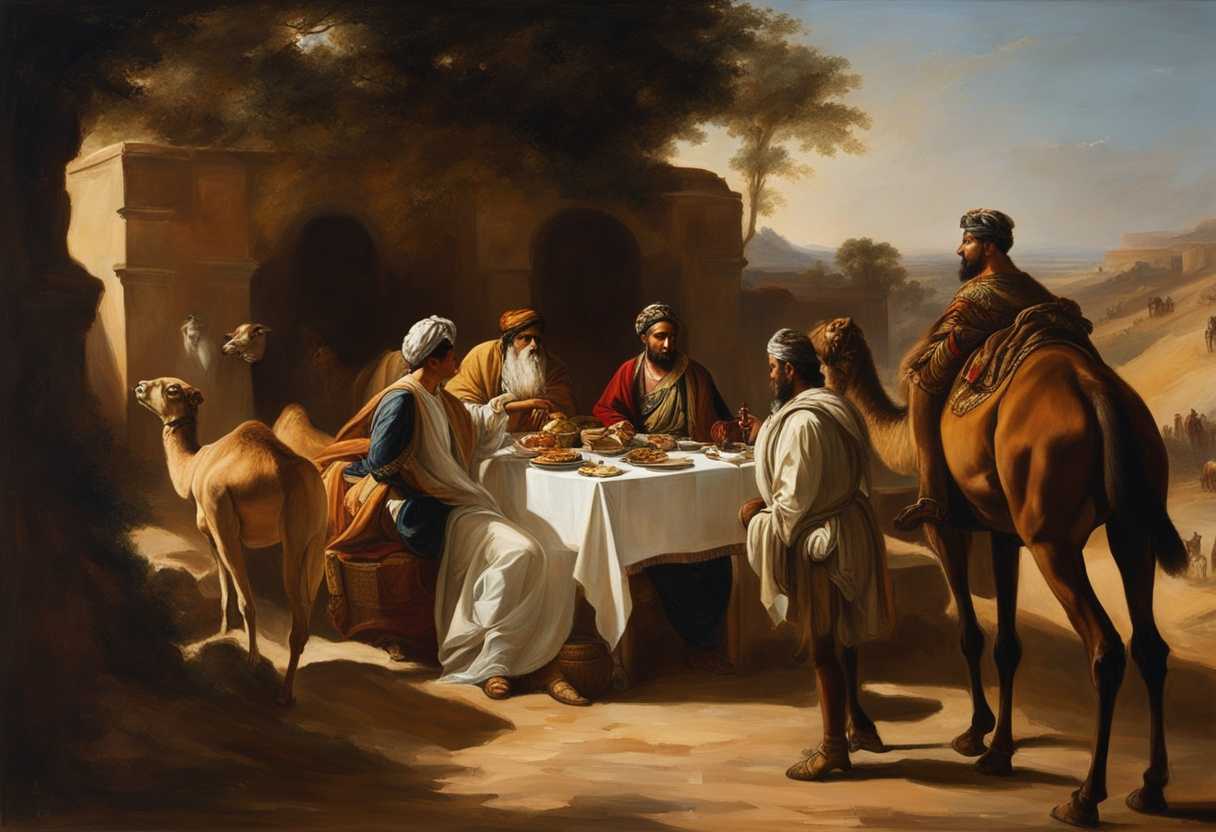
Setting the Scene for Genesis 37:25
In Genesis chapter 37, we find Joseph, the son of Jacob, in the midst of a significant event in his life. Joseph’s brothers, filled with jealousy and resentment towards him due to their father’s favoritism, have plotted to get rid of him. One day, as Joseph approaches them in the fields of Dothan, they seize the opportunity to carry out their plan. Reuben, the eldest brother, intervenes to save Joseph from being killed and suggests throwing him into a pit instead. So, they strip Joseph of his ornate robe, a symbol of his father’s love, and cast him into the empty cistern.
The scene is tense as Joseph finds himself at the mercy of his brothers’ betrayal. The surroundings are the vast fields of Dothan, with the sun beating down on the dry land. The brothers, including Reuben, Judah, Simeon, and Levi, stand around the pit, their faces clouded with mixed emotions of anger, envy, and perhaps a hint of guilt. Joseph, confused and frightened, looks up at his siblings, pleading for mercy and understanding, but his cries fall on deaf ears as they callously sit down to eat a meal, indifferent to his distress. This pivotal moment sets the stage for Joseph’s journey of trials and triumphs, ultimately leading to his rise to power in Egypt.
What is Genesis 37:25 about?
Isn’t it heartbreaking to think about Joseph being betrayed and sold into slavery by his own brothers? This verse from Genesis reminds us of the pain and betrayal that Joseph experienced at the hands of his own family. It is a powerful reminder of the destructive power of jealousy and the consequences of acting out of envy.
This story of Joseph being sold into slavery also serves as a reminder of the trials and challenges that individuals may face in their lives. It shows us that even in the face of betrayal and hardship, there is hope and redemption. Joseph’s story ultimately teaches us about forgiveness, resilience, and the importance of trusting in a higher purpose. It challenges us to reflect on our own actions and relationships, reminding us to treat others with kindness and to trust in the greater plan that may be unfolding in our lives.
Understanding what Genesis 37:25 really means
To provide a structured and thorough commentary on Genesis 37:25, we’ll follow a structured approach with the following sections: Contextual Background, Key Phrases and Their Meaning, Related Biblical Passages, Relevance Today, and Concluding Reflections.
Contextual Background
Genesis 37:25 falls within the narrative of Joseph, the favored son of Jacob, who was envied and betrayed by his brothers. This verse specifically describes a moment of callousness and disregard, as Joseph’s brothers sit down to eat after casting him into a pit. Understanding the context highlights the depth of their envy and the harshness of their actions. These events set the stage for Joseph’s eventual rise to power and the greater unfolding of God’s plan.
Key Phrases and Their Meaning
The phrase “they sat down to eat” is striking in its normalcy amidst treachery. It signifies the complete disregard Joseph’s brothers had for him, emphasizing their indifference to his suffering. The juxtaposition of their mundane action against the backdrop of their betrayal captures the depth of their moral descent.
Another critical phrase in this verse pertains to the Midianite traders. This introduction foreshadows significant developments in Joseph’s life and in the history of Israel. It begins the transition of Joseph from a pit to his eventual rise in Egypt, indicating that even in dark moments, the framework of God’s providential plan is being laid out.
Related Biblical Passages
Joseph’s story has parallels and connections throughout Scripture. One notable parallel is with Jesus, who was also betrayed by those close to Him. Judas agrees to betray Jesus for thirty pieces of silver in Matthew 26:14-16, reflecting the betrayal Joseph faced. Romans 8:28 reminds us that God works for the good of those who love him, who have been called according to his purpose.” This aligns perfectly with Joseph’s story, where apparent misfortune is woven into a greater divine plan.
Relevance Today
Today, the emotions and actions depicted in Genesis 37:25 are highly relevant. Many experience betrayal and hardship at the hands of those they trust. This verse challenges us to reflect on our own actions and attitudes. Are we sometimes indifferent to the suffering of others, consumed by our grievances or desires?
Reflecting on this can be transformative. I recall a time when a church member was wronged by a close friend. Their initial response was anger and a desire for retribution, but through prayer and reflection, they chose forgiveness. This decision not only brought peace but also restored the broken relationship, illustrating the power of facing betrayal with humility and grace.
Concluding Reflections
Genesis 37:25 is more than a narrative detail; it is a profound glimpse into human nature and divine providence. We reflect on Joseph’s betrayal, examining our own hearts and trusting in God’s overarching plan, even when our circumstances seem dire. This verse is a call to empathy, reflection, and an unwavering faith in divine justice. We are reminded that every action, no matter how small, plays a part in the grand tapestry of God’s plan as we understand and reflect on this seemingly simple moment in the lives of Joseph and his brothers. Thus, we are encouraged to live with integrity, compassion, and trust that God is at work in our lives, guiding us toward His purpose.
Do we recognize the presence of God in suffering?
Joseph’s brothers sell him into slavery out of jealousy in this verse, causing Joseph to experience immense suffering. While it may be challenging to immediately recognize the presence of God in such a distressing situation, we can find comfort in knowing that God is ultimately in control. This verse teaches us that even in times of great suffering or injustice, God’s plan is still at work.
The story of Joseph ultimately shows us how God can bring about good from even the most difficult circumstances. Through Joseph’s suffering, he was ultimately positioned to save his family and many others from a famine. This reminds us that God can use suffering as a means to accomplish His greater purposes, even when we cannot see it at the time.
Therefore, while it may be difficult to understand or accept the presence of God in times of suffering, this verse prompts us to trust in God’s sovereignty and believe that He can bring about beauty from our pain. We may not always understand why we are facing certain trials, but we can take comfort in knowing that God is always with us, working all things together for our good.
Application
Think of Genesis 37:25 as a message directly for you. In the daily grind of work and family, choose integrity and kindness, no matter how tough things get. Will you stand firm in doing what’s right, like Joseph’s brothers tried? Are you ready to lead with compassion and courage in your own life?

Reverend Michael Johnson is an experienced Church Minister with a profound expertise in spirituality and guidance. With a serene presence and a compassionate heart, he has faithfully served his congregation for over 20 years, leading them on a spiritual journey towards inner peace and enlightenment. Reverend Johnson’s extensive knowledge of religious philosophies and profound understanding of human nature have made him a trusted confidant and mentor to many, as he seamlessly weaves his profound wisdom into life teachings. Reverend Johnson’s calming demeanor and empathetic nature continue to uplift and heal souls, nurturing a sense of unity and tranquility within his community.