
23 So when Joseph came to his brothers, they stripped him of his robe, the robe of many colors that he wore.
24 and they took him and threw him into a pit. The pit was empty; there was no water in it.
25 Then they sat down to eat. And looking up they saw a caravan of Ishmaelites coming from Gilead, with their camels bearing gum, balm, and myrrh, on their way to carry it down to Egypt.
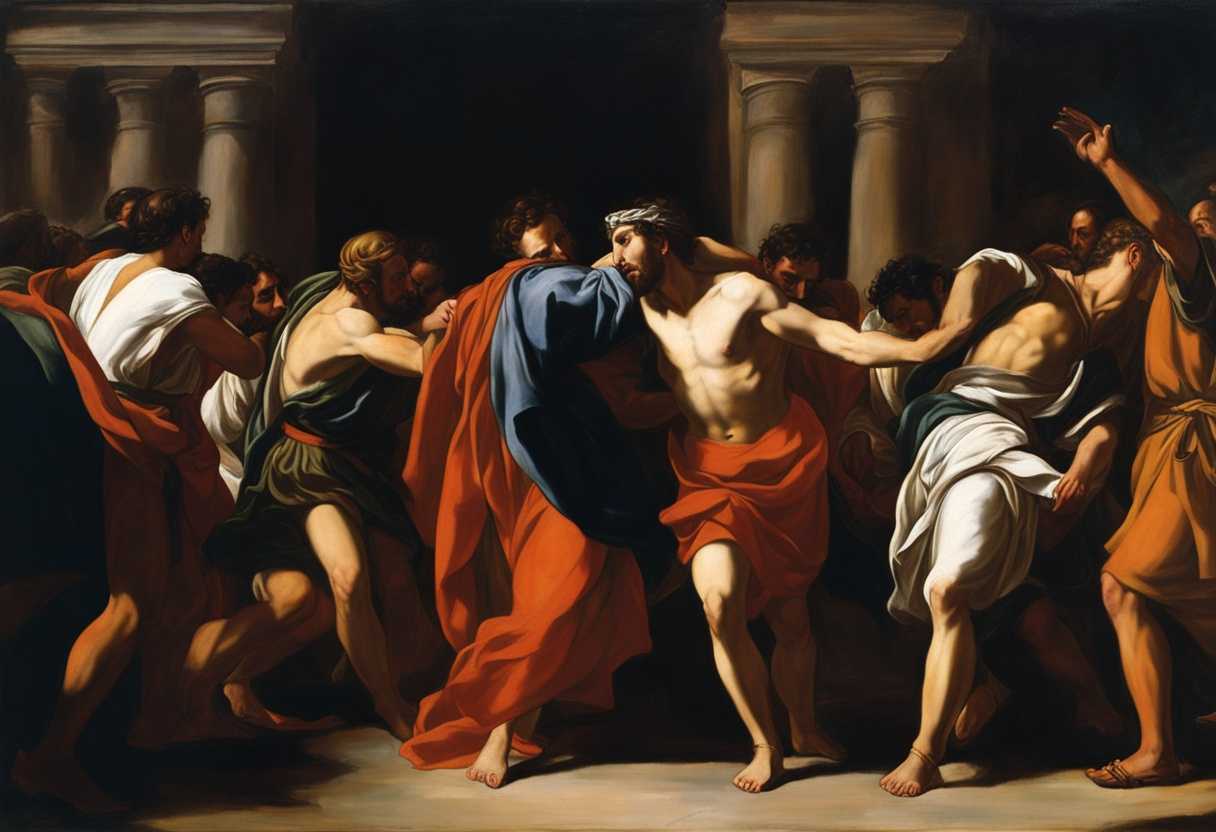
Setting the Scene for Genesis 37:23-25
In Genesis chapter 37, we find the scene where Joseph, the son of Jacob, is betrayed by his brothers. The setting is a vast field in Dothan, where Joseph’s brothers are tending to their father’s flocks. Joseph, known for his colorful coat given to him by his father, is sent by Jacob to check on his brothers’ well-being. As Joseph approaches, his brothers see him from a distance and conspire to kill him out of jealousy and resentment towards his favored status.
The brothers, including Reuben, Simeon, Levi, Judah, and the others, seize Joseph and strip him of his coat. They then throw him into a pit, intending to leave him there to die. However, Reuben, the eldest brother, secretly plans to rescue Joseph later. Meanwhile, as Joseph pleads with his brothers from the pit, they sit down nearby to eat a meal callously, indifferent to his distress. The surroundings are desolate, with the pit symbolizing the depths of betrayal and the isolation Joseph experiences at the hands of his own kin. This pivotal moment sets the stage for Joseph’s eventual journey from slavery to leadership in Egypt, showcasing themes of family dynamics, jealousy, and divine providence.
What is Genesis 37:23-25 about?
This verse from the Bible tells the story of Joseph, who was betrayed by his own brothers and sold into slavery. Imagine the pain and betrayal Joseph must have felt when his own family turned against him. Have you ever experienced a situation where someone you trusted let you down? Joseph’s story serves as a reminder that even in our darkest moments, there is hope and redemption. Despite the betrayal and hardship he faced, Joseph’s story ultimately leads to forgiveness and reconciliation with his brothers. This verse challenges us to reflect on the power of forgiveness and the importance of treating others with kindness and respect. How would you react in Joseph’s situation? Would you be able to find it in your heart to forgive those who wronged you? Joseph’s story teaches us the value of forgiveness and the strength that comes from overcoming adversity. Let us know that ultimately, love and forgiveness can conquer even the most difficult circumstances as we strive to emulate Joseph’s resilience and grace in the face of betrayal.
Understanding what Genesis 37:23-25 really means
Outline Structure for Commentary:
- Introduction: Context and Background
- Detailed Analysis of Key Phrases
- Cross-References with Other Biblical Passages
- Relevance to Modern Readers
- Anecdotal Illustration
- Conclusion: Reflective Questions and Takeaway
Commentary:
-
Introduction: Context and Background
Genesis 37:23-25 is situated within the broader narrative of Joseph, one of the twelve sons of Jacob. This passage marks a pivotal moment when Joseph’s brothers, driven by jealousy and resentment, decide to cast him into a pit and subsequently sell him into slavery. For understanding, it’s essential to realize the preceding verses detail Joseph’s favored status with his father and his dreams indicating future dominance over his family, fueling his brothers’ enmity. -
Detailed Analysis of Key Phrases
The passage vividly describes the moment Joseph’s brothers strip him of his “tunic,” a symbol of his father’s favoritism. This act signifies tearing away both his identity and his status. The term “throw him into the pit” conveys an initial plan of abandonment, a dehumanizing decision rooted in deep-seated envy. Perhaps most haunting is the image of the brothers sitting to “eat bread” afterward, illustrating a disturbing normalcy and callousness towards the gravity of their actions. -
Cross-References with Other Biblical Passages
This moment echoes earlier family strife in Genesis, such as Cain’s jealousy of Abel. It also prefigures the suffering but eventual elevation of many God-chosen individuals, like David fleeing Saul or even Jesus’ betrayal by Judas. Furthermore, Deuteronomy 23:7 warns against harboring hatred for one’s brother, a command violated in this narrative, indicating the timeless relevance of fraternal loyalty and forgiveness. -
Relevance to Modern Readers
The feelings of jealousy, betrayal, and the need for reconciliation are as real today as they were in ancient times. This passage speaks to the destructive power of unchecked envy and the moral imperative to act justly even when driven by negative emotions. It challenges modern readers to reflect on their relationships and the ways in which they either foster positivity and loyalty or allow resentment to corrode their bonds. -
Management sparks jealousy among peers by showing overt favoritism to a talented individual in a workplace scenario. The resentment builds until the team subtly ostracizes the person, impacting both work performance and emotional well-being. This mirrors Joseph’s plight, showing how envy can lead to harmful actions, whether deliberate or subconscious. The story beckons us to examine our reactions to perceived favoritism and encourages constructive dialogue over divisive actions.
-
Conclusion: Reflective Questions and Takeaway
These verses prompt us to ask: How do we handle jealousy in our lives? Are we fostering inclusive environments in our families, workplaces, and communities? Joseph’s story calls us to rise above envy, practice forgiveness, and strive for unity. Reflecting on our behavior can lead to growth and better relationships. Meditate on these verses as you consider how you might act differently when faced with similar situations. What steps can you take to cultivate peace and understanding in your circles today?
Why do some people choose to betray their own family?
Some people choose to betray their own family for various reasons, such as jealousy, resentment, or personal gain. Joseph’s brothers betray him by selling him into slavery out of jealousy and resentment towards him in the story of Genesis 37:23-25. They feel envious of their father’s favoritism towards Joseph, which leads them to betray him in order to get rid of what they see as a threat to their own status.
Betrayal within a family can also stem from deep-seated wounds or unresolved conflicts that have festered over time. Their betrayal may have been fueled by past hurts or feelings of being wronged, causing them to turn against their own blood in the case of Joseph’s brothers. This highlights how unresolved issues and emotional baggage can lead someone to betray their own family members.
Additionally, personal gain can be a motivator for betrayal within a family. His brothers saw an opportunity to profit from selling Joseph into slavery, which ultimately led them to betray him. This shows how selfish desires and a lack of empathy can drive someone to betray those closest to them in pursuit of their own interests.
Application
Think of Joseph’s story from Genesis 37:23-25: his betrayal and resilience mirror what we often face in work and family life. When everything seems to fall apart, like Joseph, we must hold on to our faith and trust there’s a bigger plan at work. Will you stand firm and believe, even when the path gets tough?

Reverend Michael Johnson is an experienced Church Minister with a profound expertise in spirituality and guidance. With a serene presence and a compassionate heart, he has faithfully served his congregation for over 20 years, leading them on a spiritual journey towards inner peace and enlightenment. Reverend Johnson’s extensive knowledge of religious philosophies and profound understanding of human nature have made him a trusted confidant and mentor to many, as he seamlessly weaves his profound wisdom into life teachings. Reverend Johnson’s calming demeanor and empathetic nature continue to uplift and heal souls, nurturing a sense of unity and tranquility within his community.