
28 Then Midianite traders passed by. And they drew Joseph up and lifted him out of the pit, and sold him to the Ishmaelites for twenty shekels of silver. They took Joseph to Egypt.
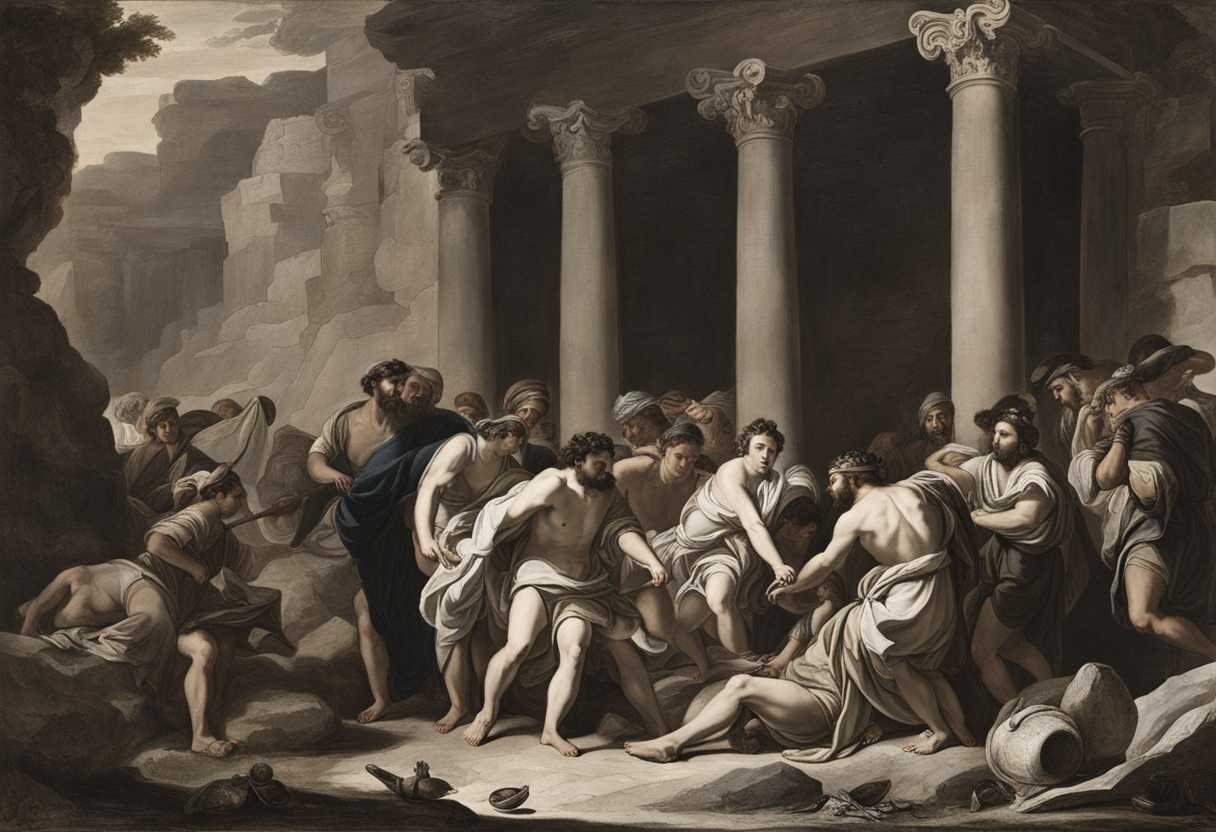
Setting the Scene for Genesis 37:28
In Genesis chapter 37, we find Joseph, the son of Jacob, in the midst of a significant event in his life. Joseph’s brothers, filled with jealousy and resentment towards him due to their father’s favoritism, have plotted against him. The scene unfolds in the fields of Dothan, where Joseph’s brothers are tending to their flocks. Joseph, unaware of their malicious intentions, is sent by his father to check on his brothers’ well-being.
As Joseph approaches his brothers in the vast fields of Dothan, the tension is palpable. The brothers see him from afar and conspire to seize him, eventually stripping him of his coat of many colors, a symbol of his father’s love. They then throw him into a pit, intending to harm him. The betrayal and cruelty of the brothers towards Joseph are starkly contrasted with the serene and open surroundings of the fields, creating a sense of foreboding and impending doom.
The betrayal and subsequent sale of Joseph into slavery by his own brothers in the fields of Dothan mark a pivotal moment in Joseph’s life, setting the stage for his eventual rise to power in Egypt. This scene serves as a powerful reminder of the consequences of jealousy and the importance of forgiveness and redemption in the biblical narrative.
What is Genesis 37:28 about?
The narrative of Joseph being sold into slavery by his own brothers in Genesis 37:28 paints a vivid picture of betrayal, hardship, and ultimately, redemption. Imagine the anguish Joseph must have felt as he was torn away from his family and everything familiar to him. How could such a cruel act be part of a greater plan? This verse reminds us that sometimes, life’s darkest moments are just the beginning of a journey towards something greater that we may not yet understand.
Just like Joseph’s story, our own lives may be filled with moments of struggle, injustice, and heartbreak. However, through faith and perseverance, we can trust that there is a larger plan at work, even when we cannot see it clearly. Joseph’s story serves as a powerful reminder that God can turn the most tragic of circumstances into something beautiful and redemptive. So, as we navigate our own trials and tribulations, let us hold onto the hope that just as Joseph eventually rose to greatness and reconciliation, there is a greater purpose waiting to unfold in our own lives.
Understanding what Genesis 37:28 really means
Structure for Commentary
- Context and Setting
- Detailed Phrase Analysis
- Cross-references in the Bible
- Relevance to Today’s Readers
- Personal Anecdote
- Reflective Questions
Context and Setting
Genesis 37:28 is a pivotal moment in the story of Joseph, the favored son of Jacob. Joseph’s brothers, filled with jealousy and resentment, decide to sell him into slavery rather than kill him. This action sets off a chain of events that will shape the future of the Israelites.
Understanding this verse in context requires recognizing the familial strife that led to this moment. Joseph had dreams that foretold his rise to prominence, dreams that did not sit well with his brothers. Their act of selling him reveals a critical lesson about the destructive power of jealousy and the sovereignty of God in using even our worst actions for a greater purpose.
Detailed Phrase Analysis
“They pulled Joseph up” – This phrase signifies a moment of both physical and emotional lifting. His brothers physically lift him from the cistern, but it also represents a shift in Joseph’s life from the familiar to the uncertain. The act of pulling him up is a prelude to his descent into suffering, but it is also the first step on his path to greatness.
“Sold him for twenty shekels of silver” – The act of selling Joseph for silver evokes powerful imagery. Silver, often used as a medium of betrayal and transactions, reminds us of Judas’ betrayal of Jesus for thirty pieces of silver. This raises questions about the value we place on human life and underscores contrasting human and divine valuations.
Cross-References in the Bible
The story of Joseph shares thematic elements with other biblical narratives. For instance, in Acts 7:9, Stephen recounts Joseph’s story, emphasizing God’s providence. Similarly, Romans 8:28 teaches us that in all things, God works for the good of those who love Him. These verses remind us that God’s purposes can transcend human malice.
Relevance to Today’s Readers
Today’s readers can find this verse profoundly relevant. We live in a world where betrayal and jealousy still exist. However, this verse encourages us to see beyond immediate suffering. It reassures us that God can redeem even the darkest moments for His greater glory and our ultimate good.
Personal Anecdote
I once knew a man who faced betrayal by a close friend in business. Though it was a devastating experience, he chose to trust in God’s plan. Over time, he found new opportunities and built a better, more ethical business. Like Joseph, his story reminds us that our darkest moments can be the starting points for incredible journeys, if we trust in God’s sovereignty.
Reflective Questions
- How do we handle betrayal in our own lives?
- Can we trust that God has a greater purpose, even when we face unfair or difficult circumstances?
- Are there moments when our actions, driven by negative emotions, have unintended consequences on others?
These questions invite us to reflect deeply on our relationships and our trust in God, encouraging growth and a more profound understanding of His work in our lives. Genesis 37:28 ultimately teaches us about resilience, redemption, and the unfathomable scope of God’s plans.
How do we handle jealousy and betrayal in relationships?
Jealousy and betrayal can be incredibly challenging issues to navigate in relationships. When jealousy arises, it’s important to communicate openly and honestly with your partner about your feelings and concerns. Seek to understand the root cause of the jealousy and work together to address any underlying issues in a constructive manner. Building trust and reassurance can help alleviate jealousy and strengthen the relationship. Assess the situation and the impact betrayal has had on the relationship in cases of betrayal. Betrayal can cause deep wounds that take time and effort to heal. It’s essential for both parties to have honest conversations about what happened, express feelings, and work towards rebuilding trust. Forgiveness may be a part of this process, but it’s important to remember that forgiveness does not mean forgetting or condoning the betrayal. Setting boundaries and practicing healthy communication are key to moving forward after experiencing betrayal in a relationship.
Application
Think of Joseph in Genesis 37:28, betrayed by his own brothers. Consider how you navigate your work and family life—are you lifting others up or pulling them down? Use this moment to choose kindness over jealousy, support over betrayal. Every day is a chance to change your story and the stories of those around you. What will your impact be today?

Reverend Michael Johnson is an experienced Church Minister with a profound expertise in spirituality and guidance. With a serene presence and a compassionate heart, he has faithfully served his congregation for over 20 years, leading them on a spiritual journey towards inner peace and enlightenment. Reverend Johnson’s extensive knowledge of religious philosophies and profound understanding of human nature have made him a trusted confidant and mentor to many, as he seamlessly weaves his profound wisdom into life teachings. Reverend Johnson’s calming demeanor and empathetic nature continue to uplift and heal souls, nurturing a sense of unity and tranquility within his community.