
1 Now the serpent was more crafty than any other beast of the field that the Lord God had made.
2 And the woman said to the serpent, “We may eat the fruit of the trees of the garden,
3 but God said, ‘You shall not eat of the fruit of the tree that is in the midst of the garden, neither shall you touch it, lest you die.’”
4 But the serpent said to the woman, “You will not surely die.
5 For God knows that when you eat of it your eyes will be opened, and you will be like God, knowing good and evil.
6 So when the woman saw that the tree was good for food, and that it was a delight to the eyes, and that the tree was to be desired to make one wise, she took of its fruit and ate, and she also gave some to her husband who was with her, and he ate.
7 Then the eyes of both were opened, and they knew that they were naked. And they sewed fig leaves together and made themselves loincloths.
8 And they heard the sound of the Lord God walking in the garden in the cool of the day, and the man and his wife hid themselves from the presence of the Lord God among the trees of the garden.
9 But the Lord God called to the man and said to him, “Where are you?”
10 And he said, “I heard the sound of you in the garden, and I was afraid, because I was naked, and I hid myself.”
3:11 He said, “Who told you that you were naked? Have you eaten of the tree of which I commanded you not to eat?”
12 The man said, “The woman whom you gave to be with me, she gave me fruit of the tree, and I ate.”
13 Then the Lord God said to the woman, “What is this that you have done?” The woman said, “The serpent deceived me, and I ate.”
14 The Lord God said to the serpent, “Because you have done this, cursed are you above all livestock and above all beasts of the field; on your belly you shall go, and dust you shall eat all the days of your life.
15 I will put enmity between you and the woman,
and between your offspring and her offspring;
he shall bruise your head,
and you shall bruise his heel.”
16 To the woman he said, “I will surely multiply your pain in childbearing; in pain you shall bring forth children. Your desire shall be contrary to your husband, but he shall rule over you.”
17 And to Adam he said, “Because you have listened to the voice of your wife and have eaten of the tree of which I commanded you, ‘You shall not eat of it,’ cursed is the ground because of you; in pain you shall eat of it all the days of your life;
18 thorns and thistles it shall bring forth for you; and you shall eat the plants of the field.
19 By the sweat of your face
you shall eat bread,
till you return to the ground,
for out of it you were taken;
for you are dust,
and to dust you shall return.”
20 The man called his wife’s name Eve, because she was the mother of all living.
21 And the Lord God made for Adam and for his wife garments of skins and clothed them.
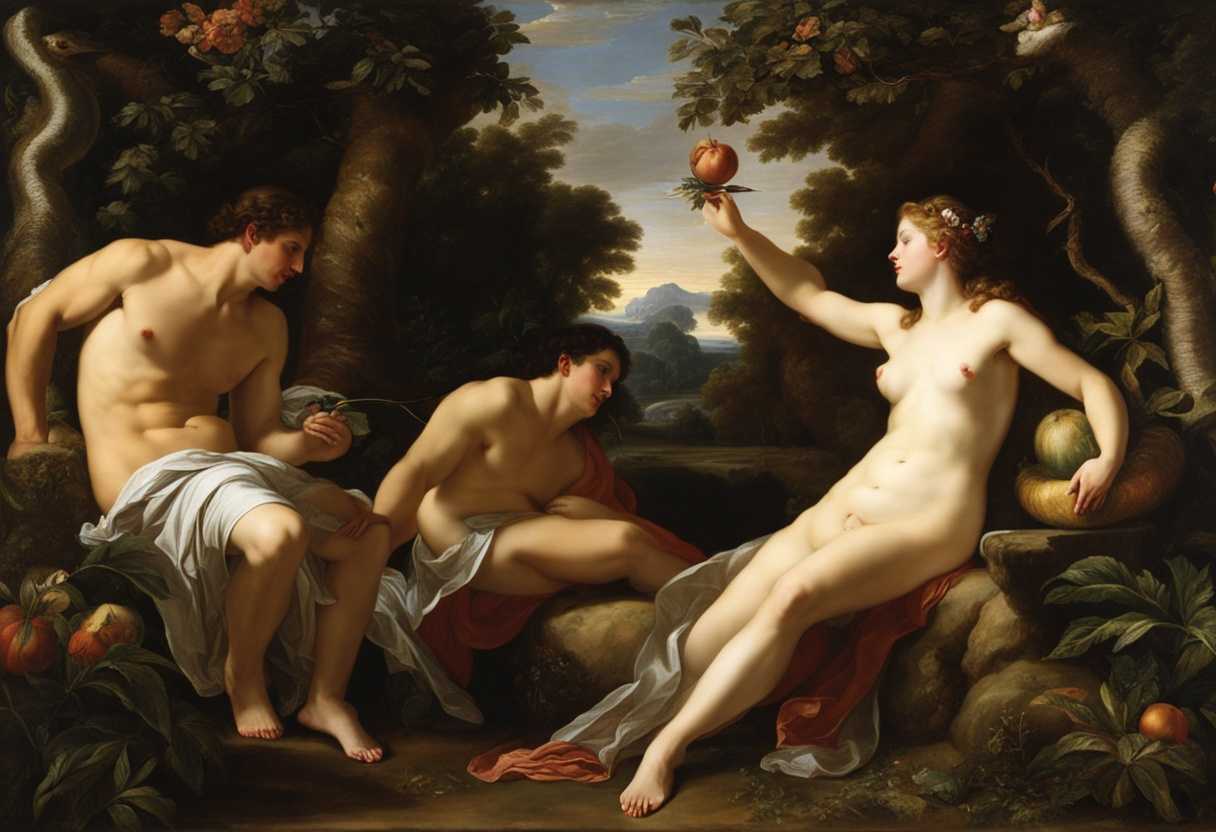
Setting the Scene for Genesis 3:1-21
In the Garden of Eden, a lush paradise filled with vibrant flora and fauna, we find Adam and Eve, the first man and woman created by God. The scene is serene and idyllic, with clear streams meandering through the verdant landscape and the sweet scent of blossoms lingering in the air. Adam and Eve, clothed in garments of light, walk hand in hand, their faces radiant with innocence and joy.
However, the tranquility of the garden is shattered when a cunning serpent, embodying the deceitful nature of evil, approaches Eve. The serpent, with its silver tongue, sows seeds of doubt in Eve’s mind, questioning God’s command not to eat from the tree of the knowledge of good and evil. Tempted by the promise of wisdom and insight, Eve plucks the forbidden fruit and takes a bite, offering it to Adam as well. In that fateful moment, sin enters the world, and the harmony of the garden is shattered.
As Adam and Eve realize their disobedience, shame and fear grip their hearts, and they hastily fashion crude coverings from fig leaves to hide their nakedness. The once-perfect relationship between humanity and God is fractured, and the consequences of their actions reverberate throughout history. The Garden of Eden, once a sanctuary of peace and communion with God, is now a place of sorrow and separation.
What is Genesis 3:1-21 about?
Ah, the story of Adam and Eve in the Garden of Eden – a tale as old as time yet filled with lessons that still resonate with us today. This verse speaks to the original sin committed by our ancestors, Adam and Eve, when they disobeyed God by eating the forbidden fruit from the Tree of Knowledge. Their act of rebellion not only led to their own expulsion from paradise but also brought sin and suffering into the world for all of humanity. This verse reminds us of the consequences of our actions and the power of free will as we reflect on it. Adam and Eve’s disobedience serves as a cautionary tale about the temptation to go against divine guidance and the importance of obedience to God’s will. It prompts us to consider the impact of our choices on our own lives and the world around us. What does their story teach us about the nature of humans and our tendency towards sin? How can we strive for obedience and righteousness in our own lives, despite the challenges and temptations we may face? We should ponder on these questions and seek guidance in our journey towards spiritual growth and redemption.
Understanding what Genesis 3:1-21 really means
Humanity encounters sin through the deception of the serpent in this pivotal event in the Bible found in Genesis 3:1-21. The narrative is not merely historical; it probes deeply into the human condition, revealing the universal struggle between obedience to divine commands and the temptation to assert independence.
The opening scenes depict the serpent, who is “more crafty than any of the wild animals the LORD God had made.” This emphasis on craftiness introduces the concept of deception as a primary tool used against humans to lead them astray. We observe how the serpent’s question, “Did God really say, ‘You must not eat from any tree in the garden’?” as we unpack this.” aims to sow doubt. This introduces a fundamental idea: sin often begins with questioning and twisting divine truth. How often do we, in moments of decision, distort or rationalize truth to fit our desires?
The reaction of Eve, and subsequently Adam, is equally instructive. Eve’s dialogue with the serpent leads to a reinterpretation of God’s command. This distortion of God’s word evolves into a direct challenge to God’s authority and goodness, suggesting that God’s command was a means of withholding something good from them. Here we see the heart of all disobedience: a distrust in God’s character and His plans for us. Reflect on your own life — have there been times when you believed that following your ways over God’s commands would lead to a better outcome?
The consequences of their actions are swift and severe: spiritual and physical alienation. Their eyes were opened, not to wisdom and god-like status as promised, but to their own vulnerability and guilt. The immediate feeling of shame and the attempt to hide from God highlight the alienation from the One who is the source of life and security. This mirrors our own experiences of guilt and shame when we stray from God’s path. Have you ever attempted to hide your failures rather than seeking reconciliation?
Interestingly, even in the midst of judgment, Genesis 3 offers a hint of redemption – a first glimpse at the divine rescue plan. The pronouncement of enmity between the serpent and the offspring of the woman alludes to the eventual coming of Jesus Christ, who would defeat sin and death on the cross. This protoevangelium, or first gospel, shows that even in our lowest moments, God’s plan for restoration through Christ is affirmed. Genesis 3:1-21 remains incredibly relevant in today’s context. It reflects the everyday human experience of temptation, the consequences of our choices, and God’s unwavering commitment to save us from ourselves. Through this passage, we are invited to examine our own lives, recognize our dependence on God, and rejoice in the grace offered to us through Jesus Christ. Where in your life might you be questioning God’s good commands? How can you more fully embrace His truth and His grace today? This section of Genesis encapsulates a profound truth about human weakness and divine redemption. It calls us to live in the light of God’s truth, guarding against deception, and trusting in His perfect plans for our lives.
How does sin corrupt relationships with God and others?
Sin corrupts relationships with God by creating a barrier between humans and God. Their sin of disobedience in the story of Adam and Eve in the Garden of Eden caused them to feel shame and hide from God. This separation from God is a consequence of their sin, as it breaks the intimacy and trust they once shared with Him. Sin disrupts the harmony and closeness that humans are meant to have with God, leading to feelings of guilt, fear, and alienation.
Sin also corrupts relationships with others by introducing conflict, jealousy, and selfishness. Their sin in the story of Adam and Eve affected not only their relationship with God but also with each other. They blamed each other for their wrongdoing, leading to a breakdown in their unity and harmony. Sin can cause division, betrayal, and hurt in relationships with others, as it distorts our ability to love, forgive, and show grace towards one another. When sin enters into relationships, it can lead to brokenness and dysfunction, as seen in the consequences of Adam and Eve’s sin in the Garden of Eden.
Application
Consider your life as a busy intersection where work, family, and personal goals constantly collide. Just as a traffic light guides motorists safely through the hustle and bustile, God’s words are meant to direct us toward safety and success. Reflecting on Genesis 3:1-21 is like pausing at a red light, giving us a moment to stop, look at our actions, and realign with God’s divine directions. Make today the day you choose to follow the roadmap laid out by faith, turning away from the shortcuts and risky paths of disobedience. Will you drive your life forward in alignment with His guidance, navigating the complexities of modern life with God as your compass?

Reverend Michael Johnson is an experienced Church Minister with a profound expertise in spirituality and guidance. With a serene presence and a compassionate heart, he has faithfully served his congregation for over 20 years, leading them on a spiritual journey towards inner peace and enlightenment. Reverend Johnson’s extensive knowledge of religious philosophies and profound understanding of human nature have made him a trusted confidant and mentor to many, as he seamlessly weaves his profound wisdom into life teachings. Reverend Johnson’s calming demeanor and empathetic nature continue to uplift and heal souls, nurturing a sense of unity and tranquility within his community.