
8 And they heard the sound of the Lord God walking in the garden in the cool of the day, and the man and his wife hid themselves from the presence of the Lord God among the trees of the garden.
9 But the Lord God called to the man and said to him, “Where are you?”
10 And he said, “I heard the sound of you in the garden, and I was afraid, because I was naked, and I hid myself.”
11 He said, “Who told you that you were naked? Have you eaten of the tree of which I commanded you not to eat?”
12 The man said, “The woman whom you gave to be with me, she gave me fruit of the tree, and I ate.”
13 Then the Lord God said to the woman, “What is this that you have done?” The woman said, “The serpent deceived me, and I ate.”
14 The Lord God said to the serpent, “Because you have done this, cursed are you above all livestock and above all beasts of the field; on your belly you shall go, and dust you shall eat all the days of your life.
15 I will put enmity between you and the woman, and between your offspring and her offspring; he shall bruise your head, and you shall bruise his heel.”
16 To the woman he said, “I will surely multiply your pain in childbearing; in pain you shall bring forth children. Your desire shall be contrary to your husband, but he shall rule over you.”
17 And to Adam he said, “Because you have listened to the voice of your wife and have eaten of the tree of which I commanded you, ‘You shall not eat of it,’ cursed is the ground because of you; in pain you shall eat of it all the days of your life;
18 thorns and thistles it shall bring forth for you;
and you shall eat the plants of the field.
19 By the sweat of your face
you shall eat bread,
till you return to the ground,
for out of it you were taken;
for you are dust,
and to dust you shall return.”
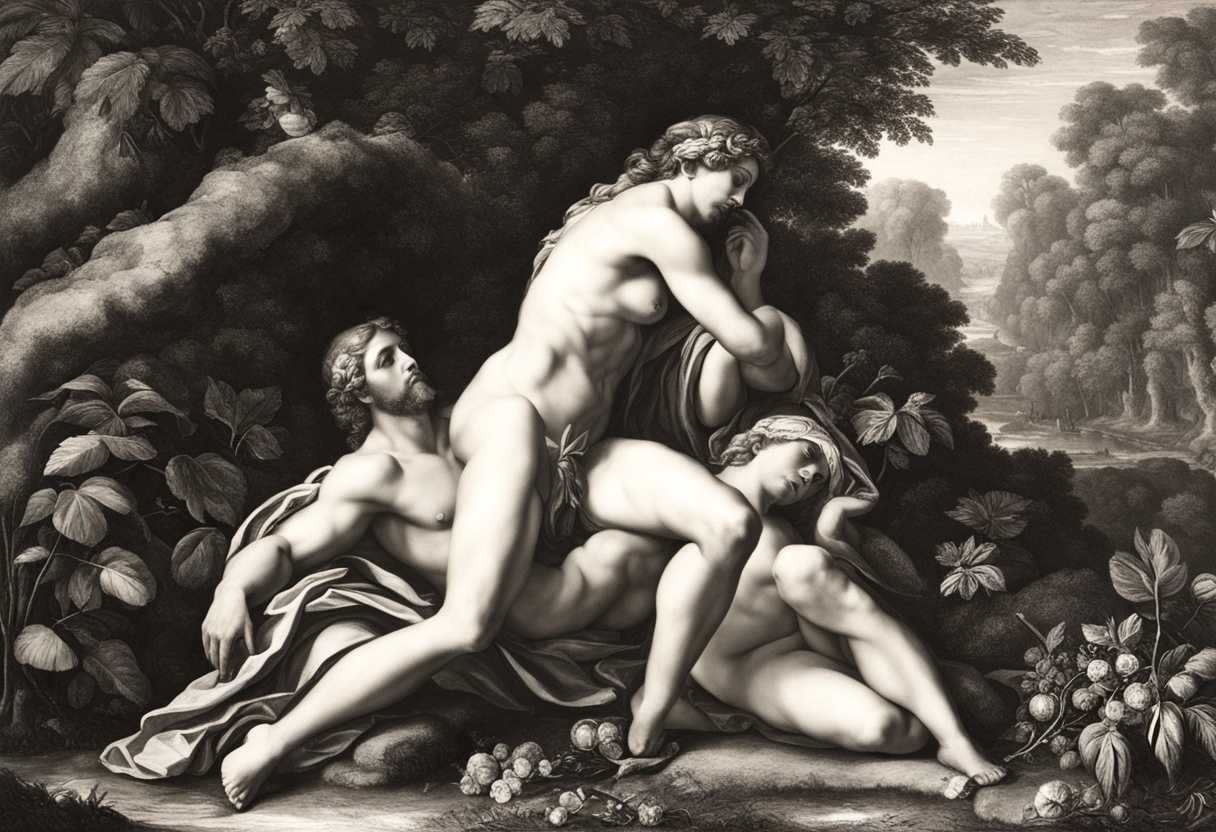
Setting the Scene for Genesis 3:8-19
In Genesis chapter 3, we find Adam and Eve in the Garden of Eden. The scene is set in a lush paradise, filled with vibrant colors and an abundance of plant life. The air is filled with the sweet fragrance of flowers, and the sound of birds chirping can be heard in the background. Adam and Eve, the first man and woman created by God, are walking through the garden, enjoying the beauty of their surroundings.
As they stroll through the garden, they hear the sound of the Lord God walking in the garden in the cool of the day. Startled by His presence, Adam and Eve hide among the trees, ashamed of their disobedience. God calls out to them, asking why they are hiding, knowing full well what they have done. Adam explains that they ate the forbidden fruit from the tree of knowledge of good and evil, which God had commanded them not to eat.
God then pronounces the consequences of their actions, foretelling the hardships they will face as a result of their disobedience. He tells Eve that she will experience pain in childbirth and that her desire will be for her husband. To Adam, God declares that the ground will be cursed because of him, and he will have to toil and sweat for his food. The scene in the Garden of Eden serves as a pivotal moment in the Bible, marking the beginning of sin and the fall of humanity.
What is Genesis 3:8-19 about?
Adam and Eve’s choice to disobey God’s command by eating from the Tree of Knowledge of Good and Evil is seen in this passage. Previously, they enjoyed a close and harmonious relationship with God in the Garden of Eden. However, their disobedience resulted in a rupture in that relationship. When they heard God walking in the garden, instead of joyfully greeting Him as before, they hid themselves out of shame and fear. This shows the immediate consequence of sin – separation from God and a sense of shame.
Furthermore, God pronounces specific consequences for Adam, Eve, and the serpent as a result of their actions. To Adam, He declares that the ground will be cursed because of him, and he will toil in labor for his sustenance. For Eve, pain in childbirth and a desire for her husband will be part of her experience. The serpent will crawl on its belly and eat dust all the days of its life. These consequences not only serve as punishment but also as a reminder of the weight of their actions and the impact of sin on themselves and the world. We are called to consider the implications of our own choices and the importance of obedience and trust in our relationship with God as we reflect on this passage. Have you ever considered the ripple effects of your actions on yourself and others? What steps can you take to cultivate obedience and trust in your relationship with God and others?
Understanding what Genesis 3:8-19 really means
Commentary Structure
- Introduction and Context
- Detailed Analysis of Key Phrases
- Cross-Referencing Other Bible Verses
- Relevance to Modern Day Life
- Anecdote and Conclusion
Introduction and Context
The passage from Genesis 3:8-19 is a pivotal moment in the Bible, marking the consequences of Adam and Eve’s disobedience to God’s commandment. This sequence of verses encapsulates the shift from innocence to the realization of sin and encompasses God’s judgment on the serpent, Eve, and Adam. Understanding these verses helps us grasp the foundations of human nature, sin, and divine justice.
Detailed Analysis of Key Phrases
One of the compelling lines begins with, “And they heard the sound of the Lord God walking in the garden in the cool of the day…” This imagery evokes an intimate relationship between humanity and God, showcasing a loss of that closeness due to disobedience. Subsequently, Adam and Eve’s hiding reveals the shame and fear that follows sin, a direct consequence of their actions.
Another significant section is God’s declaration to the serpent, “I will put enmity between you and the woman, and between your offspring and her offspring.” This introduces the concept of ongoing conflict and foreshadows the ultimate victory of Jesus Christ over sin, pointing to the messianic hope seen throughout the Bible.
Cross-Referencing Other Bible Verses
Other verses such as Romans 5:12 illuminate this passage by explaining how sin entered the world through one man, Adam. Additionally, Revelation 12:9 identifies the serpent as Satan, tying it back to Genesis and showing the continuity of God’s plan across the scriptures. Jesus echoes the declaration to Eve, “In pain you shall bring forth children,” in John 16:21, using the metaphor of childbirth to illustrate the pains and subsequent joys of the coming new covenant.
Relevance to Modern Day Life
The relevance of this passage today cannot be overstated. We all face moral decisions, and understanding the consequences of sin can guide us in striving for obedience to God’s word. Additionally, it highlights the importance of accountability and the reality of divine justice. We grapple with the same feelings of shame and fear when we stray from what we know to be right in modern times. Just as Adam and Eve tried to hide, we often attempt to cover our wrongdoings. Yet, this passage reminds us that God sees all and seeks us out, not to condemn, but to offer redemption. The parent lovingly corrects the child who steals and then hides from them. This parallels our relationship with God. We may try to hide our sins, but God seeks us with the intention of restoring that broken fellowship. Genesis 3:8-19 teaches us about the severance of harmony due to sin, the comprehensive scope of God’s justice, and the initial promise of redemption. Engaging with this passage encourages us to reflect on our actions, embrace accountability, and find solace in the redeeming love of God. How might this understanding change the way you view your daily choices and relationship with God?
How does shame impact our relationship with God?
Shame impacts our relationship with God by causing us to hide from Him, just as Adam and Eve did in the Garden of Eden. When we feel ashamed of our actions or our sins, we may try to avoid God because we fear his judgment or rejection. This separation created by shame hinders our ability to fully experience the love and grace that God offers us.
Furthermore, shame can lead to a distorted view of God, making us believe that He is a harsh judge instead of a loving father. This misconception can prevent us from seeking forgiveness and restoration in our relationship with Him. We may feel unworthy of God’s mercy and forgiveness, causing us to distance ourselves from Him even more. Shame can ultimately act as a barrier that inhibits our connection with God and prevents us from fully embracing His unconditional love and acceptance.
Application
Think of life as a project deadline at work or a commitment to your family. Ignoring God’s guidance is like missing those deadlines or breaking those promises—it has serious repercussions. Genesis 3:8-19 reminds us that disobedience carries heavy consequences. Stay alert and question deceit, just as you’d double-check an important message. Choose to live by God’s principles, seek forgiveness, and find the strength in Christ. Will you stay the course and commit to a life of obedience and integrity?

Reverend Michael Johnson is an experienced Church Minister with a profound expertise in spirituality and guidance. With a serene presence and a compassionate heart, he has faithfully served his congregation for over 20 years, leading them on a spiritual journey towards inner peace and enlightenment. Reverend Johnson’s extensive knowledge of religious philosophies and profound understanding of human nature have made him a trusted confidant and mentor to many, as he seamlessly weaves his profound wisdom into life teachings. Reverend Johnson’s calming demeanor and empathetic nature continue to uplift and heal souls, nurturing a sense of unity and tranquility within his community.