
Genesis 42:9, 13 is about Joseph recognizing his brothers who had sold him into slavery, testing their integrity and repentance, and ultimately showing forgiveness and grace, portraying themes of reconciliation, redemption, and the mysterious ways in which God works for good even in the midst of betrayal and hardship.
9 And Joseph remembered the dreams that he had dreamed of them. And he said to them, “You are spies; you have come to see the nakedness of the land.”
13 They said, “We, your servants, are twelve brothers, the sons of one man in the land of Canaan, and behold, the youngest is this day with our father, and one is no more.”
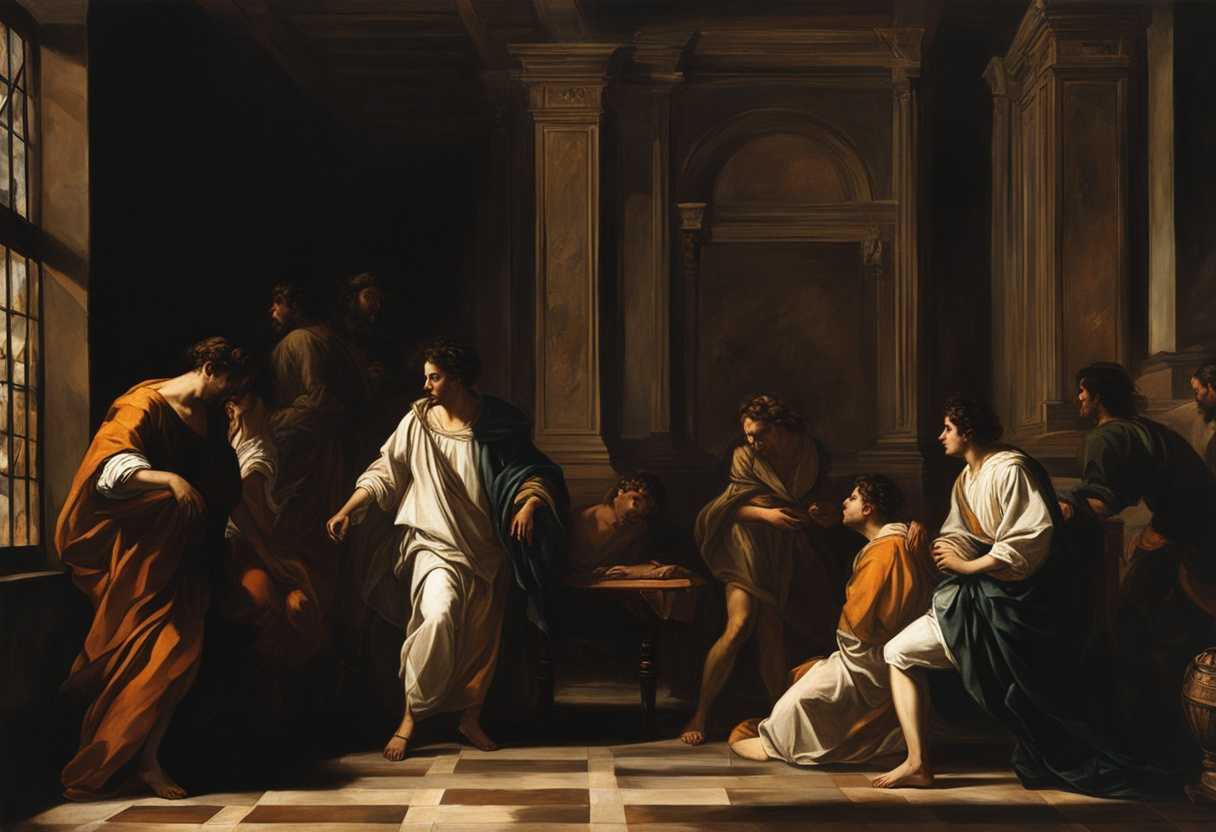
Setting the Scene for Genesis 42:9, 13
In the scene described in Genesis 42:9 and 13, we find Joseph, the beloved son of Jacob, who had been sold into slavery by his jealous brothers and taken to Egypt. Years later, Joseph rises to a position of power in Egypt, second only to Pharaoh, due to his ability to interpret dreams. Famine strikes the land, and Joseph’s brothers travel to Egypt in search of food, not knowing that they would come face to face with the brother they had betrayed and sold into slavery.
The setting is a bustling marketplace in Egypt, filled with merchants selling goods and people from various lands seeking provisions. Joseph, now a powerful ruler in Egypt, oversees the distribution of grain to the famine-stricken people. As his brothers approach him, they do not recognize Joseph, but he immediately recognizes them. There is tension in the air as Joseph grapples with the emotions of seeing his brothers again after so many years. The brothers, unaware of Joseph’s true identity, bow before him, fulfilling the dreams Joseph had shared with them in their youth. This poignant moment sets the stage for a powerful reunion and a test of forgiveness and reconciliation.
What is Genesis 42:9, 13 about?
Isn’t it amazing how things can come full circle in life? We see a powerful example of this concept in this verse from Genesis. Joseph’s brothers, who had once betrayed him and sold him into slavery, unknowingly find themselves bowing before Joseph in Egypt. This act unknowingly fulfills the dreams Joseph had shared with his brothers years earlier, where they would bow before him.
This verse is a powerful reminder of the idea that our actions and choices have consequences, whether we realize it or not. It shows how God’s plan can unfold in unexpected ways and how our past actions can come back to affect us in the future. It also teaches us the importance of forgiveness and redemption, as Joseph ultimately chooses to forgive his brothers and reconcile with them despite the pain they had caused him. Let us remember the importance of treating others with kindness and forgiveness as we reflect on this verse, as our actions today might shape our tomorrow. We should also trust in God’s plan for our lives, even when things seem uncertain or difficult, knowing that He is always working behind the scenes to bring about His perfect will.
Understanding what Genesis 42:9, 13 really means
In Genesis 42:9 and 13, we delve into the intricate narrative of Joseph, a man whose life was marked by betrayal, resilience, and divine providence. These verses unfold a poignant moment when Joseph’s brothers, unknowingly standing before the very brother they had once sold into slavery, find themselves entangled in a web of divine orchestration. “Joseph remembered the dreams he had about them,” a powerful statement that not only signifies the fulfillment of God’s plan but also serves as a testament to the intricate tapestry of God’s providence woven through Joseph’s life. His prophetic dreams from Genesis 37:5-11, where he envisioned his brothers bowing down to him, now come to fruition in a remarkable display of God’s sovereignty.
As Joseph’s brothers protest, “We are honest men, we are not spies,” the irony of their words reverberates through the narrative. Their past deceit in selling Joseph into slavery contrasts sharply with their current plea, shedding light on their desperation and the transformative journey they have embarked upon. This juxtaposition serves as a poignant reminder of the complexities of human nature and the redemptive power of God’s grace.
The interconnectedness of biblical passages such as Genesis 37:5-11, Romans 8:28, and Matthew 5:44 further illuminates the overarching themes of divine providence, redemption, and forgiveness woven throughout Joseph’s story. Joseph’s unwavering faith in God’s plan, mirrored in Romans 8:28, underscores the belief that even in the midst of trials, God works for the good of those who trust in Him. Moreover, Joseph’s eventual forgiveness of his brothers echoes the profound teaching of Jesus in Matthew 5:44, emphasizing the transformative power of love and forgiveness in the face of betrayal and adversity.
The timeless relevance of Joseph’s narrative resonates deeply with individuals navigating betrayal, hardship, and injustice in today’s world. His story serves as a beacon of hope, urging us to trust in God’s unfailing providence and to believe that even the darkest moments can be transformed into avenues of growth and redemption. Just as Joseph’s suffering paved the way for his eventual exaltation and reconciliation with his brothers, so too can our trials lead to unexpected blessings and opportunities for healing and restoration.
Consider the anecdote of a man wrongfully imprisoned, who, like Joseph, found solace in faith and used his ordeal to bring light into the lives of others. His journey of forgiveness and redemption mirrors Joseph’s own path, illustrating how God can use even the most unjust circumstances for a greater purpose. Through Joseph’s story and the lives of those who embody his spirit of resilience and forgiveness, we are reminded that God’s plans, though mysterious, are always infused with grace and mercy.
In conclusion, Genesis 42:9 and 13, within the broader narrative of Joseph, beckon us to ponder the intricate workings of God’s providence in our lives. As we navigate our own trials and tribulations, may we draw strength from Joseph’s unwavering faith, resilience, and capacity for forgiveness, trusting that God is ever-present, guiding us towards a future filled with hope and redemption.
How can we show true repentance and forgiveness?
One way we can show true repentance is by acknowledging our mistakes and taking responsibility for them. This involves admitting to our wrongdoings without making excuses or deflecting blame. True repentance also involves showing genuine remorse for the harm we have caused others and being willing to make amends to the best of our ability.
On the other hand, to truly forgive someone means letting go of feelings of anger and resentment towards them. It involves making a conscious decision to release the offender from their debt and choosing to no longer hold their actions against them. True forgiveness also entails moving forward without seeking revenge or harboring grudges, and instead, striving to cultivate a spirit of compassion and understanding towards the person who wronged us.
Application
Just like Joseph showed compassion to his brothers, let’s look within and find our own capacity for forgiveness and love. It’s time to break free from grudges and revenge, and instead, embrace grace and mercy. Let’s take a step towards healing old wounds and building stronger relationships. How can you extend forgiveness to someone in your life today?

Reverend Michael Johnson is an experienced Church Minister with a profound expertise in spirituality and guidance. With a serene presence and a compassionate heart, he has faithfully served his congregation for over 20 years, leading them on a spiritual journey towards inner peace and enlightenment. Reverend Johnson’s extensive knowledge of religious philosophies and profound understanding of human nature have made him a trusted confidant and mentor to many, as he seamlessly weaves his profound wisdom into life teachings. Reverend Johnson’s calming demeanor and empathetic nature continue to uplift and heal souls, nurturing a sense of unity and tranquility within his community.