
Genesis 43:11-14 is about Joseph testing his brothers by instructing them to bring back their youngest brother Benjamin in order to prove their honesty and sincerity.
11 Then their father Israel said to them, “If it must be so, then do this: take some of the choice fruits of the land in your bags, and carry a present down to the man, a little balm and a little honey, gum, myrrh, pistachio nuts, and almonds.”
12 Take double the money with you. Carry back with you the money that was returned in the mouth of your sacks. Perhaps it was an oversight.
13 Take also your brother, and arise, go again to the man.
14 May God Almighty grant you mercy before the man, and may he send back your other brother and Benjamin. And as for me, if I am bereaved of my children, I am bereaved.”
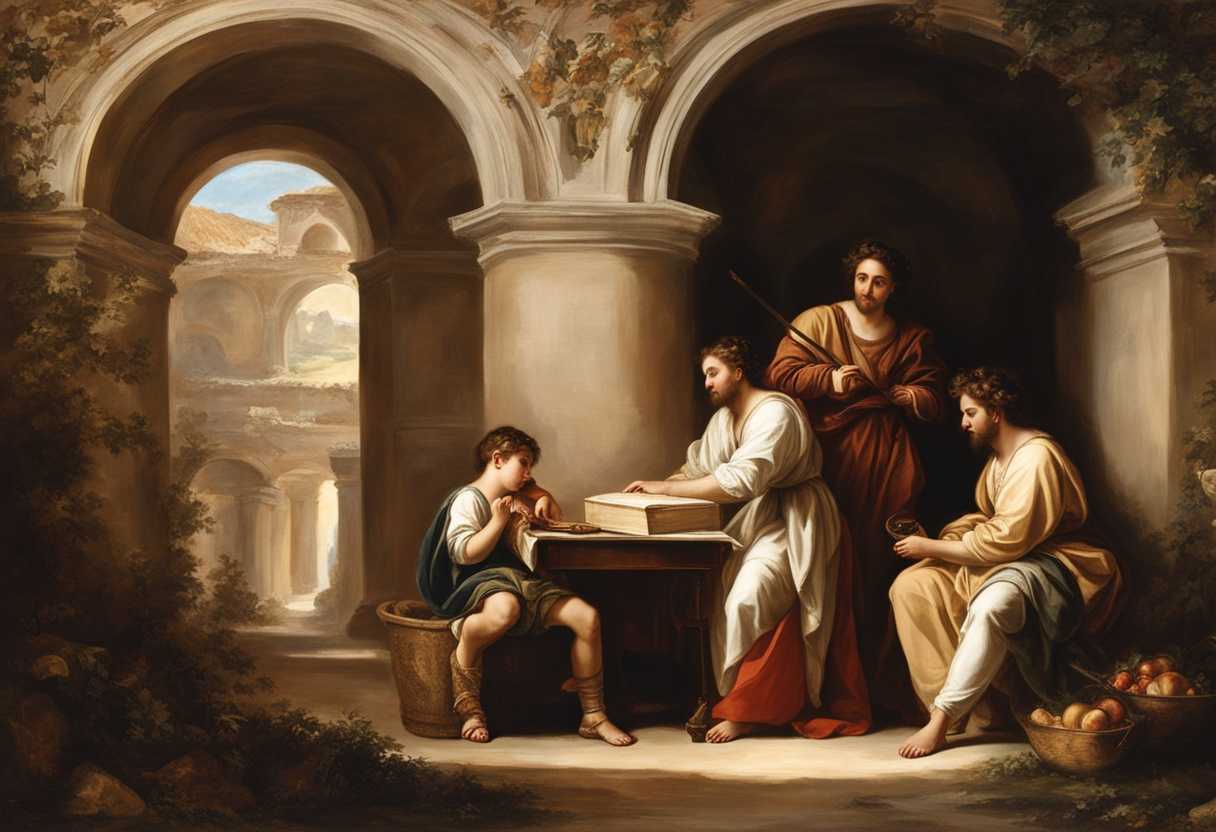
Setting the Scene for Genesis 43:11-14
In the scene described in Genesis 43:11-14, we find Joseph, the powerful ruler of Egypt, sitting in his grand palace surrounded by his attendants. His brothers from Canaan, including Benjamin, have just arrived in Egypt to buy grain during the severe famine that has struck the region. Joseph’s brothers do not recognize him, as he has risen to a position of authority since they sold him into slavery many years ago.
As Joseph sees his brothers before him, he is filled with a mix of emotions – longing to reveal his true identity to them, but also wanting to test their character and see if they have truly changed. He instructs his steward to prepare a feast for his brothers and to bring them to his house. Joseph’s heart is heavy with the memories of the past, but he knows that this encounter is a crucial step in the fulfillment of God’s plan.
The opulence of Joseph’s palace contrasts sharply with the humble origins of his brothers, creating a tense and dramatic atmosphere as they are brought before him. The surroundings are richly adorned with Egyptian decor, reflecting Joseph’s status and power in the land. As the brothers sit down to eat with Joseph, unaware of the twists and turns that await them, the stage is set for a pivotal moment in their family’s history.
What is Genesis 43:11-14 about?
Jacob, also known as Israel, sends his sons to Egypt to buy food during a famine in this verse. This act demonstrates Jacob’s deep love and concern for his family’s well-being. Despite the risks and uncertainties involved in sending his sons on such a journey, Jacob takes the necessary step to ensure that his family is cared for during a time of desperation. We can appreciate the significance of family bonds and the lengths to which one might go to protect and provide for their loved ones as we reflect on this verse. Jacob’s actions serve as a powerful reminder of the importance of selflessness and sacrifice in times of crisis. Through his decision to send his sons to Egypt, Jacob embodies the qualities of a caring and responsible leader who prioritizes the welfare of his family above all else. Jacob displays courage and trust by entrusting his sons with such a crucial task. How does this act of sending his sons to Egypt speak to the values of responsibility and familial love? Reflect on the challenges and sacrifices involved in ensuring the well-being of our loved ones during difficult times. Jacob’s example of putting family first and facing adversity with strength and determination can inspire us as we ponder his actions.
Understanding what Genesis 43:11-14 really means
In the narrative of Joseph and his brothers, we find a poignant moment where Jacob, their father, imparts instructions as they prepare to return to Egypt for more grain. The backdrop of famine sets the stage for a journey fraught with uncertainty and danger. Jacob’s deep concern for his sons, particularly Benjamin, reveals a father’s love and anxiety as they unknowingly face their powerful brother, Joseph, in Egypt.
Jacob’s directive to “Take some of the best products of the land in your bags” underscores the significance of offering our finest possessions as a gesture of respect and goodwill. This cultural practice of presenting gifts to seek favor resonates with the idea of honoring others with our best. It prompts us to reflect on how we approach relationships and interactions, emphasizing the value of giving our utmost in all endeavors.
The plea, “May God Almighty grant you mercy before the man,” showcases Jacob’s reliance on divine intervention. By invoking God’s mercy, Jacob acknowledges the sovereignty of God and the efficacy of prayer. This expression of faith serves as a reminder of the power of seeking God’s favor and guidance in times of need.
In the face of potential loss and adversity, Jacob’s poignant declaration, “If I am bereaved, I am bereaved,” reveals a profound trust in God’s plan. It exemplifies a surrender to God’s will, accepting that outcomes are ultimately in His hands. This unwavering faith in the midst of uncertainty challenges us to embrace a similar attitude of submission to God’s providence in our own lives.
Drawing parallels from related biblical passages such as Proverbs 3:5-6 and Romans 8:28, we are encouraged to trust in the Lord wholeheartedly and believe that His plans are for our good. These verses echo Jacob’s reliance on God’s mercy and underscore the assurance that God works all things for the benefit of those who love Him.
In our contemporary context, where uncertainties abound and challenges loom large, Jacob’s story resonates with themes of trust, offering our best, and accepting God’s will. Just as Jacob faced the unknown with faith, we are called to trust in God’s mercy and providence, recognizing that His plans, though mysterious, are ultimately for our well-being. Jacob’s narrative serves as a timeless reminder of the importance of faith, surrender, and reliance on God in navigating life’s uncertainties.
How can we approach hardships with faith and trust?
When faced with hardships, we can approach them with faith and trust by believing in the plan that God has for us. We can trust that God has a purpose for our struggles and that there is a lesson to be learned from them, just as Joseph’s brothers were told to bring Benjamin back to Egypt to prove their honesty. We can navigate through difficult times with a sense of peace and trust in God’s guidance by placing our faith in Him and His plan for our lives.
Additionally, we can find solace in the fact that God is always with us, even in our darkest moments. Like Joseph assured his brothers that God had shown him favor, we can trust that God is watching over us and will provide us with the strength and resilience to overcome the challenges we face. We can find comfort and reassurance that God will see us through any hardship that comes our way by turning to Him in times of need and placing our trust in Him.
Application
Just as Jacob’s sons embarked on their journey with courage, we too must navigate life’s challenges with faith and trust in God’s guidance. Let’s follow their example and step into the unknown with boldness and obedience. God is paving the way, clearing obstacles in our modern-day journey just as he did for them. Will you seize the opportunity to walk in faith and obedience, trusting in the divine path set before you?

Reverend Michael Johnson is an experienced Church Minister with a profound expertise in spirituality and guidance. With a serene presence and a compassionate heart, he has faithfully served his congregation for over 20 years, leading them on a spiritual journey towards inner peace and enlightenment. Reverend Johnson’s extensive knowledge of religious philosophies and profound understanding of human nature have made him a trusted confidant and mentor to many, as he seamlessly weaves his profound wisdom into life teachings. Reverend Johnson’s calming demeanor and empathetic nature continue to uplift and heal souls, nurturing a sense of unity and tranquility within his community.