
Genesis 43:26-31 is about the profound emotions of love and reconciliation felt by Joseph upon being reunited with his brothers, symbolizing forgiveness, healing, and the restoration of family bonds after a period of estrangement and hardship.
26 When Joseph came home, they brought into the house to him the present that they had with them and bowed down to him to the ground.
27 And he inquired about their welfare and said, “Is your father well, the old man of whom you spoke? Is he still alive?”
28 They said, “Your servant our father is well; he is still alive.” And they bowed their heads and prostrated themselves.
29 And he lifted up his eyes and saw his brother Benjamin, his mother’s son, and said, “Is this your youngest brother, of whom you spoke to me? God be gracious to you, my son!”
30 Then Joseph hurried out, for his compassion grew warm for his brother, and he sought a place to weep. And he entered his chamber and wept there.
31 Then he washed his face and came out. And controlling himself he said, “Serve the food.”
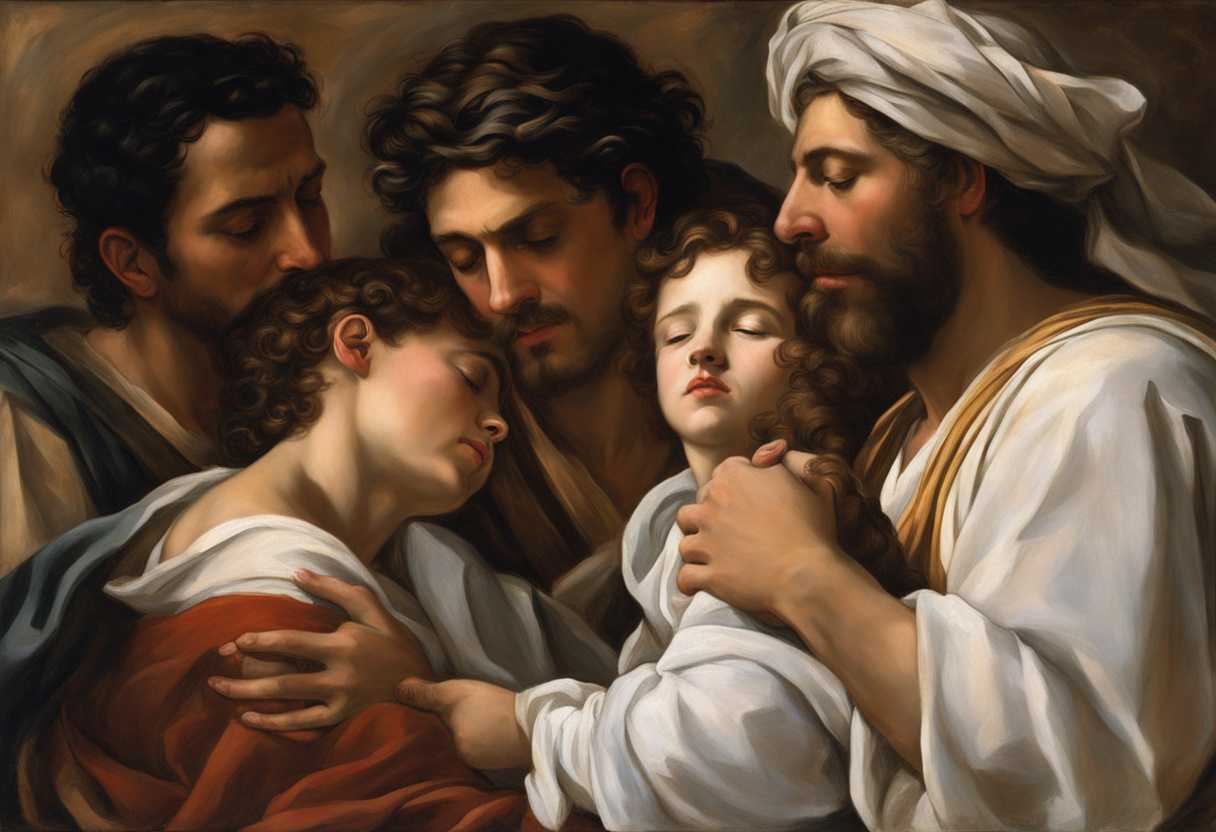
Setting the Scene for Genesis 43:26-31
In Genesis 43:26-31, we find ourselves in the grand hall of the Egyptian governor’s palace. The room is adorned with intricate tapestries, golden candelabras casting a warm glow, and the faint scent of exotic spices lingering in the air. Seated at the head of a long, ornate table is the powerful Egyptian governor, known to his brothers as the stern ruler who holds their fate in his hands. This governor is none other than Joseph, the long-lost brother they had betrayed and sold into slavery many years ago.
Surrounding Joseph are his bewildered and anxious brothers, who have traveled from Canaan to Egypt to buy grain during a severe famine. Little do they know that the governor they are now facing is their own flesh and blood. As the brothers present gifts from their father, Jacob, to the governor, Joseph is overcome with emotion at the sight of his youngest brother, Benjamin, whom he had not seen since their childhood. Unable to contain his feelings any longer, Joseph excuses himself from the table, overcome with tears of joy and longing for his family.
As Joseph composes himself and returns to the table, he orders his servants to serve the meal. The brothers are seated according to their birth order, a detail that surprises them and leaves them wondering how the governor could know such intimate details about their family. Little do they realize that this seemingly mysterious governor is orchestrating a plan to test their character and ultimately reveal his true identity to them.
What is Genesis 43:26-31 about?
This verse signifies the ultimate fulfillment of Joseph’s prophetic dream where his brothers bow before him. It showcases the journey of Joseph from being betrayed by his brothers, sold into slavery, and eventually rising to power in Egypt. This moment captures the theme of forgiveness, reconciliation, and divine providence in the face of adversity.
Through this verse, we see the importance of staying steadfast in one’s faith and trusting in the higher plan that is at work even in the darkest of times. It teaches us about the power of forgiveness and how it can lead to reconciliation and a brighter future. Educators, never lose hope or faith in the face of challenges, as things may unfold in ways we least expect, leading to a greater purpose.
Reflecting on this verse, we can ask ourselves: How can we embody Joseph’s resilience and forgiveness in our own lives? How can we trust in a higher plan during times of difficulty? How can we learn from Joseph’s journey to find strength and hope in the face of adversity? Let this verse inspire us to persevere, forgive, and trust that even in our toughest moments, there may be a greater purpose at play.
Understanding what Genesis 43:26-31 really means
In the narrative of Joseph and his brothers, we witness a poignant moment where Joseph, now a prominent figure in Egypt, encounters his brothers who are unaware of his true identity. The brothers, seeking grain during a famine, bow before Joseph, unknowingly fulfilling the dreams he had shared with them years ago. This act of submission symbolizes respect and sets the stage for a series of emotional revelations.
As Joseph inquires about his father Jacob, showing genuine concern despite years of separation and betrayal, we glimpse the depth of his enduring love for his family. However, it is his reaction upon seeing his brother Benjamin that truly unveils the complexity of his emotions. Overwhelmed by the sight of Benjamin, Joseph is moved to tears, revealing his vulnerability and the lingering pain from his past.
The parallels with other biblical passages, such as Joseph’s dreams in Genesis 37:7-9 and his eventual reconciliation with his brothers in Genesis 45:1-3, emphasize the themes of forgiveness and familial bonds. The emotional response of the father in the parable of the Prodigal Son in Luke 15:20 mirrors Joseph’s reaction, underscoring the universal significance of these themes.
In today’s world, where family conflicts and estrangements are all too common, Joseph’s story offers a beacon of hope. It serves as a reminder that reconciliation is possible, even after profound hurt and betrayal. Imagine a family long divided by misunderstandings and past wounds, brought together by a momentous occasion. The flood of emotions that ensues echoes Joseph’s experience, signaling a path towards healing and unity.
This passage prompts introspection among readers, urging them to assess their own relationships and consider where forgiveness and reconciliation may be necessary. It underscores the enduring importance of emotional and familial connections, regardless of one’s position or achievements. Joseph’s narrative encapsulates the timeless lessons of forgiveness, reconciliation, and the intricate dynamics of human relationships, challenging us to transcend grievances and pursue healing and unity.
How can we show genuine selflessness in helping others?
We can demonstrate genuine selflessness in helping others by putting the needs and well-being of others above our own desires and interests. This means being willing to make sacrifices, whether big or small, for the benefit of those around us without expecting anything in return. When we help others from a place of pure selflessness, it is a true act of compassion and kindness that comes from a place of sincere care and concern for the other person’s welfare.
This verse serves as a reminder to us that genuine selflessness involves going above and beyond what is expected or required to help others, even if it means inconveniencing ourselves or making personal sacrifices. It encourages us to look beyond our own needs and to consider the needs of others with empathy and generosity. We can make a meaningful impact and contribute to creating a more compassionate and caring community by embodying the spirit of selflessness in our actions towards others.
Application
Embrace kindness like Joseph did with his brothers in Genesis 43. Extend forgiveness and generosity, just like Joseph showed grace and abundance. How can we show love and compassion in tough situations, just as Joseph did?

Reverend Michael Johnson is an experienced Church Minister with a profound expertise in spirituality and guidance. With a serene presence and a compassionate heart, he has faithfully served his congregation for over 20 years, leading them on a spiritual journey towards inner peace and enlightenment. Reverend Johnson’s extensive knowledge of religious philosophies and profound understanding of human nature have made him a trusted confidant and mentor to many, as he seamlessly weaves his profound wisdom into life teachings. Reverend Johnson’s calming demeanor and empathetic nature continue to uplift and heal souls, nurturing a sense of unity and tranquility within his community.