
Genesis 43:32-34 is about a display of hospitality and reverence as Joseph shared a meal separately with his brothers, as per Egyptian customs, creating a moment of reconciliation, acceptance, and emotional release for the family.
32 They served him by himself, and them by themselves, and the Egyptians who ate with him by themselves, because the Egyptians could not eat with the Hebrews, for that is an abomination to the Egyptians.
33 And they sat before him, the firstborn according to his birthright and the youngest according to his youth. And the men looked at one another in amazement.
34 Portions were taken to them from Joseph’s table, but Benjamin’s portion was five times as much as any of theirs. And they drank and were merry with him.
Setting the Scene for Genesis 43:32-34
In Genesis 43:32-34, we find Joseph, the powerful ruler of Egypt, hosting a meal for his brothers who have come to Egypt from Canaan to buy grain during a severe famine. The brothers are unaware that the ruler they are dining with is actually their long-lost brother, whom they had sold into slavery many years ago. Joseph has been testing his brothers to see if they have truly changed and if they will stand up for their youngest brother, Benjamin, who Joseph has kept in Egypt.
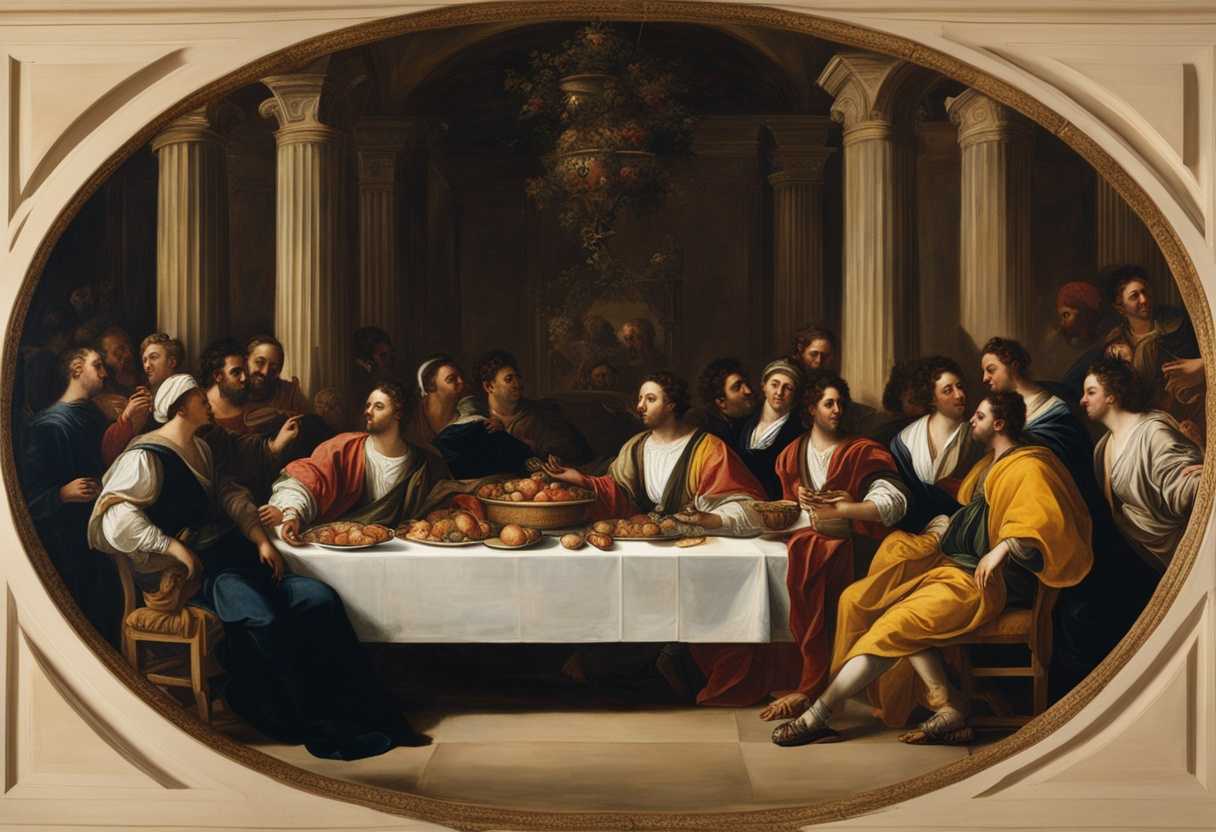
The scene is set in a grand hall in Joseph’s palace, with lavish decorations and a large banquet table filled with an abundance of food. Joseph’s brothers are seated at the table, still unaware of his true identity, while Joseph observes them closely. As the meal progresses, Joseph arranges for Benjamin to receive a portion of food that is five times larger than what his other brothers receive. This act of favoritism towards Benjamin reveals Joseph’s true feelings towards his youngest brother and tests his other brothers’ reactions.
Tension fills the room as Joseph watches to see if his brothers will show jealousy or resentment towards Benjamin. However, instead of reacting negatively, the brothers are amazed and grateful for the generous treatment of their youngest brother. This moment marks a turning point in Joseph’s relationship with his brothers, as they begin to show remorse for their past actions and demonstrate a newfound sense of unity and loyalty towards one another.
What is Genesis 43:32-34 about?
Joseph eats separately from his brothers due to Egyptian customs in Genesis 43:32-34. This moment is a poignant reminder of the cultural differences and the divide that existed between Joseph, who had been living in Egypt for many years, and his brothers who were still rooted in their Canaanite customs. Joseph adhered to the customs of the land he now called home by eating separately, further underscoring the gap that had formed between him and his brothers. Cultural norms and their impact on relationships prompt us to consider their significance as we reflect on this verse. How do our cultural backgrounds shape our behaviors and interactions with others? What happens when we are faced with different customs or traditions that challenge our own beliefs? Through Joseph’s example, we are reminded of the importance of respecting and understanding cultural differences, even when they may create barriers between us and those we care about.
The verse also invites us to ponder on the theme of reconciliation and forgiveness. Despite the separation at the dining table, we know that Joseph ultimately forgave his brothers for their past actions. How can we navigate differences in customs and beliefs in a way that promotes understanding and forgiveness? What lessons can we draw from Joseph’s journey of reconciliation with his family? We can contemplate and apply a rich tapestry of lessons in our own lives from this verse as we delve into the complexities of culture, forgiveness, and reconciliation.
Understanding what Genesis 43:32-34 really means
In the verses of Genesis 43:32-34, we delve into a pivotal moment in the story of Joseph, a tale of betrayal, forgiveness, and redemption. As Joseph’s brothers unknowingly dine with him in Egypt, we witness a poignant display of cultural and social divisions of the time. The separation of the Egyptians, Joseph, and his brothers at the table serves as a stark reminder of the societal norms and prejudices prevalent in that era.
The act of serving Joseph separately from his brothers and the Egyptians dining with him underscores the deep-rooted divisions and hierarchies existing in their society. It prompts us to ponder on how such distinctions based on ethnicity, class, or background can influence our interactions and relationships with others. Do we, knowingly or unknowingly, perpetuate similar divisions in our own communities today?
Furthermore, the gesture of Joseph sending portions from his table to his brothers symbolizes not only his authority but also his generosity towards them. It raises questions about the nature of power and privilege and how they can be wielded to uplift and support others rather than to oppress or exploit. How do we use whatever influence or resources we have to benefit those around us, especially those who may have wronged us in the past?
The deliberate act of giving Benjamin a portion five times larger than his brothers’ serves as a test of their character, particularly their capacity for jealousy and resentment. It highlights Joseph’s special affection for his only full brother and challenges us to examine our own relationships with siblings and family members. Do we harbor feelings of envy or animosity towards those closest to us, and how can we cultivate a spirit of love and generosity instead?
As we reflect on Joseph’s story, we are reminded of the timeless themes of forgiveness, reconciliation, and the transformative power of compassion. Just as Joseph ultimately forgave his brothers and sought reconciliation with them, we are called to emulate his example in our own lives. How can we extend grace and understanding to those who have wronged us, paving the way for healing and restoration in our relationships?
In a world marked by division and discord, the narrative of Joseph and his brothers challenges us to break down social barriers, foster unity, and strive for reconciliation. It beckons us to confront our biases, prejudices, and preconceptions, working towards a more inclusive and harmonious society. How can we actively dismantle the walls that separate us from others, embracing diversity and celebrating our shared humanity?
In conclusion, the story of Joseph serves as a poignant reminder of the enduring lessons of forgiveness, integrity, and the power of reconciliation. It urges us to examine our own hearts and actions, inspiring us to extend grace, show kindness, and seek unity in a world often fractured by division and strife. Let us heed the call to love our enemies, do good to those who wrong us, and strive to build bridges of understanding and compassion in a world in need of healing and wholeness.
How can we show hospitality to strangers?
We can show hospitality to strangers by being welcoming and generous towards them. This can include inviting them into our homes, sharing meals with them, and providing for their needs. We can create a sense of warmth and comfort by showing kindness and hospitality to strangers, making them feel valued and respected. Joseph invited his brothers to dine with him in the story of Genesis 43:32-34, treating them with hospitality and respect despite being strangers to him. This act of hospitality not only demonstrated Joseph’s generosity and care for his brothers, but it also helped to reconcile their relationship and bring about a sense of unity and peace. We can also extend hospitality to strangers and build relationships based on kindness and understanding by following this example.
Application
Let’s embody the essence of hospitality and generosity found in Genesis 43:32-34. Just as Joseph welcomed his brothers with open arms, let’s open our hearts and homes to those in need. How can we mirror this act of kindness in our modern lives? What steps can we take to spread love and compassion in our work and family circles? Let’s not just ponder these questions but actively put them into practice, creating a ripple effect of warmth and care around us. Can we rise to this challenge and make a difference today?

Reverend Michael Johnson is an experienced Church Minister with a profound expertise in spirituality and guidance. With a serene presence and a compassionate heart, he has faithfully served his congregation for over 20 years, leading them on a spiritual journey towards inner peace and enlightenment. Reverend Johnson’s extensive knowledge of religious philosophies and profound understanding of human nature have made him a trusted confidant and mentor to many, as he seamlessly weaves his profound wisdom into life teachings. Reverend Johnson’s calming demeanor and empathetic nature continue to uplift and heal souls, nurturing a sense of unity and tranquility within his community.