
Genesis 44:14-17 is about Judah making a heartfelt plea to Joseph, explaining the importance of Benjamin to their father Jacob and offering himself as a substitute instead, revealing themes of loyalty, sacrifice, and the consequences of past actions.
14 When Judah and his brothers came to Joseph’s house, he was still there. They fell before him to the ground.
15 And Joseph said to them, “What deed is this that you have done? Do you not know that a man like me can indeed practice divination?”
16 And Judah said, “What shall we say to my lord? What shall we speak? Or how can we clear ourselves? God has found out the guilt of your servants; behold, we are my lord’s servants, both we and he also in whose hand the cup has been found.”
17 But he said, “Far be it from me that I should do so! Only the man in whose hand the cup was found shall be my servant. But as for you, go up in peace to your father.”
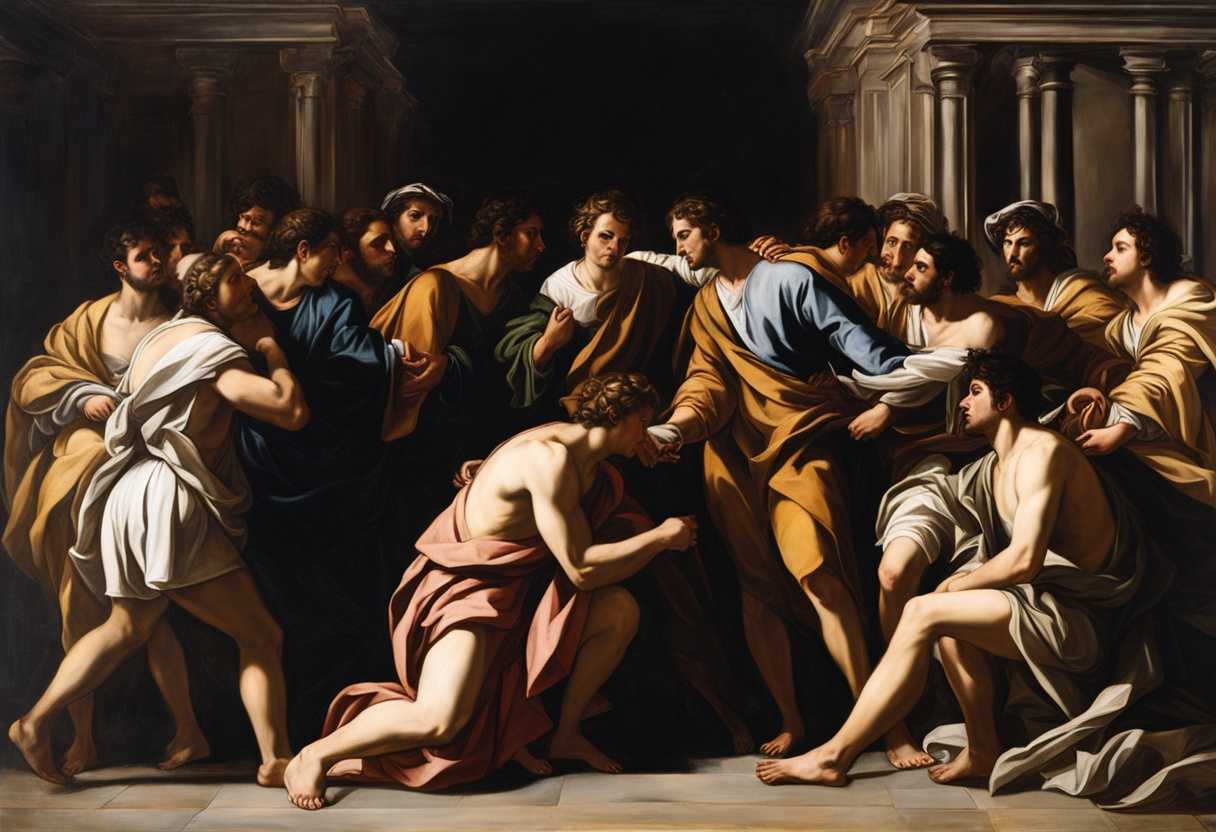
Setting the Scene for Genesis 44:14-17
In Genesis 44:14-17, we find Joseph, the powerful ruler of Egypt, setting the scene for a dramatic confrontation with his brothers who have come to Egypt seeking food during a severe famine. The brothers, including Judah, Reuben, and Benjamin, stand before Joseph in his lavish palace, unaware that the ruler they are pleading to is actually their long-lost brother whom they had betrayed and sold into slavery many years ago.
The opulent surroundings of Joseph’s palace contrast sharply with the humble origins of the brothers, who are now facing the consequences of their past actions. Tension fills the air as Joseph accuses them of stealing his silver cup, a test he has devised to see if they have truly changed and are willing to protect their youngest brother, Benjamin. The brothers, desperate to prove their innocence and protect Benjamin, are at a loss as they face the powerful ruler who holds their fate in his hands.
As the scene unfolds, emotions run high as the brothers grapple with guilt, fear, and the possibility of losing Benjamin. Joseph’s true identity remains a secret, adding to the suspense and drama of the moment. The stage is set for a powerful display of forgiveness, reconciliation, and the fulfillment of God’s plan as Joseph tests his brothers’ character and ultimately reveals himself to them.
What is Genesis 44:14-17 about?
Joseph puts his brothers to the test by falsely accusing them of stealing his silver cup in this verse. This act may seem harsh and unfair on the surface, but it serves a deeper purpose in the narrative. Joseph is not simply seeking revenge or playing a cruel trick on his siblings by creating this scenario. Instead, he is testing their character, honesty, and loyalty.
Have you ever considered why Joseph chose this particular way to test his brothers? Perhaps he wanted to see if they had truly changed and grown since the time they had betrayed him. Joseph is able to observe their reactions, assess their integrity, and ultimately determine if they have learned from their past mistakes by putting them in a difficult situation. This test challenges his brothers to demonstrate their willingness to take responsibility, show compassion, and make amends for their actions. This verse reminds us of the importance of forgiveness, redemption, and second chances as we reflect on it. Just like Joseph’s brothers, we all have the opportunity to learn from our past wrongdoings, grow as individuals, and rebuild broken relationships. Through his test, Joseph ultimately paves the way for reconciliation and a stronger bond with his family.
Understanding what Genesis 44:14-17 really means
In the narrative of Joseph and his brothers found in Genesis 44:14-17, we witness a pivotal moment where Judah and his brothers are brought before Joseph in Egypt. The scene is charged with tension as Joseph, now a prominent figure in the land, accuses them of theft, testing their integrity and loyalty. The brothers, distressed and fearful, fall before Joseph in a display of humility and submission, recognizing his authority and their desperate situation. Joseph’s probing question, “What deed is this that you have done?” serves as a moral litmus test, challenging the brothers to confront their past actions and reveal their true character.
The phrase “Far be it from me to do this” uttered by Joseph reveals his underlying intention to assess his brothers’ honesty and loyalty without harboring true malice towards them. This moment is a test of their repentance and willingness to take responsibility for their past sins. The unity and collective responsibility of the brothers, symbolized by their arrival at Joseph’s house together, underscore the theme of family bonds and mutual accountability. Through this intricate web of relationships and moral dilemmas, the narrative delves into the complexities of human nature and the dynamics of forgiveness and reconciliation.
Drawing parallels with other biblical passages such as Genesis 37:26-28 and Genesis 42:21-22, we see a pattern of betrayal, guilt, and eventual redemption playing out in the lives of these characters. The overarching themes of repentance, forgiveness, and reconciliation resonate not only in this story but also in the broader context of human relationships and spiritual growth. The parable of the Prodigal Son in Luke 15:11-32 further reinforces these themes, emphasizing the transformative power of forgiveness and the restoration of broken relationships within a familial context.
In today’s world, where conflicts and misunderstandings often strain family ties and test personal integrity, the lessons from this passage remain relevant and poignant. The call to seek reconciliation, approach conflicts with humility and honesty, and uphold principles of integrity and accountability reverberates through the ages. Just as Judah and his brothers faced their moment of reckoning before Joseph, we too are challenged to confront our past mistakes, seek forgiveness, and strive for unity within our families and communities.
Consider a scenario where siblings, estranged by past grievances, are brought to a point of testing their willingness to reconcile. Through a series of challenges and revelations, they come to realize the depth of their bond and the importance of forgiveness and unity. This anecdote serves as a poignant illustration of the transformative power of honesty, humility, and reconciliation within familial relationships.
In conclusion, the story of Joseph and his brothers in Genesis 44:14-17 serves as a timeless reminder of the enduring values of forgiveness, integrity, and family unity. It prompts us to reflect on our own relationships, confront our shortcomings, and strive for reconciliation and honesty in our interactions with others. As we navigate the complexities of human nature and the intricacies of moral dilemmas, may we draw inspiration from these ancient narratives to cultivate a spirit of forgiveness and a commitment to building strong, harmonious relationships in our lives.
What does divine retribution reveal about our actions?
Divine retribution, as shown in this verse, reveals that our actions have consequences that we cannot escape. The brothers of Joseph are facing the consequences of their past actions of selling Joseph into slavery in this specific context. Despite their attempts to deceive and cover up their wrongdoing, they are now faced with the divine retribution for their betrayal. This serves as a reminder that our actions, whether good or bad, will eventually come back to us in one way or another.
The divine retribution in this verse also emphasizes the importance of taking responsibility for our actions. The brothers must now confront their past sins and make amends for what they have done, showing that avoidance or denial will only lead to further consequences. Through their experiences, we learn that it is crucial to acknowledge our mistakes and seek forgiveness, rather than trying to escape or ignore the repercussions of our actions. Justice will prevail in the end, ultimately highlighting divine retribution as a timeless truth. No matter how much we try to avoid or evade the consequences of our actions, there is a higher power that sees all and ensures that justice is served. This verse serves as a powerful reminder that we must be held accountable for our choices and that ultimately, our actions will determine the path of divine retribution that follows.
Application
Just as Joseph’s brothers confronted their mistakes, let us also confront our own. It’s time to make amends and seek forgiveness where needed, paving the way for redemption and reconciliation. Are you prepared to embark on a journey of healing and restoration in your relationships?

Reverend Michael Johnson is an experienced Church Minister with a profound expertise in spirituality and guidance. With a serene presence and a compassionate heart, he has faithfully served his congregation for over 20 years, leading them on a spiritual journey towards inner peace and enlightenment. Reverend Johnson’s extensive knowledge of religious philosophies and profound understanding of human nature have made him a trusted confidant and mentor to many, as he seamlessly weaves his profound wisdom into life teachings. Reverend Johnson’s calming demeanor and empathetic nature continue to uplift and heal souls, nurturing a sense of unity and tranquility within his community.