
Genesis 47:27-31 is about the fulfillment of Joseph’s promise to his father Jacob that he would ensure his burial in the land of Canaan, emphasizing the importance of honoring family pacts and commitments even after death.
27 Thus Israel settled in the land of Egypt, in the land of Goshen. And they gained possessions in it, and were fruitful and multiplied greatly.
28 And Jacob lived in the land of Egypt seventeen years. So the days of Jacob, the years of his life, were 147 years.
29 And when the time drew near that Israel must die, he called his son Joseph and said to him, “If now I have found favor in your sight, put your hand under my thigh and promise to deal kindly and truly with me. Do not bury me in Egypt,
30 but let me lie with my fathers. Carry me out of Egypt and bury me in their burying place.” He answered, “I will do as you have said.”
31 Then he said, “Swear to me”; and he swore to him. So Israel bowed himself upon the head of his bed.
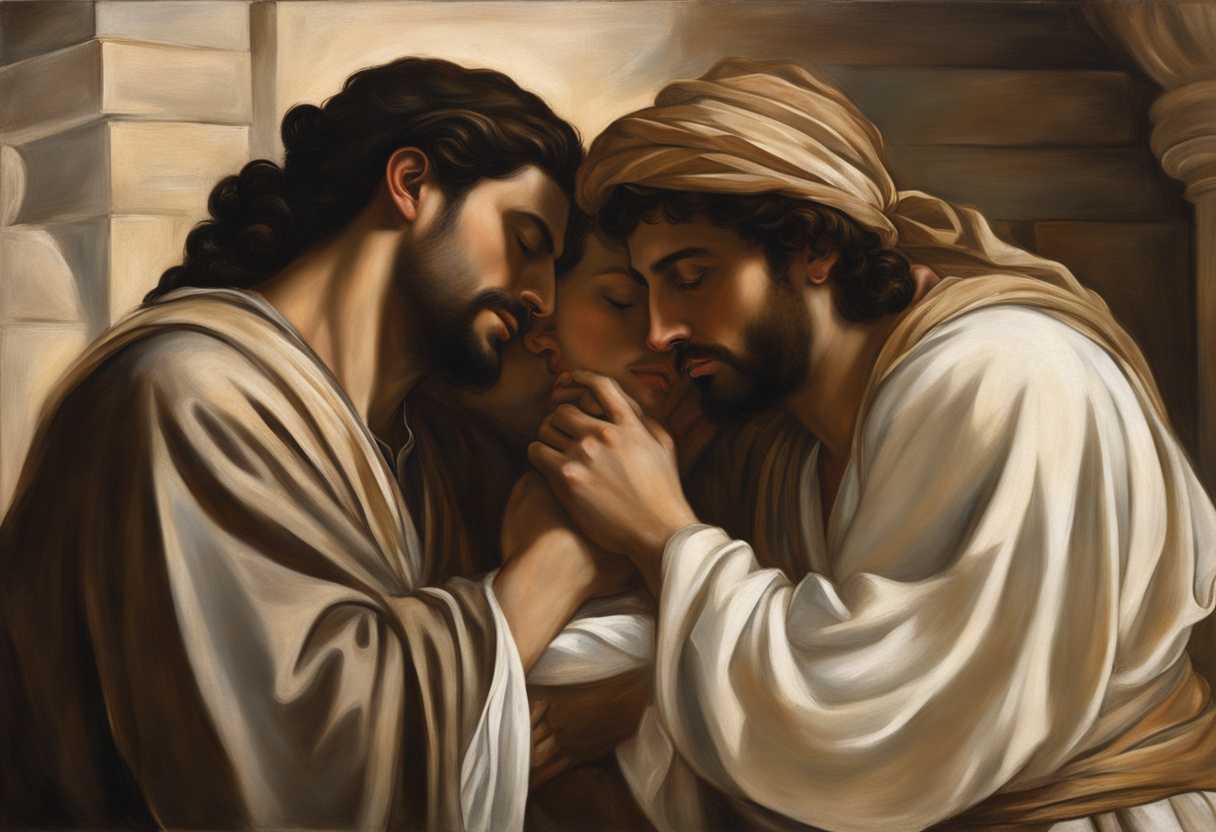
Setting the Scene for Genesis 47:27-31
In Genesis 47:27-31, we find ourselves in the land of Egypt during the time when Joseph, one of the sons of Jacob, is serving as the second-in-command to Pharaoh. Jacob, also known as Israel, along with his sons and their families, have settled in Egypt due to a severe famine in the region. They were granted the land of Goshen to dwell in by Pharaoh, where they could raise their livestock and live comfortably.
The scene unfolds with Jacob, now an old man, nearing the end of his life. He calls his son Joseph to his side and asks him to make a solemn vow. Jacob requests that Joseph promise to bury him in the land of Canaan, where his ancestors were buried, rather than in Egypt. This request is significant as it symbolizes Jacob’s faith in God’s promise to give the land of Canaan to his descendants. Joseph agrees to his father’s request, and Jacob worships God in gratitude for His faithfulness.
Surrounded by his sons and their families, Jacob blesses each of his sons, foretelling their future and the destiny of their tribes. The scene is filled with a sense of closure and anticipation as Jacob imparts his final words of wisdom and blessings before passing away. The setting is poignant and emotional, as the family patriarch prepares to be reunited with his ancestors in the land of Canaan.
What is Genesis 47:27-31 about?
This verse illustrates a pivotal moment in the story of Jacob and his family. It shows how despite the challenges and adversities they faced, they were able to thrive and prosper in a foreign land. Jacob’s blessings to his sons before his death signify a passing down of wisdom, guidance, and love from one generation to the next. It is a poignant reminder of the importance of family bonds, values, and traditions.
Have you ever experienced a moment of passing down wisdom or blessings from one generation to the next in your own family? What do you think Jacob’s blessings symbolize in terms of his hopes and dreams for his children and future generations? The verse serves as a beautiful example of the enduring power of family ties and the significance of leaving a legacy of love and guidance for those who come after us.
Understanding what Genesis 47:27-31 really means
In Genesis 47:27-31, we witness the Israelites’ settlement in Egypt during a time of famine. They found refuge and prosperity in the land of Goshen, multiplying and acquiring possessions. As Jacob approaches the end of his life, he makes Joseph swear to bury him in Canaan, not Egypt, emphasizing his faith in God’s promises regarding the Promised Land.
The phrase “Israel settled in the land of Egypt, in the land of Goshen” symbolizes a period of blessing and growth for the Israelites in a foreign land. Despite the challenges they faced, they flourished under God’s provision. “They gained possessions in it, and were fruitful and multiplied greatly” underscores God’s faithfulness in fulfilling His promise to Abraham about his descendants prospering.
Jacob’s insistence on being buried in Canaan carries profound meaning. It showcases his unwavering trust in God’s promises and his desire to be connected to the land of his forefathers even in death. This act of faith highlights the importance of honoring one’s heritage and remaining steadfast in one’s beliefs.
These verses resonate with contemporary audiences by urging us to have faith in God’s promises, even when they seem distant or uncertain. Just as the Israelites prospered in a foreign land during adversity, we are reminded that God can bless and sustain us in challenging circumstances. Jacob’s concern for his burial place serves as a poignant reminder of the significance of legacy and the value of honoring one’s roots and commitments.
Consider a family that moves to a new country for better opportunities. Despite initial struggles, they find success and build a new life. However, the grandparents always emphasize their heritage and values to the younger generation. This mirrors Jacob’s insistence on being buried in Canaan, highlighting the importance of remembering and cherishing one’s origins and faith.
In conclusion, Genesis 47:27-31 prompts us to reflect on the importance of faith, the potential for prosperity in adversity, and the significance of legacy. These verses encourage us to trust in God’s promises, maintain hope in difficult times, and honor our roots and commitments. Just as Jacob’s story inspires us to remain faithful and connected to our heritage, may we too find strength in our beliefs and heritage as we navigate life’s challenges.
How can we honor God’s promises in times of uncertainty?
We can honor God’s promises by staying faithful and trusting in His plan in times of uncertainty. We too can cling to the promises God has made to us, just as Jacob remained resolute and obedient during his time in Egypt despite the unknown future. This can involve constantly seeking God’s presence through prayer, meditation on His Word, and fellowship with other believers. We can find peace and assurance in God’s faithfulness by staying connected to Him, even when our circumstances seem unclear or challenging.
Furthermore, honoring God’s promises in times of uncertainty means surrendering our fears, worries, and doubts to Him. We can choose to anchor our hope in God’s promises rather than in our own understanding or feelings. This may require patience and perseverance as we wait for God’s timing and guidance to unfold. Through it all, remembering that God’s plans are always for our good and His glory can give us the strength and courage to press onward with confidence and trust in His faithfulness. We can ultimately navigate uncertain seasons with a firm foundation by leaning on God’s promises and putting our faith in Him. We too can honor God by holding fast to His promises, knowing that He is always faithful to His word, just as Jacob’s story reflects enduring faith and trust in God’s providence. Trusting in God’s promises allows us to move forward in hope and assurance, regardless of what lies ahead.
Application
Let’s anchor our actions in dedication and loyalty, much like Jacob did in his final moments. It’s vital to uphold our promises in both our work and family life. As we near the conclusion of our own paths, let’s leave a lasting mark of trustworthiness and commitment to following God’s path. Are we ready to forge a legacy built on unwavering devotion and integrity?

Reverend Michael Johnson is an experienced Church Minister with a profound expertise in spirituality and guidance. With a serene presence and a compassionate heart, he has faithfully served his congregation for over 20 years, leading them on a spiritual journey towards inner peace and enlightenment. Reverend Johnson’s extensive knowledge of religious philosophies and profound understanding of human nature have made him a trusted confidant and mentor to many, as he seamlessly weaves his profound wisdom into life teachings. Reverend Johnson’s calming demeanor and empathetic nature continue to uplift and heal souls, nurturing a sense of unity and tranquility within his community.