
3 In the course of time Cain brought to the Lord an offering of the fruit of the ground.
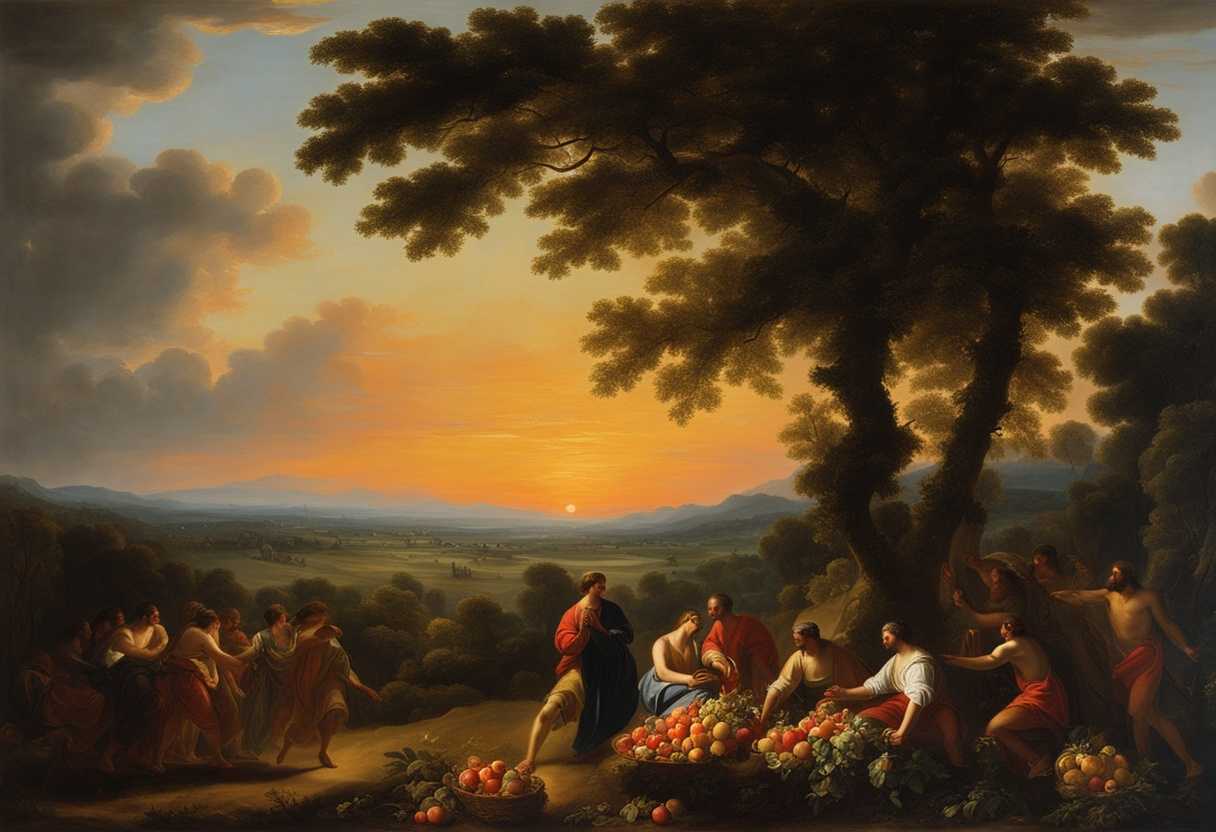
Setting the Scene for Genesis 4:3
In Genesis chapter 4, we find the scene where Cain and Abel, the sons of Adam and Eve, are offering sacrifices to God. The setting is a vast field with lush greenery and a clear sky above. Cain, the older brother, is a farmer, and he brings an offering of the fruit of the ground. Abel, the younger brother, is a shepherd, and he presents the best of his flock as an offering to the Lord.
As the brothers stand before God with their offerings, there is a sense of anticipation and reverence in the air. Cain’s countenance falls when God looks favorably upon Abel’s offering but does not regard his own. This leads to jealousy and anger welling up in Cain’s heart, setting the stage for the tragic events that follow in the story.
The scene captures a pivotal moment in the early history of humanity, showcasing the consequences of envy and the importance of sincere worship. It serves as a powerful lesson on the significance of offering our best to God with a pure heart.
What is Genesis 4:3 about?
Cain presents an offering of his crops to God in Genesis 4:3. This act symbolizes Cain’s acknowledgment of God’s importance in his life and his desire to show gratitude and reverence. Cain demonstrated his willingness to give back to God and honor Him with his possessions by bringing the best of what he had cultivated. This offering reflects a sense of humility and dependency on God, recognizing Him as the ultimate provider and sustainer of life.
Have you ever thought about what it means to offer something to God? Through Cain’s example, we are reminded of the importance of giving our best to God, whether it be our time, talents, or resources. It prompts us to reflect on our own acts of worship and whether they truly reflect our sincerity and devotion to God. Just as Cain offered his crops to God, we are called to offer our lives as living sacrifices, holy and pleasing to God (Romans 12:1). We can consider how to demonstrate our love and commitment to God through our offerings, just as Cain did in this verse.
Understanding what Genesis 4:3 really means
First, let’s delve into Genesis 4:3 by setting a structure for our commentary. Introduction to the Verse and Context
2. Meaning of Key Phrases within the Verse
3. Connection to Broader Biblical Themes
4. Relevance to Contemporary Life
5. Anecdotal Illustration
6. We witness the early chapters of humanity in Genesis 4:3, focusing on the story of Cain and Abel. This pivotal moment in biblical history sets the stage for understanding human nature, worship, and the consequences of our choices. Cain, a farmer, and his brother Abel, a shepherd, both bring offerings to the Lord.
Meaning of Key Phrases within the Verse
The phrase “in the course of time” suggests that Cain didn’t immediately bring his offering but did so at a designated moment, implying a set time of worship or a specific ritual. The latter part, “Cain brought to the Lord an offering of the fruit of the ground,” highlights Cain’s profession and his choice of offering. This choice embodies Cain’s intentions and relationship with God. It’s worth noting that the specifics of his offering aren’t as elaborated upon as Abel’s, which may provide insight into the heart behind his actions.
Connection to Broader Biblical Themes
Cain’s offering can be vastly contrasted with Romans 12:1, where Paul urges believers to offer themselves as “living sacrifices, holy and pleasing to God.” It makes us ponder: How does the quality of our offerings and our hearts reflect our devotion to God? The Bible constantly reminds us that what we give is less important than the spirit in which we give it, evident in Jesus’s praise of the widow’s mite in Mark 12:41-44.
Relevance to Contemporary Life
This verse is incredibly relevant today as it prompts introspection about our motives and the authenticity of our worship. This passage challenges us to consider the sincerity and wholeheartedness of our devotion in a world full of distractions and outward shows of piety. Are we giving God our best, or are we merely going through the motions out of obligation?
Anecdotal Illustration
I recall a story about a young girl named Emily who loved playing the piano but often skipped practicing. One day, she was asked to play at a community event. Rather than practicing a heartfelt piece, she hurriedly put together something she thought would be ‘good enough.’ Her performance was lackluster, not because of lack of talent but because her heart wasn’t in it. Like Emily’s piano playing, what we offer in our worship and service needs to be done with commitment and sincerity. Let’s ask ourselves as we reflect on this verse: What are we offering to God? Are we giving Him our best, or merely what is convenient? Let’s strive to cultivate a heart that desires to honor God fully in every aspect of our lives. This week, consider intentionally setting aside time to worship and serve with a joyful heart, ensuring our ‘offerings’—whether time, talents, or resources—reflect our genuine love for Him. Genesis 4:3 serves as a powerful reminder to evaluate the sincerity and integrity of our devotion to God. Let us strive to offer not just the fruits of our labor but also the very best of our hearts.
Am I giving my best to God in worship?
We must approach God with sincere hearts and genuine intentions in order to give our best in worship. Merely going through the motions or offering half-hearted gestures is not enough to truly honor God. He desires our whole-hearted devotion and authentic worship.
Our worship should come from a place of humility, gratitude, and reverence for God. When we offer our best to Him in worship, we demonstrate our love and commitment to Him. God sees the sincerity of our hearts and is pleased when we come before Him with a genuine desire to honor and adore Him. We should strive to give God our all – our time, talents, and treasures in our worship. We show our love and obedience to God by offering our best to Him in every aspect of our lives. It is through whole-hearted and genuine worship that we can truly honor and glorify Him in everything we do.
Application
Consider your daily grind and family commitments. Are you giving your best at work, or just going through the motions? Just like in Genesis 4:3, it’s about the quality of what you bring. Are you offering God your finest efforts, or are you holding back? Reflect deeply and strive to give Him your best. What will you choose to offer today?

Reverend Michael Johnson is an experienced Church Minister with a profound expertise in spirituality and guidance. With a serene presence and a compassionate heart, he has faithfully served his congregation for over 20 years, leading them on a spiritual journey towards inner peace and enlightenment. Reverend Johnson’s extensive knowledge of religious philosophies and profound understanding of human nature have made him a trusted confidant and mentor to many, as he seamlessly weaves his profound wisdom into life teachings. Reverend Johnson’s calming demeanor and empathetic nature continue to uplift and heal souls, nurturing a sense of unity and tranquility within his community.