
7 Then the Lord said to Noah, “Go into the ark, you and all your household, for I have seen that you are righteous before me in this generation.
2 Take with you seven pairs of all clean animals, the male and his mate, and a pair of the animals that are not clean, the male and his mate,
3 and seven pairs of the birds of the heavens also, male and female, to keep their offspring alive on the face of all the earth.
4 For in seven days I will send rain on the earth forty days and forty nights, and every living thing that I have made I will blot out from the face of the ground.
5 And Noah did all that the Lord had commanded him.
6 Noah was six hundred years old when the flood of waters came upon the earth.
7 And Noah and his sons and his wife and his sons’ wives with him went into the ark to escape the waters of the flood.
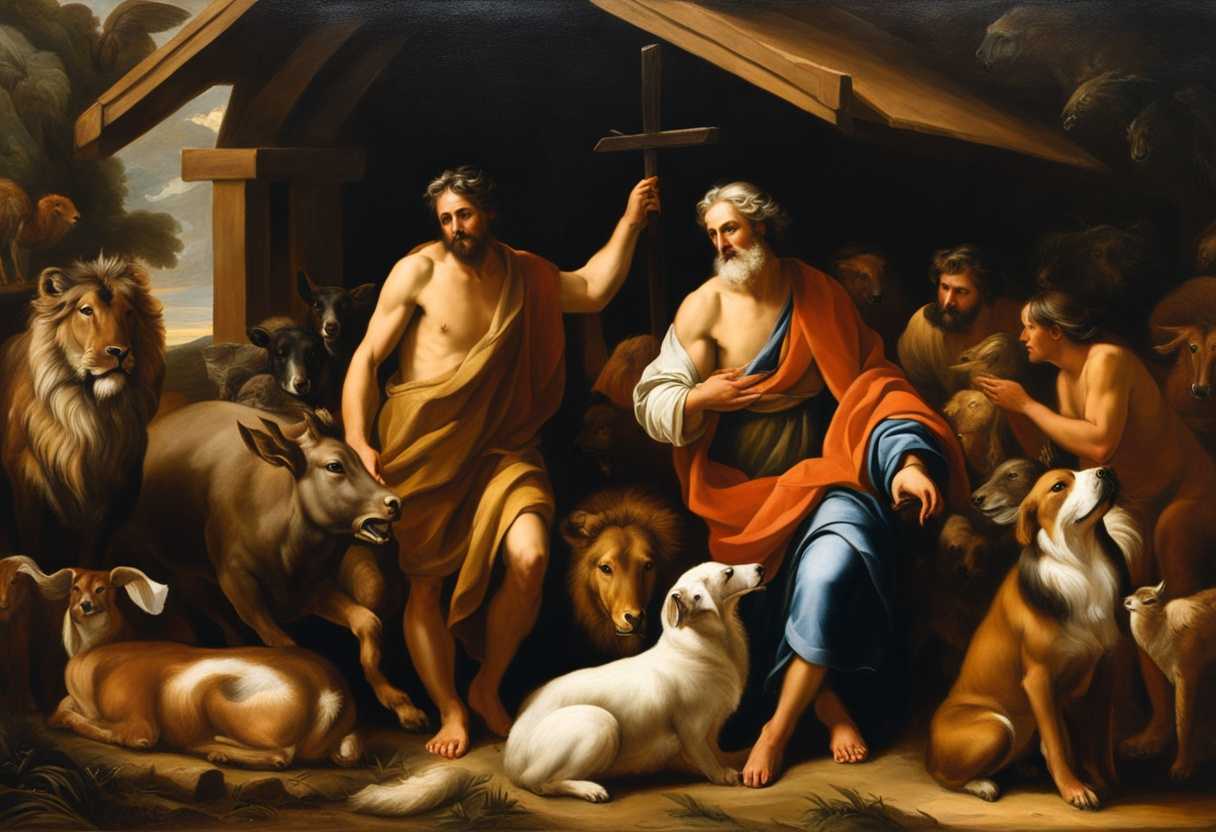
Setting the Scene for Genesis 7:1-7
In Genesis chapter 7, we find ourselves in the midst of a pivotal moment in biblical history. The scene is set in the ancient land of Mesopotamia, where the righteous man Noah resides with his family. God has seen the wickedness of humanity and has decided to bring a great flood to cleanse the earth. Noah, however, has found favor in the eyes of the Lord due to his righteousness, and God instructs him to build an ark to save himself, his family, and a remnant of all living creatures.
Noah, a man of faith, diligently follows God’s instructions and constructs the massive ark over many years. As the ark nears completion, the skies darken, and the first drops of rain begin to fall. Noah, along with his wife, their three sons (Shem, Ham, and Japheth), and their wives, gather together with the animals that God has commanded them to bring aboard. The atmosphere is tense with anticipation as they enter the ark, knowing that they are about to witness the unfolding of God’s judgment upon the earth.
As the last of the animals are safely aboard, the heavens open up, and the floodwaters pour down upon the earth. The ark, a symbol of God’s mercy and salvation, floats upon the waters, preserving the lives of those within it. In this moment, Noah and his family stand as a beacon of faith and obedience in the face of divine judgment, a testament to the enduring power of God’s grace amidst the chaos of a world engulfed in sin.
What is Genesis 7:1-7 about?
We see a powerful example of obedience and trust in God’s plan in this verse. God gave Noah specific instructions to build an ark and gather pairs of animals, and Noah followed these instructions without hesitation. This act of obedience shows Noah’s faith and belief in God’s guidance, even when the task seemed daunting or impossible.
Through Noah’s actions, we can learn important lessons about trust, obedience, and faith. Just like Noah, we are called to trust in God’s plan for us, even when we may not fully understand it. We can find security and protection in the midst of life’s storms and challenges by following God’s guidance and obeying His commands. Reflecting on this verse reminds us of the importance of listening to God’s voice and following His will. Like Noah, let us have faith in God’s plan for our lives and trust that He will guide us through any difficulties we may face. We step into the “ark” of God’s protection with confidence, knowing that He is always with us, leading us to safety and salvation.
Understanding what Genesis 7:1-7 really means
Genesis 7:1-7 reveals a profound interaction between God and Noah that underscores themes of obedience, salvation, and divine selection. This passage is pivotal not only for understanding the character of Noah but also for grasibling institutional issues of grace and judgment in theological context.
Initially, the phrase “for I have found you righteous in this generation” presents a significant theological foothold. Righteousness here is depicted not as inherent human perfection but as living in faithfulness to God’s commands. It highlights a reciprocal relationship between divine grace and human obedience. The narrative places Noah in contrast to his contemporaneous society, which was rife with corruption and violence. This variation underscores a theme that is consistent throughout the Bible: the idea of being set apart for God’s purposes. The mention of Noah with Daniel and Job in Ezekiel 14:14 reinforces the idea of righteousness coupled with deliverance. A divine strategy for preservation and continuation of life frames the instruction to bring his family and various creatures into the ark. This directive from God isn’t just about survival, but about maintaining the creation God declared “good” in Genesis 1. This element parallels the concept seen in 2 Peter 2:5, where Noah is termed a “preacher of righteousness,” suggesting his life and actions were a testament to living under God’s righteous order amidst prevailing corruption.
Now, the relevance of this passage today can be captured well through an everyday occurrence. Unethical practices are the norm in a corporate setting. Taking a stand for integrity might isolate you, somewhat like Noah. However, the narrative encourages the modern believer that divine recognition and salvation from corruption come through steadfast obedience and upholding righteousness, irrespective of prevalent norms.
Further, understanding the completeness of the rescue plan, “two of every kind…to keep them alive,” invites readers to reflect on God’s meticulous concern for all creation. It’s not just humanity that God is concerned about in this covenant of survival but the entirety of His creation. This comprehensive care can inspire individuals today to consider broader ecological and environmental stewardship as part of their divine mandate. This passage invites us to view ourselves in Noah’s lineage – not by blood, but through the shared calling of righteousness in a world that often celebrates the opposite. It beckons us to ask: How are we responding to God’s call to be righteous? Are we building our ‘arks’—not of wood but of faith, integrity, and godly character—to safeguard not only our lives but also to preserve what is precious and good in God’s eyes?
How can we remain faithful in a corrupt world?
We can remain faithful in a corrupt world by following the example of Noah in Genesis 7. Noah was described as a righteous man who walked with God. Despite living in a world filled with corruption and evil, Noah remained faithful by obeying God’s instructions and living a righteous life. We can remain faithful by seeking to live in accordance with God’s will, even when it may be challenging or unpopular in the corrupt world around us.
One way to stay faithful in a corrupt world is to prioritize our relationship with God above all. Just as Noah walked with God, we can strive to cultivate a close relationship with Him through prayer, meditation on His word, and obedience to His teachings. We can draw strength and guidance to navigate the challenges and temptations of a corrupt world by staying connected to God.
Additionally, remaining faithful in a corrupt world may require us to stand firm in our beliefs and values, even when they are contrary to the prevailing culture. Just as Noah followed God’s instructions to build the ark despite facing ridicule and opposition, we too must be willing to stand firm in our faith and trust in God’s promises, knowing that He will always be with us and guide us through difficult times.
Application
Imagine yourself in Noah’s shoes, tasked with a monumental challenge amid the chaos of a pre-flood world. Just as he built the ark to safeguard his family and future generations, you too are called to build bridges of faith in your day-to-day life. Picture your workplace as a field ripe for sowing seeds of kindness and your home as the ark that shelters and nurtures love. With each act of obedience, you fortify these structures against the storms of life. Are you ready to step into your role, heed the divine call, and move forward with unwavering faith, just as Noah did? What will your answer be when God calls?

Reverend Michael Johnson is an experienced Church Minister with a profound expertise in spirituality and guidance. With a serene presence and a compassionate heart, he has faithfully served his congregation for over 20 years, leading them on a spiritual journey towards inner peace and enlightenment. Reverend Johnson’s extensive knowledge of religious philosophies and profound understanding of human nature have made him a trusted confidant and mentor to many, as he seamlessly weaves his profound wisdom into life teachings. Reverend Johnson’s calming demeanor and empathetic nature continue to uplift and heal souls, nurturing a sense of unity and tranquility within his community.