
2 Take with you seven pairs of all clean animals, the male and his mate, and a pair of the animals that are not clean, the male and his mate,
3 And of the birds of the heavens seven pairs, male and female, to keep their offspring alive on the face of all the earth.
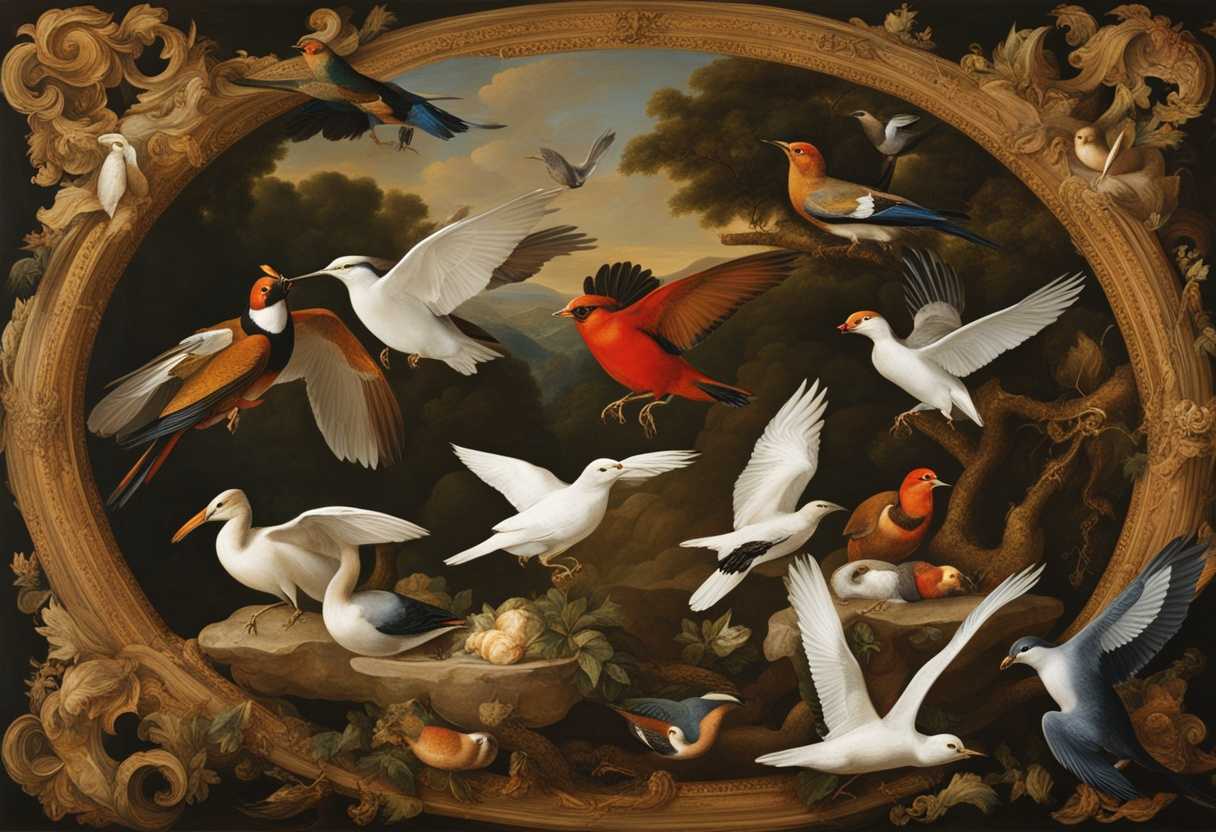
Setting the Scene for Genesis 7:2-3
In Genesis chapter 7, we find ourselves in the midst of a pivotal moment in biblical history – the great flood. The scene is set on a vast plain where Noah, a righteous man in the eyes of God, is diligently following the instructions given to him by the Lord. Surrounding him are his wife, his three sons – Shem, Ham, and Japheth – and their wives. Together, they have been tasked with building an enormous ark to save themselves and a remnant of all living creatures from the impending deluge.
Noah and his family have spent years constructing the massive vessel, following the precise measurements and design provided by God. As they put the finishing touches on the ark, pairs of every kind of animal begin to gather around them, guided by a divine instinct to seek refuge within the safety of the ark. The atmosphere is charged with a sense of urgency and anticipation as the skies darken and the first drops of rain begin to fall, signaling the start of the cataclysmic event that will reshape the world. Amidst the chaos and uncertainty, Noah and his family stand as beacons of faith and obedience, ready to embark on a journey that will test their resolve and trust in the Almighty.
What is Genesis 7:2-3 about?
God is instructing Noah to gather a specific number of clean and unclean animals to bring onto the ark with him in this verse. This command is significant because it shows God’s care for the preservation of different species during the flood. God is ensuring that there will be enough animals for repopulation once the flood waters recede by specifying the number of animals. The distinction between clean and unclean animals is also important because it reflects the importance of purity and following God’s guidelines even in the midst of a chaotic and seemingly destructive event.
Have you ever thought about the meticulous planning and care that God has for His creation? The fact that He not only saved Noah and his family but also all the animals, in specific numbers and classifications, demonstrates His sovereignty and attention to detail. This verse can also serve as a reminder for us to trust in God’s provision and wisdom, even when we may not fully understand the reasons behind His commands. Let’s reflect on the faith and obedience of Noah in carrying out God’s instructions, and consider how we can apply that same trust in our own lives.
Understanding what Genesis 7:2-3 really means
God gives Noah a directive in Genesis 7:2-3, marking a significant moment in biblical history. Here, God instructs Noah to take “of every clean beast thou shalt take to thee by sevens, the male and his female: and of beasts that are not clean by two, the male and his female.” Additionally, it is noted that “of fowls also of the air by sevens, the male and the female; to keep seed alive upon the face of all the earth.” This passage offers rich material for reflection and application in our daily lives.
First, let us explore the distinction between the “clean” and “unclean” animals. This categorization is crucial, for it lays the groundwork for later dietary laws in Leviticus 11 and Deuteronomy 14. The clean animals were suitable for sacrifice and, later, consumption. Noah could maintain the species and have enough for offerings by bringing in sevens. This detail points to the importance of worship and obedience in the midst of crisis—a theme that resonates deeply with believers today. The instruction to bring in the animals by sevens or by twos highlights the idea of divine order and balance. It’s a call to preserve life in all its forms, ensuring the continuity of God’s creation. This notion teaches us about God’s foresight and His providential care—not only for human beings but for all life. It prompts us as modern readers to consider our responsibilities towards the environment and biodiversity.
Turning to its relevance today, this passage challenges us to think about our roles as stewards of the Earth. We are caring for the creatures under our dominion in an age where environmental concerns are escalating. Are our practices reflective of the balance and respect showcased in Genesis?
An anecdote that comes to mind involves a church community that started a conservation project in their local area. Inspired by passages like Genesis 7, they worked to clean up local waterways and establish safe habitats for wildlife. Their actions stemmed from recognizing that, like Noah, they were called to preserve and respect life. This story is a practical demonstration of living out biblical principles in contemporary settings. Genesis 7:2-3 is not just a historical account; it is a foundational text that speaks to ongoing themes of obedience, worship, and stewardship. We should ask ourselves: In what ways are we being called to maintain the sanctity of life and creation as we ponder these verses? How might we, like Noah, respond to God’s commands amidst the challenges of our time? This reflection can inspire both personal and collective action towards a more harmonious and responsible relationship with the world around us.
How can we faithfully follow God’s instructions?
To faithfully follow God’s instructions as shown in these verses, we must pay attention to the specificity of His commands. God instructs Noah to take specific types and numbers of clean and unclean animals onto the ark. This demonstrates the importance of being attentive to the details of God’s guidance and not deviating from His specific instructions. We show our trust and obedience to God by following His commands with exactness.
Additionally, faithfully following God’s instructions requires a deep level of faith and trust in His wisdom and providence. Noah diligently followed God’s commands, even though the instructions may have seemed unusual or challenging. We, as believers, should trust that God’s plans are perfect and His guidance is for our ultimate good. We demonstrate our faith in His sovereignty and trust in His plan for us by faithfully following His instructions.
Finally, to faithfully follow God’s instructions, we must prioritize our relationship with Him above all else. Noah’s obedience to God’s command to enter the ark with his family and the animals saved them from the impending flood. We must prioritize God’s will and instructions above our own desires or the expectations of others in our lives. We show that God is the ultimate authority in our lives and trust Him with our future and well-being by seeking His guidance and faithfully following His instructions.
Application
Imagine if your life was a complex blueprint, akin to building an unshakable family home. Each instruction, each detail from God, is a crucial nail or beam designed to keep your structure sturdy amidst life’s storms, just as Noah found his ark’s blueprint within God’s commands. Now consider how embracing God’s guidance with the same faith and obedience as Noah could transform your daily work, strengthen your family bonds, and guide your steps with unwavering purpose. The question isn’t just what God is asking of you, but how profoundly you can root your actions in His plans. Will you step into the blueprint of your life and trust in God’s design today?

Reverend Michael Johnson is an experienced Church Minister with a profound expertise in spirituality and guidance. With a serene presence and a compassionate heart, he has faithfully served his congregation for over 20 years, leading them on a spiritual journey towards inner peace and enlightenment. Reverend Johnson’s extensive knowledge of religious philosophies and profound understanding of human nature have made him a trusted confidant and mentor to many, as he seamlessly weaves his profound wisdom into life teachings. Reverend Johnson’s calming demeanor and empathetic nature continue to uplift and heal souls, nurturing a sense of unity and tranquility within his community.