
20 Then Noah built an altar to the Lord and took some of every clean animal and some of every clean bird and offered burnt offerings on the altar.
21 And when the Lord smelled the pleasing aroma, the Lord said in his heart, “I will never again curse the ground because of man, for the intention of man’s heart is evil from his youth. Nor will I ever again strike down every living creature as I have done.
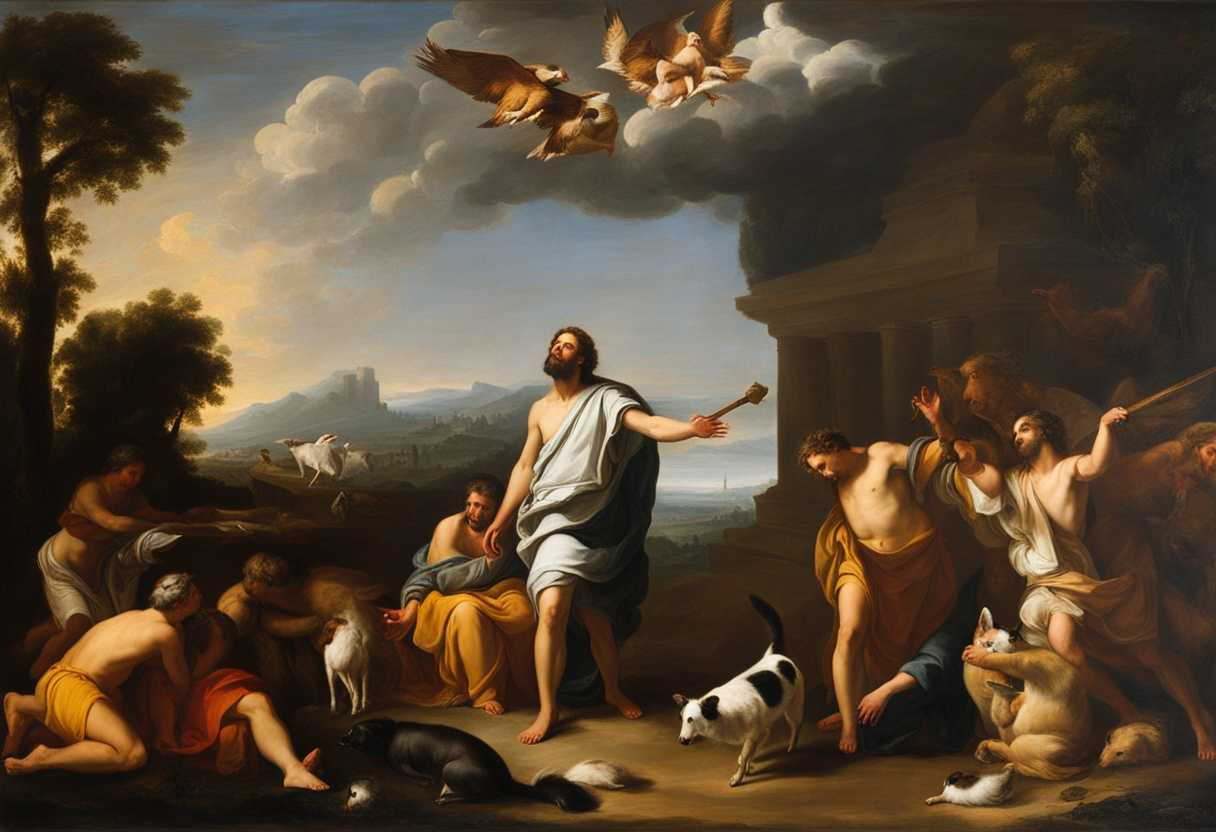
Setting the Scene for Genesis 8:20-21
In Genesis chapter 8, after the great flood had subsided, Noah and his family found themselves on dry land once again. The scene is set on the slopes of Mount Ararat, where the ark had come to rest. The air is crisp and clean, the ground still damp from the receding waters, and the sun shines brightly in the sky, casting a warm glow over the landscape.
Noah, a righteous man in the eyes of the Lord, stands with his wife, their three sons – Shem, Ham, and Japheth – and their wives. They had spent over a year on the ark, caring for the animals and waiting for the waters to recede. Now, as they step out onto the newly formed earth, a sense of gratitude and awe fills their hearts.
In this moment, Noah builds an altar to the Lord and takes some of every clean animal and bird, offering burnt offerings on the altar. The pleasing aroma rises up to the heavens, and God, who had brought the flood upon the earth, is moved by Noah’s act of worship. It is a scene of new beginnings, of gratitude for survival, and of faith in the promises of God.
What is Genesis 8:20-21 about?
Noah demonstrates gratitude and worship towards God after surviving the flood in this verse. Noah shows his appreciation for God’s protection and saving grace by offering sacrifices. This gesture of sacrifice symbolizes Noah’s acknowledgment of God’s sovereignty and his desire to honor Him.
God’s promise to never again curse the ground signifies His mercy and forgiveness towards humanity. Despite the sinful nature of mankind, God chooses to show compassion and establish a covenant with Noah and his descendants. This promise serves as a reminder of God’s faithfulness and enduring love for His creation.
Reflect on the profound display of faith and mercy in this verse. Consider the significance of sacrificial offerings and the power of God’s promises. How does Noah’s act of worship inspire you in your own spiritual journey? What does God’s commitment to never curse the ground teach us about His character and the nature of His relationship with humanity?
Understanding what Genesis 8:20-21 really means
Genesis 8:20-21 presents us with a profound scene of renewal and divine reassurance. Let’s delve deeper into the significance of this passage and its implications for our lives today.
Firstly, the act of building an altar and offering burnt offerings symbolizes deep devotion and gratitude. The altar represents a pivotal point of contact between humanity and the divine. It is a place of surrender and commitment, where one lays down what is most precious. What are the altitudes in your life where you meet God? What sacrifices are you called to make to honor this relationship?
The phrase “the Lord smelled the pleasing aroma” is rich with symbolic meaning. Aromas in biblical terms often convey the idea of acceptance and favor. This moment indicates a shift in God’s interaction with humanity, moving from judgment, as seen in the flood, to a promise of never again cursing the ground because of humans. This speaks volumes about the nature of God’s grace and His readiness to offer new beginnings. How often do you recognize and celebrate God’s grace and forgiveness in your own life?
Furthermore, God’s reflection, “never again will I…,” introduces a covenant theme, further developed later in Scripture. God’s promise sets a precedent for His ongoing relationship with humanity. It is a note of eternal commitment and care that threads through the fabric of biblical history, culminating in the New Covenant through Jesus Christ. Reflect on the power of God’s promises; how do they affect your daily decisions and your spiritual outlook? Consider how we can apply God’s unchanging character to our lives today. Just as He provided a fresh start for humanity through Noah, He offers each of us new beginnings through our repentance and faith in Jesus Christ. Every act of prayer, every moment of repentance, and every gathering at the Church altar can be seen as an echo of Noah’s altar—a symbol of hope and a fresh start.
To illustrate, imagine a person burdened by mistakes and failures. When they learn about and accept the essence of this passage—the idea of a new beginning offered by God—they find incredible hope. This hope is not just theological but immensely practical; it influences their self-perception and their interactions with others. It’s about the transformation that comes from embracing God’s promises. Genesis 8:20-21 is not merely a historical account but a foundational lesson on devotion, divine grace, and the power of new beginnings. Let us consider how we can live out these truths as we reflect on this passage. How can we build our altars of devotion, bask in the aroma of Christ’s sacrifice for us, and walk in the assurance of God’s eternal promises? This mindset can radically change our lives and our interactions with the world around us.
How can we offer pleasing sacrifices to God?
To offer pleasing sacrifices to God, we can follow Noah’s example from the verses mentioned. We can first choose the best of what we have to offer, demonstrating our respect and reverence for God. Just as Noah selected clean animals and birds, we can present to God our best efforts, talents, and resources. This shows our sincere desire to honor Him and offer sacrifices that are pleasing in His sight.
Additionally, we can approach our sacrifices with a thankful and humble heart, just as Noah did when he built an altar to the Lord. We show gratitude and humility in our offerings by acknowledging God’s faithfulness and provision in our lives. This attitude of thanksgiving and humility allows us to express our worship and adoration for God in a genuine and heartfelt manner.
Lastly, we can seek to align our sacrifices with God’s will and desires. Noah’s actions were guided by God’s instructions, and he offered sacrifices according to God’s specifications. We demonstrate our obedience and commitment to Him when we align our sacrifices with God’s Word and seek His guidance. We show our desire to please and honor God in everything we do by offering sacrifices that are in line with His will.
Application
Imagine you’ve just navigated through a stormy sea of challenges at work and at home, only to see the skies clear and calm restored, much like Noah after the flood. What is your first response as you stand on solid ground? Like Noah, you have a chance to build an altar of gratitude. Make it a point to acknowledge the steadfast presence that saw you through your trials. Start today by setting a foundation of thankfulness in your heart and celebrate your victories big and small. Connect deeply with this act of worship, making it as essential as the daily bread that nourishes your family. Will you bring forth the sweet fragrance of gratitude to fill your life’s space today?

Reverend Michael Johnson is an experienced Church Minister with a profound expertise in spirituality and guidance. With a serene presence and a compassionate heart, he has faithfully served his congregation for over 20 years, leading them on a spiritual journey towards inner peace and enlightenment. Reverend Johnson’s extensive knowledge of religious philosophies and profound understanding of human nature have made him a trusted confidant and mentor to many, as he seamlessly weaves his profound wisdom into life teachings. Reverend Johnson’s calming demeanor and empathetic nature continue to uplift and heal souls, nurturing a sense of unity and tranquility within his community.