
Hebrews 7:15-17 is about Jesus being a high priest in the order of Melchizedek, a unique and eternal priesthood that surpasses the Levitical priesthood established under the law of Moses.
15 This becomes even more evident when another priest arises in the likeness of Melchizedek,
16 who has become a priest, not on the basis of a legal requirement concerning bodily descent, but by the power of an indestructible life.
17 For it is witnessed of him, “You are a priest forever, after the order of Melchizedek.”
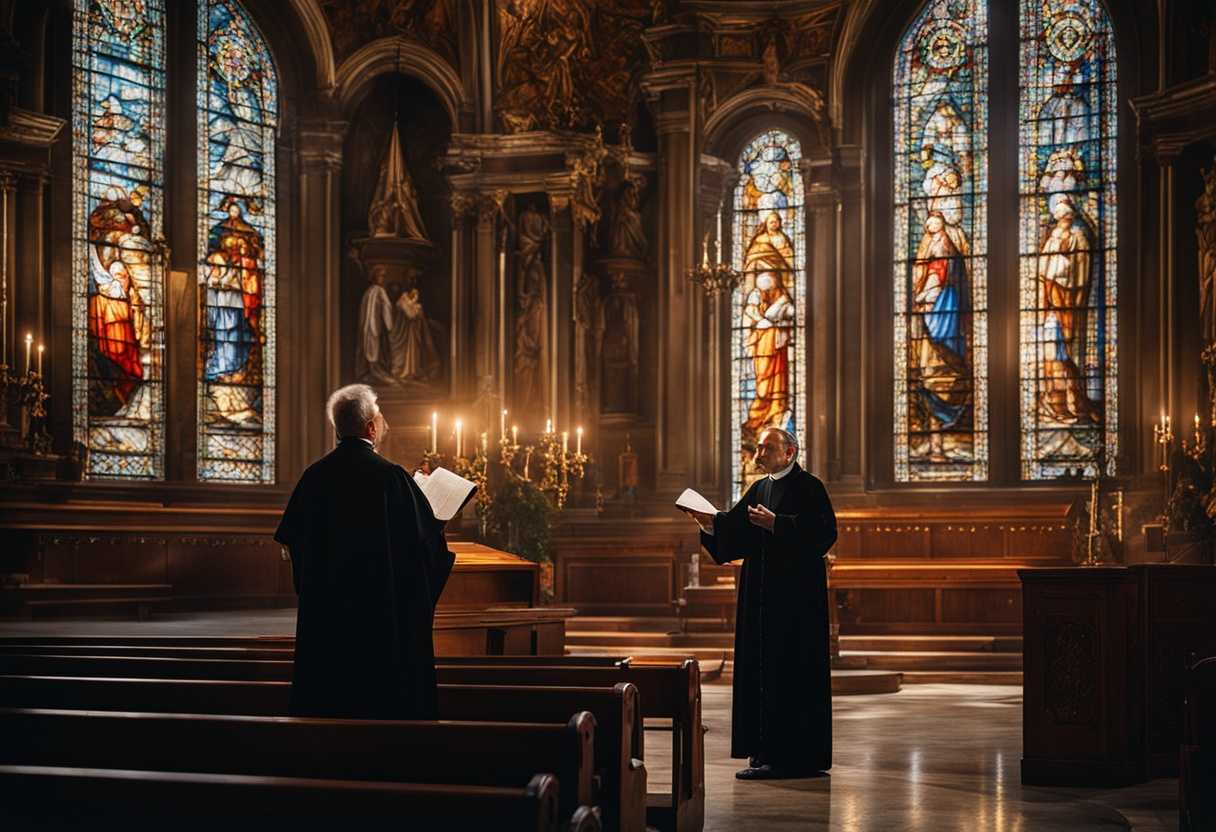
Setting the Scene for Hebrews 7:15-17
In the scene described in Hebrews 7:15-17, the writer sets the stage by discussing the appointment of a new priest, Jesus, who is from the order of Melchizedek. The writer explains that Jesus did not become a priest through a regulation as the Levitical priests did, but rather through the power of an indestructible life. This new priest, Jesus, is a fulfillment of the prophecy in Psalm 110:4, where it is stated that the Messiah would be a priest forever in the order of Melchizedek.
The scene unfolds in a heavenly setting, where Jesus is being appointed as the eternal high priest. Surrounding Jesus are angels and heavenly beings, witnessing this momentous occasion. The atmosphere is filled with awe and reverence as Jesus takes on his new role as the mediator between God and humanity. The writer emphasizes the significance of Jesus’ priesthood, highlighting its superiority over the Levitical priesthood and its eternal nature.
As the heavenly scene unfolds, the writer of Hebrews paints a vivid picture of Jesus’ unique and unparalleled role as the high priest in the order of Melchizedek. This scene serves to underscore the supremacy of Jesus’ priesthood and his eternal reign, fulfilling the prophecy and ushering in a new era of salvation and redemption for all who believe in him.
What is Hebrews 7:15-17 about?
The author of Hebrews is drawing a comparison between Jesus and Melchizedek, a mysterious figure mentioned in the book of Genesis in this verse. Unlike the priests from the line of Aaron, who served in the earthly tabernacle, Jesus is seen as a high priest in the order of Melchizedek. This comparison serves to highlight Jesus’ superior priesthood, which is not limited by earthly lineage or temporal constraints.
Think about the significance of this comparison. Why is it important that Jesus is likened to Melchizedek rather than being from the line of Aaron? This portrayal of Jesus as a priest in the order of Melchizedek emphasizes his eternal and transcendent nature as a mediator between humanity and God. It challenges our traditional understanding of priesthood and invites us to contemplate the profound and mysterious ways in which Jesus fulfills and surpasses the role of a priest in God’s plan of redemption.
Reflect on how this verse deepens our appreciation of Jesus’ unique and unparalleled role as our high priest. How does this comparison with Melchizedek help us to see Jesus in a new light and to understand the depth of his priesthood? Let us marvel at the richness of Christ’s priesthood and the ways in which he perfectly embodies the eternal and unchanging nature of God’s redemptive work in the world as we meditate on this verse.
Understanding what Hebrews 7:15-17 really means
The book of Hebrews stands as a profound theological masterpiece, serving as a bridge between the Old and New Testaments, with a central theme of highlighting the supremacy of Christ. In Hebrews 7:15-17, the discussion revolves around the priesthood of Jesus, drawing a comparison to the enigmatic figure of Melchizedek from biblical history.
The context of Hebrews reveals that the author is addressing Jewish Christians who are well-versed in the practices of the Levitical priesthood. Melchizedek, first introduced in Genesis 14:18-20 and later referenced in Psalm 110:4, holds a significant role as a foreshadowing figure, with the prophecy that the Messiah would be a perpetual priest in the order of Melchizedek.
Key phrases in Hebrews 7:15-17 shed light on the essence of Jesus’ priesthood. Phrases like “Another priest arises in the likeness of Melchizedek” signify a departure from the traditional priesthood based on lineage or Mosaic Law to a divine appointment. The mention of “the power of an indestructible life” emphasizes the eternal nature of Jesus’ priesthood, rooted in His resurrection and eternal existence.
Related biblical passages such as Genesis 14:18-20, Psalm 110:4, and Hebrews 5:6 further reinforce the eternal priesthood of Jesus in the order of Melchizedek. This eternal priesthood offers believers a sense of comfort and security, unlike the fallible and mortal human priests of the past. Jesus’ priesthood is perfect and everlasting, providing unwavering mediation and intercession.
Consider the analogy of someone seeking guidance from various counselors without finding lasting solutions until encountering one who offers perfect understanding and perpetual support. This mirrors Jesus’ role as the ultimate counselor and mediator, always present and eternally effective in His priesthood.
Hebrews 7:15-17 serves as a reminder of the exceptional and eternal nature of Jesus’ priesthood, inviting us to place our trust in His flawless mediation and find solace in His everlasting presence. Reflecting on this truth can deepen our faith and offer profound comfort on our spiritual journey.
What does it mean to be a priest forever?
To be a priest forever means to hold a priesthood that is not limited by time or by the constraints of human life. It signifies an eternal priesthood that transcends the boundaries of earthly existence. This type of priesthood is not subject to the limitations of age, sickness, or mortality, and it endures for all time without interruption.
Being a priest forever also implies a permanence and continuity in the priestly role. It suggests a continuous and unending ability to intercede on behalf of others, offer sacrifices, and mediate between humanity and Divinity. This eternal priesthood bridges the gap between God and humanity, providing a constant connection and access to the divine.
The concept of a priest forever conveys the idea of an unchanging and steadfast presence in the spiritual realm. It emphasizes the reliability and constancy of the priestly ministry, ensuring that there is always a mediator who can stand before God on behalf of the people. It signifies a timeless and unending commitment to serving and representing others before God.
Application
Embrace the teachings of Hebrews 7:15-17, embody Jesus’s example in your life. Let righteousness, love, and humility guide your actions at work and home. Strive for a deeper connection with God, spread His grace and mercy in your interactions. Act on this message now, make a difference in the world around you. How will you embrace Jesus’s qualities today?

Reverend Michael Johnson is an experienced Church Minister with a profound expertise in spirituality and guidance. With a serene presence and a compassionate heart, he has faithfully served his congregation for over 20 years, leading them on a spiritual journey towards inner peace and enlightenment. Reverend Johnson’s extensive knowledge of religious philosophies and profound understanding of human nature have made him a trusted confidant and mentor to many, as he seamlessly weaves his profound wisdom into life teachings. Reverend Johnson’s calming demeanor and empathetic nature continue to uplift and heal souls, nurturing a sense of unity and tranquility within his community.