
Hosea 10:15 is about the impending judgment and destruction that Israel will face due to their unfaithfulness and reliance on false idols, highlighting the consequences of turning away from God.
15 Thus it shall be done to you, O Bethel, because of your great evil. In the morning the king of Israel shall be utterly cut off.
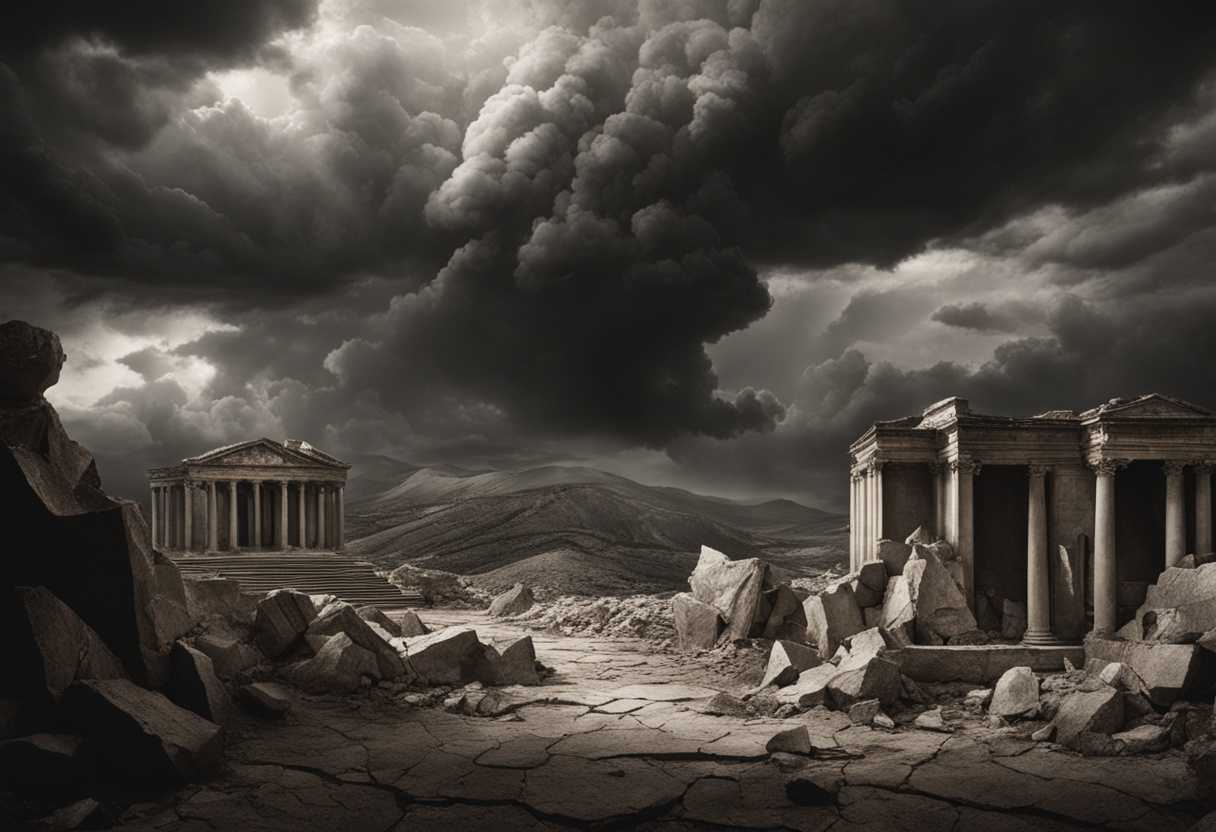
Setting the Scene for Hosea 10:15
In the ancient land of Israel, the air is thick with tension and uncertainty. The sun hangs low in the sky, casting long shadows over the fields that once flourished with crops. The people of Israel, weary from years of conflict and moral decay, gather in a small village, their faces etched with worry and despair. Among them is Hosea, a prophet chosen by God to deliver a message of warning and hope. He stands at the center of the crowd, his voice steady yet filled with urgency, as he speaks of impending judgment and the need for repentance. The villagers, including leaders and common folk alike, have come to hear his words, drawn by a mix of fear and curiosity about their fate.
As Hosea addresses the crowd, he recalls the history of their nation, a tapestry woven with moments of faithfulness and rebellion. He speaks of the golden calves, the altars built to foreign gods, and the unfaithfulness that has led them astray. The people listen intently, some nodding in agreement, while others cast furtive glances at one another, their hearts heavy with guilt. Among them is a farmer named Eli, who has struggled to provide for his family amidst the drought that has plagued the land. His wife, Miriam, stands beside him, clutching their young child, her eyes filled with tears as she fears for their future. The couple represents the many who have been caught in the web of their nation’s disobedience, longing for restoration yet unsure of how to achieve it.
The surroundings are stark, with the remnants of once-bountiful fields now parched and cracked under the relentless sun. Dust swirls around the feet of the villagers, a physical manifestation of their spiritual barrenness. In the distance, the mountains loom, silent witnesses to the unfolding drama of their lives. As Hosea’s words echo in the air, he paints a vivid picture of the consequences of their actions, warning them that their choices will lead to destruction. Yet, amidst the dire warnings, there is a glimmer of hope—a call to return to their God, to seek His mercy and restoration. The scene is charged with emotion, as the people grapple with the weight of their past and the possibility of a renewed future, all while Hosea stands as a beacon of truth in a time of darkness.
What is Hosea 10:15 about?
A stark warning is directed toward Israel in Hosea 10:15, highlighting the consequences of their unfaithfulness and the dangers of turning to false idols. The verse serves as a reminder of how one’s actions and choices can lead to inevitable judgment. When we reflect on this, we might ask ourselves: What does it mean to be unfaithful? How often do we put our trust in things that ultimately let us down? When we prioritize the superficial over the substantial, we too can find ourselves facing consequences in our lives, just as Israel faced impending judgment.
This passage also compels us to consider the nature of our own faithfulness. Are there modern-day idols in our lives that distract us from a true connection with what is meaningful? Hosea’s message is both urgent and relevant; it urges us to examine what we hold dear—whether that might be material possessions, social acceptance, or even power—and to recognize that these can never take the place of unwavering faith. The call is not just to avoid judgment but to embrace a deeper, more authentic relationship that can withstand trials. So, as we read and reflect on this verse, how might we realign our priorities to avoid falling into similar patterns of reliance on false supports? What steps might we take today to reaffirm our commitment to genuine faithfulness?
Understanding what Hosea 10:15 really means
Hosea 10:15 states, “So will Bethel do to you because of your great wickedness; at daybreak the king of Israel will be destroyed.” This verse encapsulates the urgent message of the prophet Hosea, who spoke during a time of moral decay and spiritual unfaithfulness in Israel. Understanding the historical context is crucial; Israel was facing impending judgment due to its persistent disobedience to God. The weight of this message is not just for the people of that time but resonates with us today.
One of the key themes in this verse is the idea of judgment and consequences. Hosea warns that turning away from God leads to inevitable repercussions. This theme is echoed throughout Scripture, notably in Galatians 6:7, which reminds us that “a man reaps what he sows.” Our actions, whether good or bad, have consequences that we cannot escape. This principle is as relevant today as it was in ancient Israel. Are we aware of the seeds we are planting in our lives?
Divine retribution is another significant theme in Hosea 10:15. The phrase “the day of punishment” serves as a stark reminder of God’s justice. While God is loving and merciful, He is also just and will not overlook wrongdoing indefinitely. This duality of God’s nature invites us to reflect on our own lives. Are we living in a way that honors God, or are we ignoring the warnings He provides?
In our contemporary world, where moral relativism often prevails, the message of accountability resonates deeply. Many individuals grapple with the consequences of their choices, whether in personal relationships, societal issues, or spiritual matters. Consider the story of a young man who, despite warnings from friends and family, engages in reckless behavior. Initially, he feels invincible, but over time, the consequences catch up with him—strained relationships, lost opportunities, and a sense of emptiness. This narrative mirrors the spiritual journey many face when they ignore God’s guidance.
The meaningful phrases in this verse also warrant attention. “The king of Israel” signifies leadership and responsibility, reminding us that those in positions of authority are held to a higher standard. Their actions can lead a nation astray or toward righteousness. Furthermore, “the morning dawns” symbolizes hope and renewal. Even amidst judgment, there is the promise of a new beginning for those who turn back to God. This duality of judgment and hope invites us to consider our own paths.
In conclusion, Hosea 10:15 serves as a poignant reminder of the consequences of our choices and the importance of returning to God. It calls us to reflect on our lives, encouraging us to seek righteousness and embrace the hope of redemption that is always available through repentance. As we navigate our own journeys, let us be mindful of the seeds we are sowing and the legacy we are creating. Are we ready to turn back to God and embrace the renewal He offers?
How can I seek healing from my spiritual failures?
To seek healing from spiritual failures, it’s essential to first acknowledge the areas in your life where you feel disconnected or have strayed from your values. Recognition is the first step toward healing, allowing you to confront those failures honestly rather than avoiding or denying them. You create space for growth and the possibility of renewal by opening your heart to this self-reflection.
Once you’ve identified your spiritual shortcomings, turn toward genuine repentance. This involves not just feeling remorse for your actions but also committing to change. Seeking forgiveness, whether through prayer, meditation, or conversations with trusted spiritual advisors or community members, can help you release the burden of guilt and start to mend your relationship with your beliefs and values. Embrace the idea that healing is a process, one that requires both patience and persistence.
Lastly, engage in practices that foster reconciliation and strengthen your spiritual journey. This might include immersing yourself in study, prayer, service to others, or joining a community that shares your values. Nurturing a deeper connection to your spiritual foundation by dedicating time and energy to these practices paves the way for healing and transformation in your life. The journey may be challenging, but each step taken in faith makes the path clearer and more rewarding.
Application
Life is like a busy office—full of tasks and distractions, but it’s time to hit pause and reflect. Just like a family gathering, we need to evaluate if we’re strengthening our bonds or allowing tension to build. Hosea 10:15 urges us to look at our decisions and how they resonate with our true purpose. It’s the perfect moment to spark a personal transformation! Are you prepared to tackle the parts of your life that need change and embrace a new direction?

Reverend Michael Johnson is an experienced Church Minister with a profound expertise in spirituality and guidance. With a serene presence and a compassionate heart, he has faithfully served his congregation for over 20 years, leading them on a spiritual journey towards inner peace and enlightenment. Reverend Johnson’s extensive knowledge of religious philosophies and profound understanding of human nature have made him a trusted confidant and mentor to many, as he seamlessly weaves his profound wisdom into life teachings. Reverend Johnson’s calming demeanor and empathetic nature continue to uplift and heal souls, nurturing a sense of unity and tranquility within his community.