
Isaiah 10:12-19 is about God using the Assyrian Empire as a tool to punish Israel’s pride and arrogance, displaying His sovereignty and justice over both the oppressor and the oppressed.
12 When the Lord has finished all his work on Mount Zion and on Jerusalem, he will punish the speech of the arrogant heart of the king of Assyria and the boastful look in his eyes.
13 For he says: “By the strength of my hand I have done it, and by my wisdom, for I have understanding; I remove the boundaries of peoples, and plunder their treasures; like a bull I bring down those who sit on thrones.
14 My hand has found like a nest the wealth of the peoples; and as one gathers eggs that have been forsaken, so I have gathered all the earth; and there was none that moved a wing or opened the mouth or chirped.”
15 Shall the axe boast over him who hews with it, or the saw magnify itself against him who wields it? As if a rod should wield him who lifts it, or as if a staff should lift him who is not wood!
16 Therefore the Lord God of hosts will send wasting sickness among his stout warriors, and under his glory a burning will be kindled, like the burning of fire.
17 The light of Israel will become a fire, and his Holy One a flame, and it will burn and devour his thorns and briers in one day.
18 The glory of his forest and of his fruitful land the Lord will destroy, both soul and body, and it will be as when a sick man wastes away.
19 And the remnant of the trees of his forest will be so few that a child can write them down.
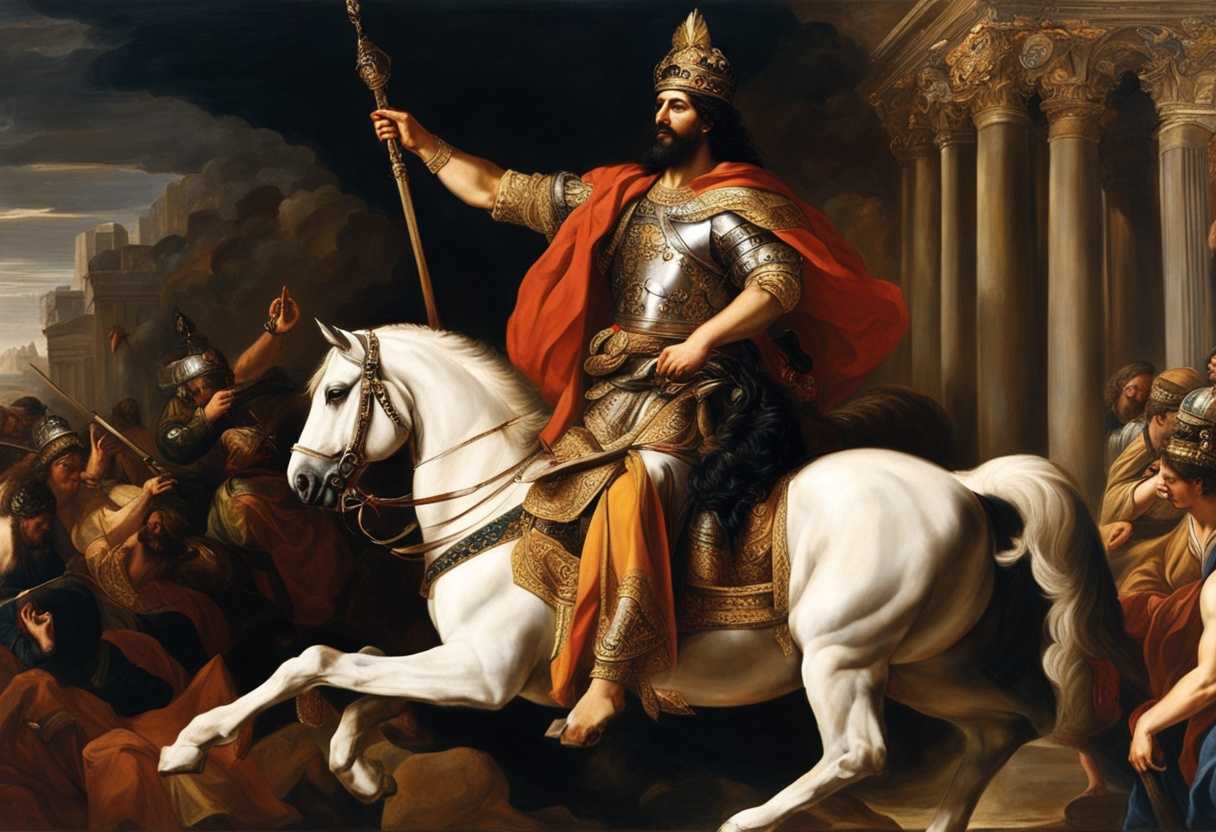
Setting the Scene for Isaiah 10:12-19
The scene in Isaiah 10:12-19 takes place in the ancient kingdom of Assyria during a time of great turmoil and conquest. The powerful Assyrian army, led by King Sennacherib, has been on a relentless campaign to conquer neighboring nations, including Judah. In this particular moment, the Assyrian army has besieged the city of Jerusalem, threatening its destruction.
Within the city walls, King Hezekiah of Judah is faced with a dire situation as his people are surrounded by the mighty Assyrian forces. Hezekiah, a devout king who seeks guidance from the prophet Isaiah, turns to God in prayer for deliverance. Isaiah, a trusted advisor and messenger of God, stands before the king and reassures him that the Lord will not allow the Assyrians to prevail against Jerusalem.
The atmosphere is tense as the fate of the city hangs in the balance. The people of Jerusalem are filled with fear and uncertainty, but Hezekiah’s faith in God remains steadfast. As the Assyrian army continues its siege, the stage is set for a miraculous intervention by the Lord to protect His people and bring about the downfall of the arrogant Assyrians.
What is Isaiah 10:12-19 about?
A powerful reminder of the consequences of pride and arrogance is seen in this verse. Assyria, a nation that exuded hubris and thought themselves invincible, will face judgment and destruction from God. It serves as a cautionary tale against the dangers of haughtiness and self-importance. Think about the times when you or others around you have been consumed by pride – perhaps it led to conflicts, misunderstandings, or even downfall. This verse compels us to reflect on our own actions and attitudes, prompting us to strive for humility and empathy in our interactions with others.
Furthermore, this verse highlights the belief that ultimately, God is the ultimate judge and arbiter of justice. No matter how powerful or mighty a nation may seem, they are not above divine accountability. It prompts us to ponder on the idea of accountability and consequences. How does this notion shape our understanding of ethics and morality? How does it influence the way we navigate conflicts and power dynamics in our own lives? This verse invites us to contemplate the importance of humility and righteousness in our actions, reminding us that true strength lies in humility and respect for others.
Understanding what Isaiah 10:12-19 really means
In Isaiah 10:12-19, we delve into a prophecy where God, through Isaiah, foretells the judgment and downfall of Assyria, a nation once used by God but now consumed by arrogance. This passage underscores God’s sovereignty and justice, reminding us that even the mightiest nations are subject to His divine will. The phrase “When the Lord has finished all his work against Mount Zion and Jerusalem” signifies the purposeful nature of God’s judgment, assuring us that His actions are deliberate and measured. It serves as a reminder that God’s plans have a definitive end and are not arbitrary.
“I will punish the king of Assyria for the willful pride of his heart and the haughty look in his eyes” highlights God’s disdain for arrogance and oppression. The king’s boastful claim, “By the strength of my hand I have done this, and by my wisdom, because I have understanding,” reveals his failure to acknowledge God’s sovereignty and instead attribute success solely to his own abilities. The metaphor “Does the ax raise itself above the person who swings it?” poignantly illustrates the folly of Assyria exalting itself above the One who wields it, emphasizing their role as mere instruments in God’s hands.
Drawing parallels, Proverbs 16:18 warns, “Pride goes before destruction, a haughty spirit before a fall,” reinforcing the notion that pride leads to downfall. James 4:6 echoes this sentiment, stating, “God opposes the proud but shows favor to the humble,” emphasizing God’s stance against pride and His favor towards humility. In Romans 9:17-18, Paul references God’s sovereignty over nations and leaders, akin to how God used and judged Assyria, showcasing His overarching authority.
Today, Isaiah 10:12-19 remains relevant, cautioning us against the dangers of pride and underscoring the significance of humility. In a world that often glorifies personal achievements, this scripture prompts us to acknowledge God’s hand in our successes. It also serves as a reminder that God is just and will hold accountable those who oppress others with arrogance. An anecdote of a business leader attributing success solely to personal efforts mirrors Assyria’s downfall, emphasizing the necessity of humility and recognizing God’s role in our lives for sustained righteousness.
In conclusion, Isaiah 10:12-19 imparts valuable lessons on the perils of pride and the imperative of acknowledging God’s sovereignty. It urges us to embrace humility and justice, knowing that God is in control and will ultimately bring about justice. Let us heed these timeless truths, striving for humility and righteousness in all aspects of our lives.
What happens when pride leads to destruction?
When pride leads to destruction, it can result in God’s judgment and discipline. The verse highlights the danger of arrogance and self-reliance, as well as the consequences of boasting in one’s own strength instead of relying on God. It shows that those who exalt themselves will ultimately be humbled by the Lord. Pride brings about destruction in this case, serving as a reminder that God is sovereign and will not tolerate prideful behavior. The passage underscores the importance of humility and dependence on God, as well as the consequences of neglecting to acknowledge His authority and power. Individuals need to remain humble before God and heed the warning against the dangers of pride.
Application
Embrace the power of Isaiah 10:12-19! Let God’s message stir your soul. Align your actions with His will and embrace righteousness. Reject behaviors that defy His commandments. Will you heed this divine call and realign your path with God’s purpose?

Reverend Michael Johnson is an experienced Church Minister with a profound expertise in spirituality and guidance. With a serene presence and a compassionate heart, he has faithfully served his congregation for over 20 years, leading them on a spiritual journey towards inner peace and enlightenment. Reverend Johnson’s extensive knowledge of religious philosophies and profound understanding of human nature have made him a trusted confidant and mentor to many, as he seamlessly weaves his profound wisdom into life teachings. Reverend Johnson’s calming demeanor and empathetic nature continue to uplift and heal souls, nurturing a sense of unity and tranquility within his community.