
Leviticus 8:1-5 is about the consecration of Aaron and his sons as priests, symbolizing the need for a designated priesthood to intercede on behalf of the people before God.
1 Then the Lord spoke to Moses, saying,
2 “Take Aaron and his sons with him, and the garments and the anointing oil and the bull of the sin offering and the two rams and the basket of unleavened bread,”
3 And Moses said to Aaron, “Take a bull calf for a sin offering and a ram for a burnt offering, both without blemish, and offer them before the Lord.
4 And Moses did as the Lord commanded him, and the congregation was assembled at the entrance of the tent of meeting.
5 And Moses said to the congregation, “This is the thing that the Lord has commanded to be done.”
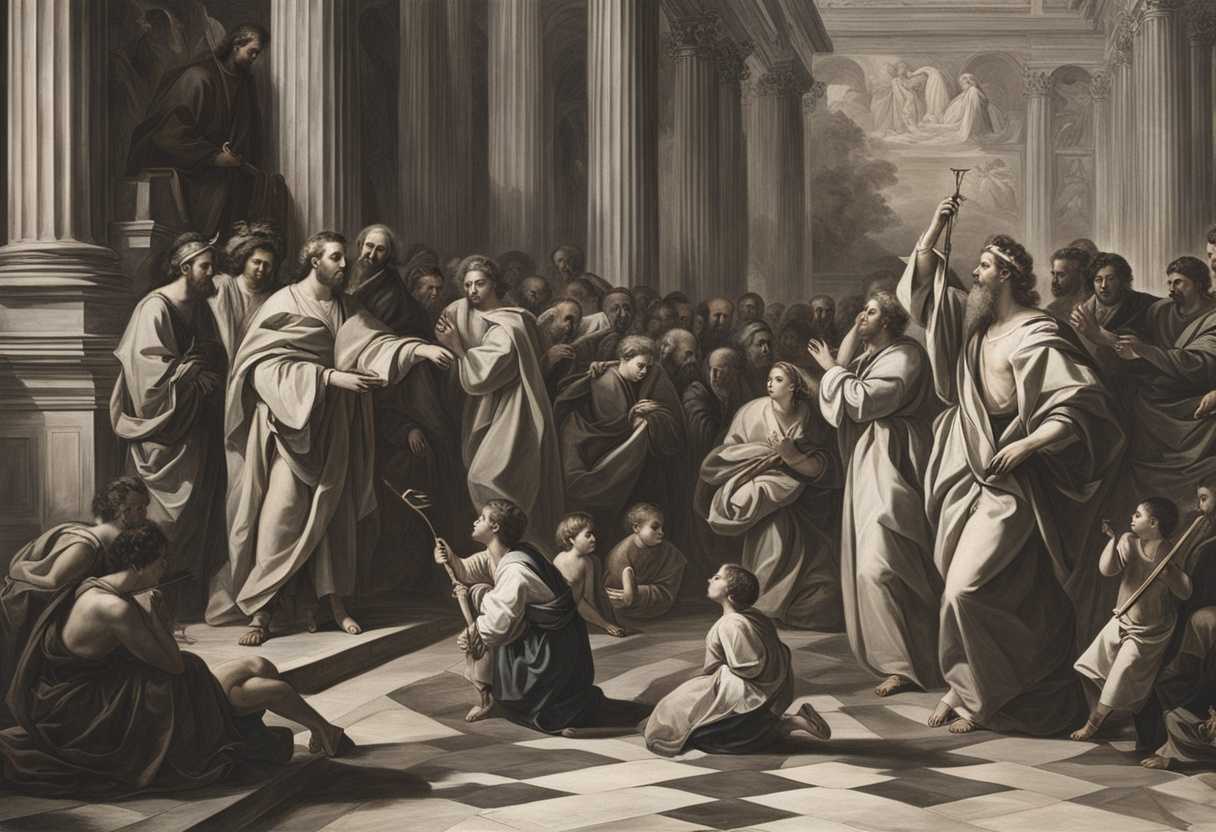
Setting the Scene for Leviticus 8:1-5
In the book of Leviticus, we find a significant scene unfolding as Moses gathers Aaron and his sons, along with the entire congregation of Israel, at the entrance of the Tabernacle. The setting is one of reverence and anticipation as the Israelites prepare for a sacred moment in their history. The Tabernacle, a portable sanctuary for worship, stands majestically in the center, its intricate details reflecting the glory of God.
Moses, the chosen leader of the Israelites, follows the instructions given to him by the Lord. He anoints Aaron and his sons, consecrating them for their roles as priests. The atmosphere is charged with solemnity as the people witness this sacred ordination. The garments of the priests glisten in the sunlight, symbolizing their purity and dedication to serving God.
As the ceremony progresses, the scent of incense fills the air, and the sound of prayers and blessings reverberates throughout the camp. The people bow their heads in reverence, understanding the significance of this moment. Through this act of consecration, the priests are set apart for a holy purpose, to intercede on behalf of the people and carry out the rituals of atonement. The scene is a powerful reminder of the Israelites’ covenant with God and their commitment to following His commandments.
What is Leviticus 8:1-5 about?
Moses follows God’s instructions to consecrate Aaron and his sons as priests in this verse. This act symbolizes a sacred ritual where individuals are set apart for special service to God. It signifies a deep spiritual calling and a sense of dedication to carrying out God’s work. Moses affirms the role of Aaron and his sons as priests by consecrating them, entrusting them with the responsibility of leading the community in worship and upholding religious traditions as mediators between the people and God.
Think about the significance of this act – how must Aaron and his sons have felt, knowing that they were being chosen for such an important and holy duty? Being a priest requires considering the weight of responsibility and the level of faith and obedience needed to fulfill this role. Reflect on how this act of consecration represents a sense of divine calling and the importance of serving God with utmost reverence and commitment.
Understanding what Leviticus 8:1-5 really means
The book of Leviticus serves as a guide for the Israelites, outlining how to lead a holy life and maintain a close relationship with God. Within this context, Leviticus 8:1-5 stands out as a pivotal passage, detailing the consecration of Aaron and his sons as priests, a significant moment in establishing the Levitical priesthood.
“The Lord spoke to Moses,” a phrase from the passage, underscores the divine origin of the instructions given for the consecration. It highlights that this process is not a mere human tradition but a direct command from God Himself. The specific selection of Aaron and his sons for the priestly role, as mentioned in the text, emphasizes the importance of divine calling and appointment in serving God.
The various items listed in the passage, such as the garments, anointing oil, and offerings, symbolize purification, dedication, and atonement for sin. Each element plays a crucial role in the consecration ceremony, reflecting the significance of these rituals in setting apart the priests for their sacred duties. Additionally, the instruction to assemble the entire community underscores the communal nature of the priesthood, emphasizing that their role is not isolated but impacts the entire community.
In exploring related passages like Exodus 28-29, Hebrews 5:1-4, and 1 Peter 2:9, a deeper understanding of the priestly garments, the role of the high priest, and the concept of believers as a “royal priesthood” emerges. These connections bridge the Old and New Testaments, showing the continuity of God’s plan and the fulfillment of these priestly roles in Jesus Christ.
The relevance of Leviticus 8:1-5 extends to modern believers, reminding them of their unique calling, the importance of community in worship, and the necessity of obedience to God’s commands. Just as the ancient consecration ceremony involved the entire community, contemporary believers are encouraged to engage in collective worship and support one another in their spiritual journeys.
In a modern context, envision a church ordaining a new pastor, with the congregation coming together to witness the ceremony. This event echoes the ancient consecration of Aaron and his sons, illustrating the enduring principles of divine calling, community involvement, and obedience to God. It serves as a tangible reminder that these foundational aspects of faith remain relevant and impactful in today’s world.
Leviticus 8:1-5 encapsulates timeless truths about divine calling, community, and obedience, offering believers inspiration and guidance for their own spiritual walk. By delving into the meanings behind the phrases and connecting them to broader biblical themes, individuals can glean valuable insights for applying these principles in their lives today.
How can we consecrate ourselves for service to God?
To consecrate ourselves for service to God, we can follow the example found in Leviticus 8:1-5. This passage describes how Aaron and his sons were consecrated for service as priests to the Lord. They were washed with water, clothed with specific garments, anointed with oil, and presented before the congregation. These actions symbolized their dedication and setting apart for God’s service. We can consecrate ourselves for service to God by purifying ourselves through confession and repentance, putting on the “garments” of righteousness, seeking the anointing of the Holy Spirit, and presenting ourselves as living sacrifices to God. This involves a daily commitment to seeking God’s will, walking in obedience to His Word, and offering ourselves fully to Him for His service and glory. We too can consecrate ourselves for service by recognizing our calling and purpose in God’s kingdom, just as Aaron and his sons were set apart for a specific purpose in serving God as priests. This involves surrendering our own desires and plans to align with God’s will, allowing Him to use us as vessels for His work and ministry in the world. We position ourselves to be instruments of God’s love, grace, and truth to those around us by consecrating ourselves in this way.
Application
Are you ready to embrace your purpose and serve in God’s kingdom with the same dedication as Aaron and his sons? Just like them, you have a sacred duty to fulfill. Take a moment to reflect on how you can fully commit yourself to fulfilling your calling. Will you answer the call with unwavering devotion and truly honor Him in all that you do?

Reverend Michael Johnson is an experienced Church Minister with a profound expertise in spirituality and guidance. With a serene presence and a compassionate heart, he has faithfully served his congregation for over 20 years, leading them on a spiritual journey towards inner peace and enlightenment. Reverend Johnson’s extensive knowledge of religious philosophies and profound understanding of human nature have made him a trusted confidant and mentor to many, as he seamlessly weaves his profound wisdom into life teachings. Reverend Johnson’s calming demeanor and empathetic nature continue to uplift and heal souls, nurturing a sense of unity and tranquility within his community.