
1 Then the Lord spoke to Moses, saying,
2 “Take Aaron and his sons with him, and the garments and the anointing oil and the bull of the sin offering and the two rams and the basket of unleavened bread,”
3 And you shall put all these on the palms of Aaron and on the palms of his sons, and wave them for a wave offering before the Lord.
4 And Moses did as the Lord commanded him, and the congregation was assembled at the entrance of the tent of meeting.
5 And Moses said to the congregation, “This is the thing that the Lord has commanded to be done.”
6 And Moses brought Aaron and his sons and washed them with water.
7 And he put the coat on him and tied the sash around his waist and clothed him with the robe and put the ephod on him and tied the skillfully woven band of the ephod around him, binding it to him with the band.
8 And he placed the breastpiece on him, and in the breastpiece he put the Urim and the Thummim.
9 And he set the turban on his head, and on the turban, in front, he set the golden plate, the holy crown, as the Lord commanded Moses.
10 And Moses took the anointing oil and anointed the tabernacle and all that was in it, and consecrated them.
11 And he sprinkled some of it on the altar seven times and anointed the altar and all its utensils and the basin and its stand to consecrate them.
12 And he poured some of the anointing oil on Aaron’s head and anointed him to consecrate him.
13 And Moses brought Aaron’s sons and clothed them with coats and tied sashes around their waists and bound caps on them, as the Lord commanded Moses.
14 Then he brought the bull of the sin offering, and Aaron and his sons laid their hands on the head of the bull of the sin offering.
15 Then he killed it, and Moses took the blood, and with his finger put it on the horns of the altar around it and purified the altar and poured out the blood at the base of the altar and consecrated it to make atonement for it.
16 And he took all the fat that was on the entrails and the long lobe of the liver and the two kidneys with their fat, and Moses burned them on the altar.
17 But the bull and its skin and its flesh and its dung he burned up with fire outside the camp, as the Lord commanded Moses.
18 Then he presented the ram of the burnt offering, and Aaron and his sons laid their hands on the head of the ram.
19 And he killed it, and Moses threw the blood against the sides of the altar.
20 Then he took the fat and the fat tail and all the fat that was on the entrails and the long lobe of the liver and the two kidneys with their fat, and Moses burned them on the altar.
21 And he washed the entrails and the legs with water, and Moses burned the whole ram on the altar. It was a burnt offering with a pleasing aroma, a food offering for the Lord, as the Lord commanded Moses.
22 Then he presented the other ram, the ram of ordination, and Aaron and his sons laid their hands on the head of the ram.
23 And he killed it, and Moses took some of its blood and put it on the lobe of Aaron’s right ear and on the thumb of his right hand and on the big toe of his right foot.
24 And he presented Aaron’s sons, and Moses put some of the blood on the lobes of their right ears and on the thumbs of their right hands and on the big toes of their right feet. And Moses threw the blood against the sides of the altar.
25 And he took the fat, and the fat tail, and all the fat that was on the entrails, and the long lobe of the liver and the two kidneys with their fat, and Moses burned them on the altar.
26 And out of the basket of unleavened bread that was before the Lord, he took one unleavened loaf and one loaf of bread with oil and one wafer and placed them on the pieces of fat and on the right thigh.
27 And he put all these in the hands of Aaron and in the hands of his sons and waved them as a wave offering before the Lord.
28 And Moses took them from their hands and burned them on the altar with the burnt offering.
29 And Moses took the breast and waved it for a wave offering before the Lord. It was Moses’ portion of the ram of ordination, as the Lord commanded Moses.
30 Then Moses took some of the anointing oil and of the blood that was on the altar and sprinkled it on Aaron and his garments, and also on his sons and his sons’ garments. So he consecrated Aaron and his garments, and his sons and his sons’ garments with him.
31 And Moses said to Aaron and his sons, “Boil the flesh at the entrance of the tent of meeting, and there eat it and the bread that is in the basket of ordination offerings, as I commanded, saying, ‘Aaron and his sons shall eat it.’
32 And that which remains of the flesh and the bread you shall burn up with fire.
33 And you shall not go outside the entrance of the tent of meeting for seven days, until the days of your ordination are completed, for it will take seven days to ordain you.
34 As has been done today, the Lord has commanded to be done to make atonement for you.
35 Therefore you shall stay at the entrance of the tent of meeting day and night for seven days, and keep the charge of the Lord, that you may not die, for so I am commanded.”
36 Thus Aaron and his sons did all the things that the Lord commanded by Moses.
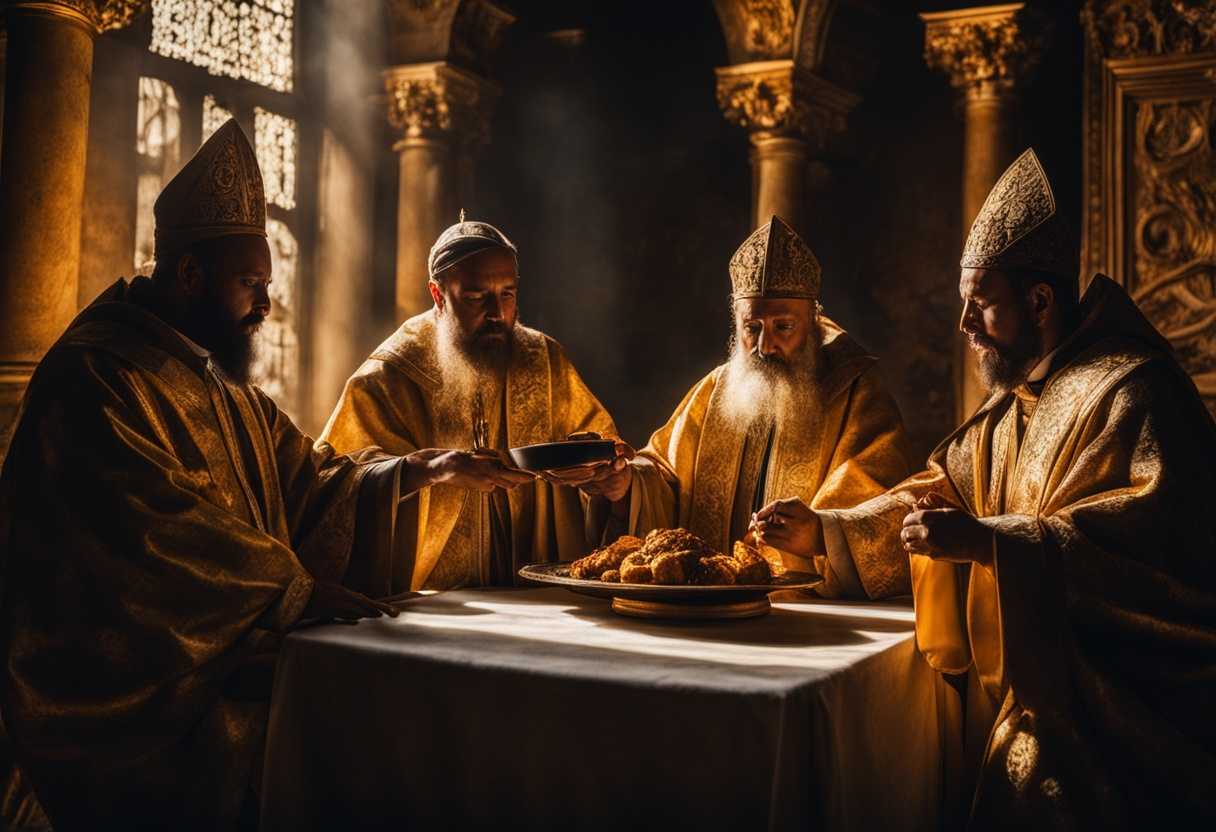
The True Meaning of Leviticus 8
The book of Leviticus was written by Moses, the great prophet and leader of the Israelites. We witness the consecration and ordination of Aaron and his sons as the first priests of the Israelite nation in this chapter. This event marks a significant turning point, as God establishes the priesthood to serve as the intermediaries between the people and the divine.
The chapter describes in detail the rituals and ceremonies involved in this sacred process. We see the anointing of Aaron, the washing of the priests, and the offering of various sacrifices. These actions symbolize the holiness and purity required of those who would serve in God’s sanctuary. The people are reminded of the importance of obedience and reverence in their worship of the Almighty.
Throughout the passage, we are reminded of the importance of following God’s commands precisely, as seen in the earlier instructions given to Moses in Exodus 29. The consecration of the priests is a crucial step in the establishment of the Israelite religious system, paving the way for the future worship and service of the Lord.
Leviticus 8:1-5
Moses summoned Aaron and his sons to the entrance of the tabernacle in Leviticus 8:1-5 after its construction was completed. This act marks the beginning of the consecration of Aaron and his sons as priests. It’s important to note that Aaron was Moses’ brother and was appointed by God to be the first high priest of Israel. The establishment of the priesthood played a crucial role in the religious life of ancient Israel, as the priests were mediators between the people and God, responsible for offering sacrifices and interceding on behalf of the people.
The act of consecration was a solemn and sacred ceremony, involving the washing of Aaron and his sons with water, dressing them in priestly garments, and anointing them with oil. Each step in the consecration process was symbolic and significant. The washing with water signified purification and cleansing, preparing the priests for their holy service. The priestly garments distinguished Aaron and his sons as set apart for God’s work, emphasizing the importance of their role in the community. The anointing with oil symbolized the empowering and equipping of the priests by the Holy Spirit for their duties.
This event foreshadows the later establishment of the priesthood under the new covenant in Christianity, where Jesus Christ is seen as the ultimate high priest who intercedes on behalf of believers before God. Hebrews 4:14-16 speaks of Jesus as our great high priest who can empathize with our weaknesses and gives us access to the throne of grace. Jesus serves as the mediator between humanity and God, offering himself as the ultimate, perfect sacrifice for the atonement of sin.
The consecration of Aaron and his sons as priests also underscores the importance of obedience and faithfulness in serving God. The instructions for the consecration ceremony were given by God to Moses, and it was crucial for Aaron and his sons to follow these instructions carefully. This emphasis on obedience reflects a broader theme in the Bible regarding the importance of following God’s commands and serving Him wholeheartedly. Deuteronomy 5:32-33 emphasizes the significance of obeying God’s statutes and commands, which leads to life and prosperity. Aaron and his sons’ obedience in the consecration process set a precedent for future generations of priests to honour God through their service.
Leviticus 8:6-9
Aaron and his sons are ordained as priests before the Lord in a significant moment in Leviticus 8:6-9. The process of ordaining the priests involved several key elements that held great symbolic meaning. First, Moses had Aaron and his sons come forward before the tent of meeting, signifying their separation for the holy service they were called to fulfill. This act of stepping into the presence of God in the tent of meeting symbolized their consecration and dedication to the Lord.
Next, Moses washed Aaron and his sons with water. Water has long been a symbol of purification and cleansing in various religious traditions, and here it served to cleanse the priests from any impurities before they could serve as mediators between the Israelites and God. This act also underscored the importance of spiritual cleanliness when approaching the divine presence.
Following the washing with water, Moses clothed Aaron in the sacred garments of the priesthood. The garments, including the ephod, breastpiece, robe, and turban, were designed with specific colors and materials as instructed by God. Each garment had symbolic meanings, such as representing the authority given by God or bearing the names of the twelve tribes of Israel on the breastplate, signifying the priest’s role as a representative of the people before God.
Then, Moses anointed Aaron with the anointing oil, poured it on his head, and anointed the tabernacle and all its furnishings. The anointing with oil was a symbol of being chosen and set apart by God for a holy purpose. Oil was used in the Bible to signify the presence and power of the Holy Spirit. They consecrated Aaron and the tabernacle for the service of God by anointing them. This act of anointing also signified the empowering of the priests to carry out their sacred duties. Those called to serve as priests before God demonstrate the importance of consecration, purification, and empowerment in these verses. The meticulous rituals of the ordination process underscored the sacredness of the priesthood and the need for the priests to be set apart from the rest of the community. This dedication and separation for the holy service were crucial for maintaining the sanctity of the priests’ role as mediators between God and the people.
This ordination of Aaron and his sons as priests also points forward to Christ, who would serve as the ultimate High Priest. Jesus in the New Testament is referred to as the High Priest who intercedes for believers before God (Hebrews 4:14-16). The symbolism and rituals of the priesthood in Leviticus find their fulfillment and ultimate meaning in Jesus Christ, who through His sacrifice, provides purification and access to God for all who believe in Him.
Leviticus 8:10-13
Moses took the anointing oil and anointed the tabernacle, along with everything in it, to consecrate them and set them apart for the service of the Lord, as described in Leviticus 8:10-13. This act of anointing was significant because it signified the setting apart of the tabernacle as a sacred space where God’s presence would dwell among His people. The anointing oil was used symbolically to consecrate and purify the objects and individuals for holy use.
This act of anointing holds great symbolism in the Bible. Anointing with oil was a common practice in ancient Israel to signify being chosen or appointed by God for a specific purpose. James 5:14 in the New Testament shows the significance of anointing with oil, which symbolizes the presence and power of the Holy Spirit in bringing about restoration and wholeness by anointing the sick with oil for healing.
Moses, as the intermediary between the Israelites and God, played a crucial role in anointing the tabernacle and its contents. His obedience and adherence to God’s commands in this act of anointing set an example for the priests and the Israelites, showing the importance of following God’s instructions for worship and consecration. This act emphasized the holiness and sanctity of God’s presence among His people and the need for reverence and obedience in approaching Him.
The consecration of the tabernacle through anointing also points forward to the ultimate consecration and anointing fulfilled in Jesus Christ. Jesus is often referred to as the Anointed One (Messiah/Christ) in the Bible, signifying His role as the chosen and anointed one of God to bring salvation and redemption to humanity. Jesus, portrayed as the ultimate High Priest in Hebrews 9:11-14, enters the heavenly tabernacle once and for all, offering His own blood for the purification of sins, fulfilling the need for a permanent consecration and atonement for all. Leviticus 8:10-13 highlights the importance of consecration, obedience, and reverence in worshiping God. It serves as a foreshadowing of the ultimate consecration and atonement brought about by Jesus Christ, the perfect High Priest who anoints us with His Spirit for the service of God.
Leviticus 8:14-17
The selection in Leviticus 8:14-17 deals with the anointing of Aaron, the high priest, and his sons in a solemn ceremony that marked the beginning of their priestly duties. This momentous event was pivotal in establishing the consecration and sanctification of Aaron and his sons for their sacred office.
Starting with verse 14, it states, “Then he brought the bull of the sin offering, and Aaron and his sons laid their hands on the head of the bull of the sin offering.” This act of laying hands on the sacrificial animal symbolizes the transfer of sin from the individual to the animal, representing the atonement for sin that was necessary for the priests to be consecrated. This practice foreshadowed the ultimate sacrifice of Jesus Christ as the sacrificial lamb for the sins of humanity. The purity and holiness required of the priests in their service to God were represented in this sin offering.
Moving on to verse 15, which reads, “He slaughtered it, and Moses took the blood and with his finger put it on the horns of the altar all around, purifying the altar. He poured out the rest of the blood at the base of the altar; thus he consecrated it to make atonement for it.” This act of sprinkling the blood on the altar signified the cleansing and consecration of the altar itself, making it a holy place set apart for worship and offering sacrifices to God. The blood was a vital element in the process of atonement, as it symbolized the giving of life for the forgiveness of sin, which is a prominent theme throughout the Bible. This act reflects the importance of blood sacrifices and the significance of atonement in the Old Testament. Moses turned all the fat that was around the entrails, the lobe of the liver, and the two kidneys and their fat into smoke on the altar in verse 16.” The burning of the fat and specific organs on the altar was a demonstration of complete dedication and surrender to God. The fat was considered the choicest part of the animal and burning it on the altar was a symbol of giving the best to God. It illustrates the concept of offering one’s best to God, reflecting the principle of wholehearted devotion in service and worship. This idea is echoed in other passages such as Romans 12:1, which calls believers to present themselves as living sacrifices, holy and pleasing to God.
Concluding with verse 17, “But the bull, its hide, its flesh, and its dung he burned with fire outside the camp, as the Lord commanded Moses.” The disposal of the remaining parts of the sin offering outside the camp emphasizes the removal of sin and impurity from the camp where God dwelt. This act highlights the importance of maintaining purity and holiness in the presence of God. The idea of removing impurity from the camp is also reflected in the New Testament, where believers are encouraged to cleanse themselves from all defilement of body and spirit, perfecting holiness out of reverence for God (2 Corinthians 7:1). The anointing of Aaron and his sons in Leviticus 8 symbolizes the sanctification, dedication, and consecration required for serving as priests before God. This ceremonial process serves as a foreshadowing of the ultimate sacrifice of Jesus Christ, who would become the eternal High Priest and provide atonement once and for all for the sins of humanity. The intricate details of the consecration ceremony in Leviticus not only emphasize the importance of holiness and purity in worship but also point to the redemptive work of Christ that fulfills and surpasses the sacrificial system of the Old Testament.
Leviticus 8:18-21
Moses consecrated Aaron and his sons as priests in a pivotal moment in Leviticus 8:18-21. This act of consecration was of utmost importance, as it marked their official induction into their sacred role as intermediaries between the people of Israel and God. Let’s break down this passage further to understand its significance.
Starting with verse 18, we see Moses taking the blood of the ram that was sacrificed as a burnt offering and putting it on the right earlobes, right thumbs, and right big toes of Aaron and his sons. The act of applying blood to these specific body parts symbolizes the consecration and purification of their thoughts, actions, and walk. This act signified that every aspect of their lives, from what they hear to what they do, was now sanctified for the service of the Lord. This symbolism underscores the need for holiness and purity in carrying out the duties of a priest, reminding us of the importance of consecrating ourselves wholly to God in all aspects of our lives.
Moving on to verse 19, Moses sprinkles the blood that is on the altar around the priests, signifying that they are fully dedicated to God’s service. The blood represents atonement and the covering of sins, highlighting the priests’ need for purification before they can effectively minister on behalf of the people. This act also points to the necessity of sacrifice and shedding of blood for the forgiveness of sins, a concept that foreshadows the ultimate sacrifice of Jesus Christ, who would shed His blood for the redemption of all humanity. Moses takes the anointing oil and sprinkles it on the priests and their garments in verse 20. The anointing oil was a symbol of the Holy Spirit’s presence and empowerment for the priestly duties ahead. This anointing set them apart for their sacred role and bestowed upon them the authority and blessing needed to represent the people before God. The anointing oil is a powerful reminder of the empowerment that comes from God for His chosen servants, echoing the importance of relying on the Holy Spirit for guidance and strength in our own lives and ministries.
Finally, verse 21 records Moses as commanding Aaron and his sons to boil the flesh at the entrance of the tent of meeting and eat it there with the bread that was in the basket of consecration offerings. This act of sharing a meal together was a symbol of fellowship and unity among the priests as they embarked on their shared ministry. Eating the consecrated food in the holy place underscored the need for the priests to be nourished by the Word of God and to partake in His provision as they carried out their duties. This communal meal reflects the importance of community and support among believers, as we are all called to encourage and uplift one another in our walk with the Lord. Leviticus 8:18-21 provides us with profound insights into the significance of consecration, purification, empowerment, and fellowship in the service of God. Through the consecration of Aaron and his sons, we are reminded of the call to holiness and dedication in our own lives, the need for atonement and empowerment through the Holy Spirit, and the importance of unity and communal support in our journey of faith. These timeless messages resonate throughout the Bible, pointing us towards a deeper understanding of our role as God’s chosen people and the calling to live a life that glorifies Him in all that we do.
Leviticus 8:22-29
An important section detailing the anointing of Aaron and his sons as priests is seen in Leviticus 8:22-29. The verses describe the process in which Moses took some of the anointing oil and some of the blood from the altar and sprinkled it on Aaron and his garments, as well as on his sons and their garments. This act symbolized the consecration and setting apart of Aaron and his sons for the holy work of serving as priests before the Lord.
This anointing ceremony was crucial in the establishment of the priesthood in Israel. It signified the authority and blessing bestowed upon Aaron and his sons to carry out the duties of the priesthood. The anointing oil was a symbol of the Holy Spirit and the divine calling that was placed upon them. Through this act, they were separated from the rest of the Israelites to fulfill their sacred duties in the tabernacle.
This event holds significant parallels to the anointing of Jesus Christ as the High Priest of all believers. “It states in Hebrews 7:17, ‘For it is witnessed of him, “You are a priest forever, after the order of Melchizedek.””” Through His sacrifice on the cross, Jesus became the ultimate High Priest, interceding on behalf of all who believe in Him. The anointing of Aaron and his sons foreshadowed the ultimate priesthood of Christ, who would offer Himself as the perfect sacrifice for the sins of humanity.
Additionally, the anointing of Aaron and his sons serves as a reminder of the importance of consecration and obedience in serving God. They were set apart for a specific purpose and were expected to conduct themselves in a manner befitting their role as priests. This highlights the need for believers today to live lives of holiness and dedication to God, recognizing that we have been called to serve Him in our various roles and responsibilities. The anointing of Aaron and his sons as priests in Leviticus 8:22-29 not only established the Aaronic priesthood in Israel but also pointed towards the ultimate High Priest, Jesus Christ. This event underscores the significance of consecration, obedience, and the calling to serve God with reverence and purity. It serves as a timeless message for believers to remember the sacredness of our calling and the need to walk in obedience and holiness before the Lord.
Leviticus 8:30-36
The focus in Leviticus 8:30-36 is on anointing Aaron and his sons as the priests of Israel. This event marks the culmination of the consecration process and establishes Aaron as the high priest. Let’s break it down into important sections for a detailed commentary:
-
Anointing the Altar and its Articles (Verses 30-32): Moses takes the anointing oil and sprinkles it on the altar seven times to consecrate it and all its utensils. This action symbolizes the setting apart of the altar and its instruments for holy use. The anointing oil is a representation of the Holy Spirit’s empowerment and equipping for the service of God. This ritual underscores the importance of sanctifying the objects used in worship, emphasizing the significance of ceremonial purity and reverence in approaching God.
-
Anointing Aaron and His Garments (Verses 33-36): Moses anoints Aaron’s head, consecrating him to be the high priest. The anointing with oil signifies being chosen and set apart for a specific purpose ordained by God. It also symbolizes the pouring out of God’s Spirit upon Aaron for his upcoming ministry as the intermediary between the people of Israel and God. The anointing of Aaron’s garments, including the breastpiece and the turban, further emphasizes the holiness and sanctity with which these priests are to serve.
The anointing of Aaron and his sons as priests holds significant theological importance in the Bible. It points towards Christ as the ultimate High Priest who intercedes for us before God, as mentioned in Hebrews 4:14-16. Aaron’s role as the high priest in the Old Testament foreshadows the role of Jesus Christ, who offered himself as the perfect sacrifice for the sins of humanity. Christ’s priestly ministry surpasses that of Aaron and his descendants, as Jesus is the eternal and perfect High Priest according to the order of Melchizedek (Hebrews 7:17).
Additionally, the anointing ceremony in Leviticus 8 mirrors the process of consecration that believers go through when they are filled with the Holy Spirit for service. Christians are called a royal priesthood (1 Peter 2:9), chosen and anointed to proclaim the excellencies of Him who called us out of darkness into His marvelous light. Believers today are anointed to represent God’s kingdom on earth and carry out His work, just as Aaron and his sons were anointed for sacred duties. Leviticus 8:30-36 underscores the importance of consecration, anointing, and sanctification in the service of God. It provides a symbolic representation of the calling and empowerment of God’s chosen servants for ministry, while also pointing towards the ultimate High Priest, Jesus Christ, who fulfills and surpasses the role of the Levitical priesthood.
After Leviticus 8
The people watched as Moses anointed Aaron and his sons, consecrating them as priests before the Lord. He sprinkled the blood on the altar and poured out the oil, setting them apart for holy service. The people knew this was a pivotal moment, for the priests would now stand between them and God, offering sacrifices and interceding on their behalf. The glory of the Lord filled the tabernacle as the ceremony concluded, signifying His presence and approval. The people left with a renewed sense of awe, eager to see how the Lord would use these new priests to guide and bless His chosen nation.

Reverend Michael Johnson is an experienced Church Minister with a profound expertise in spirituality and guidance. With a serene presence and a compassionate heart, he has faithfully served his congregation for over 20 years, leading them on a spiritual journey towards inner peace and enlightenment. Reverend Johnson’s extensive knowledge of religious philosophies and profound understanding of human nature have made him a trusted confidant and mentor to many, as he seamlessly weaves his profound wisdom into life teachings. Reverend Johnson’s calming demeanor and empathetic nature continue to uplift and heal souls, nurturing a sense of unity and tranquility within his community.