
Leviticus 8:18-21 is about the process of consecration and ordination of Aaron and his sons as priests, symbolizing their separation to serve God and the community in a holy and sacred manner.
18 Then he presented the ram of the burnt offering, and Aaron and his sons laid their hands on the head of the ram.
19 And he killed it, and Moses threw the blood against the sides of the altar.
20 Then he took the fat and the fat tail and all the fat that was on the entrails and the long lobe of the liver and the two kidneys with their fat, and Moses burned them on the altar.
21 And he washed the entrails and the legs with water, and Moses burned the whole ram on the altar. It was a burnt offering with a pleasing aroma, a food offering for the Lord, as the Lord commanded Moses.
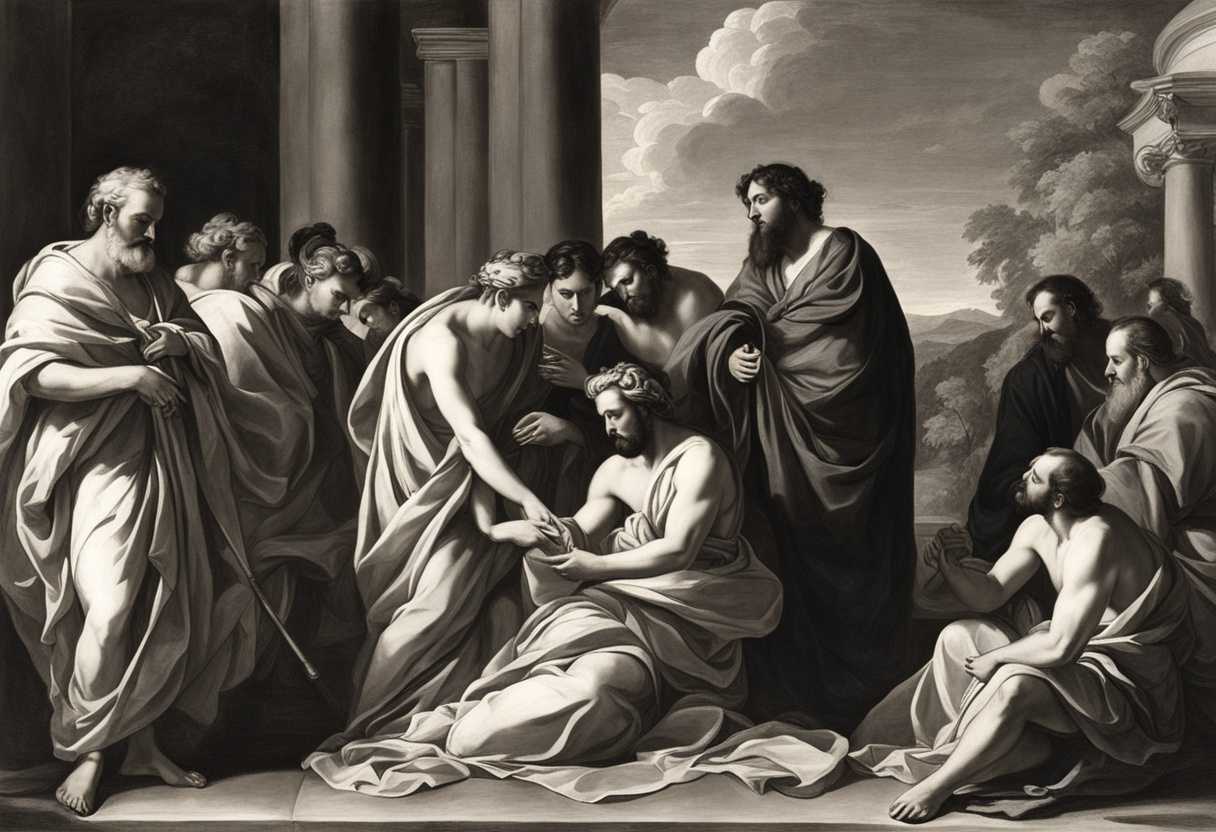
Setting the Scene for Leviticus 8:18-21
In Leviticus 8:18-21, we find ourselves in the Tabernacle courtyard, where Moses is performing the consecration ceremony for Aaron and his sons as priests. The scene is filled with anticipation and reverence as the Israelites gather to witness this sacred event. The air is heavy with the scent of burning incense and the sound of prayers being offered up to the Lord.
Moses, dressed in his priestly garments, carefully anoints Aaron and his sons with the consecrated oil, symbolizing their set-apartness for the service of God. Aaron, the high priest, stands with his sons, Nadab, Abihu, Eleazar, and Ithamar, as they receive this solemn ordination. The onlookers watch in awe as the chosen ones are prepared for their holy duties.
The courtyard is adorned with the sacred vessels and altars, and the flickering light of the menorah casts a warm glow over the proceedings. The people are hushed, knowing that they are witnessing a pivotal moment in the history of their nation. As the ceremony unfolds, a sense of holiness and divine presence fills the space, reminding all present of the importance of their faith and the covenant they share with the Almighty.
What is Leviticus 8:18-21 about?
The verse describes the concept of consecration. “Consecration” refers to the act of setting someone or something apart for a sacred purpose, usually through a ritual or ceremony. Aaron and his sons are being consecrated as priests in this specific context, officially designated to represent the community in religious duties.
The use of anointing oil and the blood of sacrifice in this consecration process symbolizes purification and sanctification. The anointing oil signifies being chosen and empowered by a higher authority, as well as the presence of the divine spirit. The blood of sacrifice represents the atonement for sin and the sealing of a covenant between God and the priests. Consecrating Aaron and his sons as priests with these symbolic elements underscores the importance of their role in mediating between the Israelites and God. It highlights the need for holiness, purity, and sacrifice in their service. This verse serves as a reminder of the sacred nature of priesthood and the responsibilities that come with it. Reflect on the significance of these rituals and the profound symbolism they hold in establishing the priestly lineage and the relationship between the people and the divine.
Understanding what Leviticus 8:18-21 really means
Introduction
In Leviticus 8:18-21, we witness the consecration of Aaron and his sons as priests, a pivotal moment emphasizing the offering of a ram as a burnt sacrifice. This passage delves into the significance of ritual purity, obedience to divine commands, and the crucial role of sacrifice in fostering a connection with God.
Key Phrases and Their Meanings
“He then presented the ram for the burnt offering”: The ram’s offering symbolizes complete surrender and dedication to God, portraying a profound act of devotion.
“Aaron and his sons laid their hands on its head”: This gesture signifies the transfer of sin and the identification of the offerer with the sacrificial act, highlighting the need for personal involvement in atonement.
“Moses slaughtered the ram and splashed the blood against the sides of the altar”: The use of blood in this ritual underscores its symbolic importance, representing life, atonement, and purification essential for sanctification.
“He cut the ram into pieces and burned the head, the pieces, and the fat”: This meticulous process emphasizes the thoroughness required in worship, emphasizing the necessity of complete devotion in serving God.
Related Biblical Passages
Hebrews 9:22: “Without the shedding of blood there is no forgiveness.” This verse from the New Testament links the Old Testament sacrificial system to the ultimate sacrifice of Jesus Christ, highlighting the centrality of atonement through blood.
Romans 12:1: “Offer your bodies as a living sacrifice, holy and pleasing to God—this is your true and proper worship.” This verse urges believers to lead lives of continual dedication to God, echoing the all-encompassing nature of the burnt offering.
1 Peter 2:9: “But you are a chosen people, a royal priesthood, a holy nation, God’s special possession.” This passage reminds us of our call to be set apart for God’s service, akin to Aaron and his sons’ consecration as priests.
Relevance to People Today
The timeless concepts of sacrifice and dedication resonate in today’s world, urging us to prioritize our relationship with God amidst life’s distractions and demands.
The principles of ritual purity and obedience find modern relevance in living lives of integrity and faithfulness to God’s commands, guiding us towards spiritual growth and closeness to the divine.
Anecdote
Consider a diligent gardener meticulously caring for their garden, tending to each plant with precision and dedication. Just as the gardener’s efforts yield a flourishing garden, our commitment to God’s ways results in spiritual growth and blessings, emphasizing the importance of dedication in our spiritual lives.
Conclusion
Leviticus 8:18-21, though rooted in ancient rituals, imparts profound lessons on dedication, obedience, and the significance of sacrifice. By embracing and applying these principles, we can deepen our connection with God and lead lives that honor and please Him.
How can we ensure our spiritual garments are clean?
To ensure our spiritual garments are clean, we must first understand that in a spiritual context, garments symbolize our character and righteousness. Sin and impurity can also taint our spiritual garments just as physical garments can become dirty and stained. Therefore, it is essential for us to regularly examine our hearts, actions, and intentions to see if there is anything that needs to be cleansed or purified.
One way to keep our spiritual garments clean is through repentance and seeking forgiveness. Confessing our sins, acknowledging our shortcomings, and asking for God’s forgiveness helps to remove the stains and impurities from our spiritual garments. Additionally, we can engage in regular spiritual practices such as prayer, meditation, studying scripture, and participating in acts of kindness and charity, which can help to maintain the cleanliness of our spiritual garments and strengthen our relationship with God. Keeping our spiritual garments clean ultimately requires diligence, self-reflection, and a sincere desire to grow spiritually in a continual process. We can ensure that our spiritual garments remain pure and unblemished by staying connected to God, seeking His guidance, and striving to walk in His ways.
Application
Embrace the power of consecration in Leviticus 8:18-21 to ignite your dedication to God. Like Aaron and his sons, commit to a life of purpose and devotion. Let this ancient ritual inspire you to elevate your connection with the Divine. How will you answer the call to consecration in your own journey right now?

Reverend Michael Johnson is an experienced Church Minister with a profound expertise in spirituality and guidance. With a serene presence and a compassionate heart, he has faithfully served his congregation for over 20 years, leading them on a spiritual journey towards inner peace and enlightenment. Reverend Johnson’s extensive knowledge of religious philosophies and profound understanding of human nature have made him a trusted confidant and mentor to many, as he seamlessly weaves his profound wisdom into life teachings. Reverend Johnson’s calming demeanor and empathetic nature continue to uplift and heal souls, nurturing a sense of unity and tranquility within his community.