
Isaiah 19:23-25 is about a future time when traditional enemies will become allies and worship together, symbolizing peace and unity under the reign of God.
23 In that day there will be a highway from Egypt to Assyria, and Assyria will come into Egypt, and Egypt into Assyria, and the Egyptians will worship with the Assyrians.
24 In that day Israel will be the third with Egypt and Assyria, a blessing in the midst of the earth,
25 whom the Lord of hosts has blessed, saying, “Blessed be Egypt my people, and Assyria the work of my hands, and Israel my inheritance.”
Setting the Scene for Isaiah 19:23-25
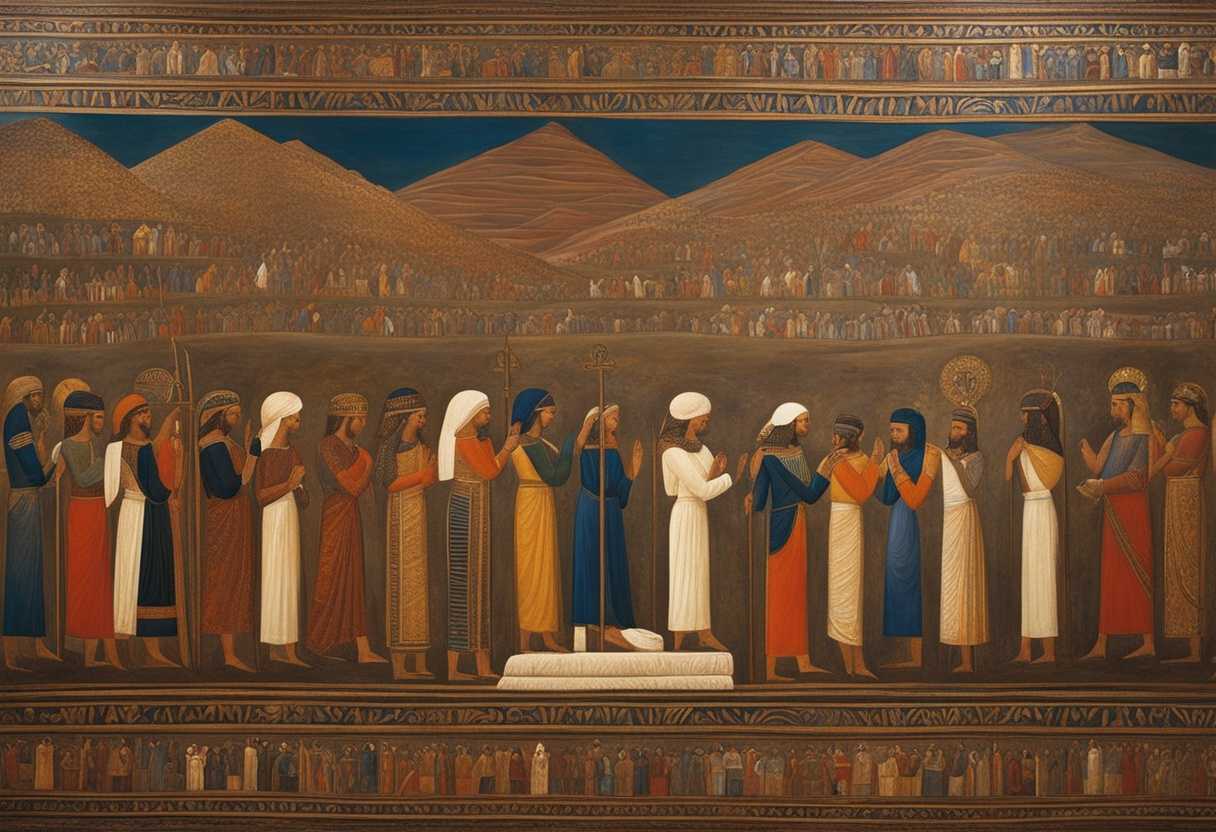
In Isaiah chapter 19, we find a powerful and prophetic scene unfolding in the land of Egypt. The verses 23-25 speak of a time when there will be a highway connecting Egypt, Assyria, and Israel. This highway signifies a time of unity and peace among these nations, a stark contrast to the historical conflicts that have plagued them.
In this scene, we see representatives from Egypt, Assyria, and Israel coming together in a symbolic gesture of reconciliation and harmony. The leaders of these nations, along with their people, have gathered at a crossroads where the highway intersects, signifying a new era of cooperation and understanding. The atmosphere is filled with a sense of hope and optimism for a future where old animosities are set aside in favor of mutual respect and collaboration.
Surrounding this gathering are lush landscapes, with fields of wheat swaying in the gentle breeze and olive trees standing tall and strong. The sun is setting in the distance, casting a warm glow over the scene and highlighting the diverse group of individuals coming together in unity. As they stand at the crossroads, they are reminded of the words of the prophet Isaiah, envisioning a future where peace reigns supreme and all nations walk together in harmony.
What is Isaiah 19:23-25 about?
This verse from the book of Isaiah carries a powerful message of unity, reconciliation, and peace among ancient nations that were once in conflict with each other. It envisions a future where Egypt, Assyria, and Israel, representing historical enemies, come together in harmony to worship God. This image of diverse nations united in worship speaks to the universal nature of God’s love and the idea that all people, regardless of their past differences, can come together in shared reverence for a higher power.
It prompts us to reflect on the possibility of reconciliation and forgiveness even in the midst of conflicts and divisions. It challenges us to transcend our differences and work towards building relationships based on respect, understanding, and cooperation. This verse serves as a reminder that no matter how deep the animosities may run, there is always hope for reconciliation and unity if we are willing to open our hearts and engage in dialogue with one another. How powerful is the image of former enemies coming together in worship? How does this verse inspire us to think about reconciliation and unity in our own lives and communities? Let it guide us to strive for peace and understanding in a world that is often plagued by discord and division.
Understanding what Isaiah 19:23-25 really means
Isaiah 19:23-25 presents a compelling prophecy regarding Egypt and Assyria, traditional adversaries of Israel, coming together in harmony and worship alongside Israel. This vision of unity and peace among nations is a testament to the transformative power of God’s plan for reconciliation. The imagery of a highway connecting Egypt and Assyria symbolizes not only physical travel but also open communication and cooperation between former enemies. It speaks to the possibility of overcoming historical animosities and embracing a future of mutual understanding and collaboration.
The phrase “The Egyptians and Assyrians will worship together” signifies a profound spiritual transformation, highlighting the unity in worshiping the one true God. This unity in worship reflects a deeper unity among nations, transcending cultural and historical divides. Israel’s role as a blessing on the earth, alongside Egypt and Assyria, underscores the inclusive nature of God’s plan for global blessing and reconciliation. It emphasizes that God’s love and blessings extend beyond national or ethnic boundaries, encompassing all who seek Him.
Drawing parallels with other biblical passages such as Ephesians 2:14-18, Revelation 7:9, and Galatians 3:28, we see a consistent theme of unity and reconciliation in Christ. These passages reinforce the idea that in Christ, divisions are broken down, and all are united as one new humanity. The message of unity and reconciliation conveyed in Isaiah 19:23-25 is not confined to a specific time or context but resonates with timeless relevance in a world marked by division and conflict.
In our contemporary society, characterized by deep-seated divisions and historical grievances, the message of Isaiah 19:23-25 challenges us to transcend past animosities and strive for peace and mutual respect. It prompts us to reflect on how we can contribute to building bridges and fostering unity in our communities. Just as the prophecy envisions former enemies coming together in worship and peace, we are called to be agents of reconciliation, breaking down barriers and promoting understanding among diverse groups.
Consider a scenario where individuals from different backgrounds collaborate on a community project, initially marred by mistrust and misunderstandings. As they work together towards a common goal, they begin to see each other’s humanity and shared aspirations. Through this shared experience, new friendships are forged, and a sense of unity emerges. This narrative mirrors the vision in Isaiah 19:23-25, where former adversaries unite in worship and peace, blessed by God’s inclusive love.
In conclusion, Isaiah 19:23-25 offers a profound vision of hope and reconciliation that transcends boundaries and inspires us to strive for unity in a fragmented world. It beckons us to emulate God’s inclusive love and work towards building a harmonious and blessed community. By embracing this vision of unity and reconciliation, we participate in God’s grand plan for a world where peace and understanding prevail.
How can nations reconcile and worship together?
Nations can reconcile and worship together by coming together in unity and harmony, setting aside their differences and grievances. Nations can come together to worship and celebrate their faith by recognizing the common humanity and shared values amongst them. This unity and reconciliation can pave the way for a peaceful and prosperous coexistence, where conflicts are resolved through dialogue and understanding rather than violence and division.
When nations come together to worship, they acknowledge the diversity of beliefs and practices while embracing the common desire to connect with the divine. Nations can create a sacred space where everyone feels welcomed and valued by fostering a spirit of inclusivity and mutual respect. This shared worship experience can help bridge cultural and religious divides, fostering a sense of interconnectedness and belonging among nations that transcends boundaries and fosters genuine relationships and understanding.
Application
Let’s be the builders of bridges in a world that often feels fractured. We have the power to mend what is broken and unite where there is division. Let’s embrace diversity and seek common ground with others, just like in our work and family lives. Our actions can radiate the love and understanding that God envisions for all nations. How will you contribute to creating a world of unity and peace today?

Reverend Michael Johnson is an experienced Church Minister with a profound expertise in spirituality and guidance. With a serene presence and a compassionate heart, he has faithfully served his congregation for over 20 years, leading them on a spiritual journey towards inner peace and enlightenment. Reverend Johnson’s extensive knowledge of religious philosophies and profound understanding of human nature have made him a trusted confidant and mentor to many, as he seamlessly weaves his profound wisdom into life teachings. Reverend Johnson’s calming demeanor and empathetic nature continue to uplift and heal souls, nurturing a sense of unity and tranquility within his community.