
Isaiah 36:1-3 is about the Assyrian king’s attempt to intimidate and demoralize the people of Judah by spreading fear and doubt about their faith in God.
1 In the fourteenth year of King Hezekiah, Sennacherib king of Assyria came up against all the fortified cities of Judah and took them.
2 And the king of Assyria sent the Rabshakeh from Lachish to King Hezekiah at Jerusalem, with a great army. And he stood by the conduit of the upper pool on the highway to the Washer’s Field.
3 Then the Rabshakeh said to them, “Say to Hezekiah, ‘Thus says the great king, the king of Assyria: On what do you rest this trust of yours?
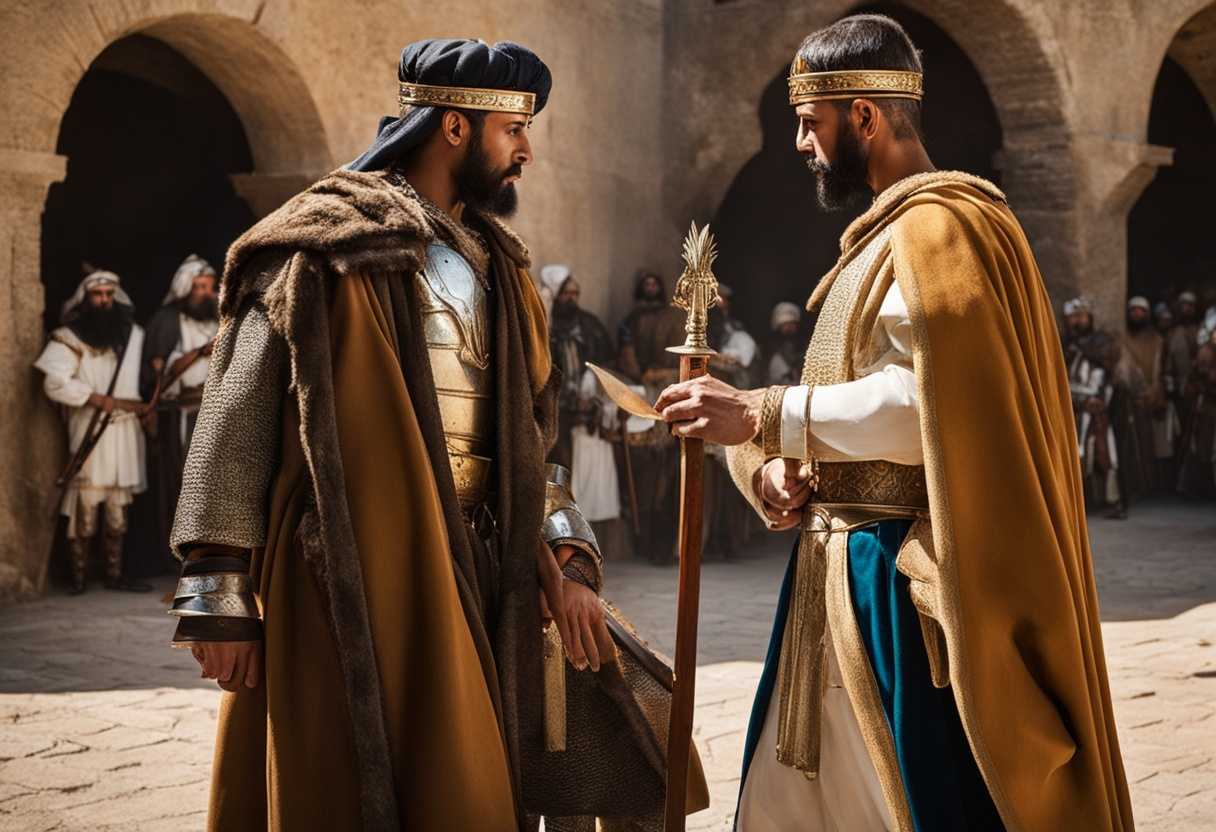
Setting the Scene for Isaiah 36:1-3
In Isaiah chapter 36, we find ourselves in the royal court of King Hezekiah of Judah. The scene is set in the grand palace of Jerusalem, where the king and his officials have gathered to discuss matters of great importance. King Hezekiah, a devout ruler known for his faithfulness to God, is seated on his throne, surrounded by his advisors and military commanders. The atmosphere is tense as news has arrived that the powerful Assyrian army, led by King Sennacherib, is advancing towards Jerusalem.
The room is filled with a sense of urgency and concern as the officials debate the best course of action to defend their city against the impending threat. King Hezekiah listens intently to the counsel of his trusted advisors, seeking wisdom and guidance in this time of crisis. The fate of the kingdom hangs in the balance as they strategize and prepare for the inevitable confrontation with the mighty Assyrian army. Amidst the uncertainty and fear, King Hezekiah’s unwavering faith in God serves as a beacon of hope and strength for his people, inspiring them to trust in the Lord’s protection and deliverance.
What is Isaiah 36:1-3 about?
The king of Assyria threatens the kingdom of Judah in Isaiah 36:1-3, seeking to instill fear and provoke surrender. However, King Hezekiah’s response stands out as he chooses not to rely on his own strength or resources to face this daunting challenge. Instead, he turns to God, seeking His guidance, protection, and intervention.
This passage teaches us the profound lesson of trust and faith in times of crisis. It prompts us to examine where we place our confidence and how we respond when faced with adversity. Do we immediately turn to our own abilities and solutions, or do we follow King Hezekiah’s example by seeking divine help and placing our trust in God’s sovereignty? We acknowledge God’s ultimate authority and power in our lives by seeking His wisdom and protection, allowing Him to guide us through even the most perilous circumstances.
So, as we reflect on Isaiah 36:1-3, let us consider how we can emulate King Hezekiah’s faithfulness and reliance on God in the face of challenges that may seem insurmountable. May we find comfort and strength in knowing that, like King Hezekiah, we are never alone in our struggles, for God is always there to support and safeguard us through every trial and tribulation.
Understanding what Isaiah 36:1-3 really means
In the fourteenth year of King Hezekiah’s reign, a pivotal moment unfolds as Sennacherib, the formidable king of Assyria, launches a campaign against the fortified cities of Judah, seizing them one by one. The gravity of the situation is underscored as the Assyrian king dispatches his field commander with a massive army towards Jerusalem, the heart of Judah, setting the stage for a test of faith and leadership for King Hezekiah and his people. This historical context immerses us in a time of crisis and impending conflict, where the fate of a nation hangs in the balance.
As we delve into the key phrases of the passage, we grasp the magnitude of the threat facing Judah. The relentless advance of the Assyrian forces paints a picture of overwhelming power and imminent danger. The mention of specific locations such as Lachish and Jerusalem adds a geographical dimension to the narrative, emphasizing the strategic significance of these cities in the unfolding drama. Through these phrases, we are transported to a time of turmoil and uncertainty, where the resilience and resolve of King Hezekiah will be put to the ultimate test.
Drawing parallels to contemporary challenges, we find resonance in the themes of facing overwhelming odds, seeking guidance through faith, and hoping for divine intervention. Just as Hezekiah grappled with the specter of invasion, individuals today confront their own battles against formidable adversaries, be it in the form of personal struggles, professional setbacks, or societal upheavals. The response of Hezekiah, marked by a reliance on faith and a plea for divine assistance, serves as a beacon of inspiration for those navigating turbulent waters in their own lives.
In exploring related biblical passages such as 2 Kings 18:13-17, Isaiah 37:1-7, and Psalm 46:1-3, we gain a broader perspective on the unfolding narrative and the multifaceted responses to crisis. These interconnected accounts offer layers of insight into the dynamics of faith, leadership, and divine providence, weaving a tapestry of hope and resilience in the face of adversity. The reassurance of God’s presence and protection, echoed in the Psalms, resonates across time and space, offering solace to all who find themselves in the crucible of trials and tribulations.
To illustrate the enduring relevance of the passage, consider the plight of a small business owner on the brink of financial ruin amidst economic turmoil. Just as Hezekiah stood against a mighty foe, the business owner grapples with overwhelming pressures threatening the very existence of their enterprise. By emulating Hezekiah’s example of seeking counsel, turning to prayer, and making strategic decisions, the business owner can chart a course towards survival and renewal, buoyed by the belief in divine guidance and intervention.
In conclusion, Isaiah 36:1-3 emerges as a poignant reminder of the timeless themes of courage, faith, and divine intervention in the face of adversity. Through the lens of this historical account, readers are encouraged to draw strength from the trials of the past, finding inspiration to confront their own challenges with unwavering resolve and a steadfast trust in the higher power that guides us through the storms of life.
What does it mean to trust in God’s protection?
Trusting in God’s protection means having faith that He is watching over you and will keep you safe from harm. It involves believing that no matter what challenges or threats come your way, God is there to shield and defend you. This trust allows you to find peace and confidence in the midst of difficulties, knowing that you are not alone in facing them. You can rest assured that by placing your trust in God’s protection, He has the power and ability to keep you secure from any harm that may come your way. Surrender your fears and worries to God and rely on His strength to see you through any situation.
Application
In the battlefield of life, our faith is the armor that protects us from the arrows of doubt and uncertainty. Let us not waver in our resolve, but instead stand tall like the strongest pillar, unwavering and unshakeable. Our faith is a lighthouse guiding us through the stormy seas of life, a beacon of hope shining brightly in the darkness. Will you take up the mantle of unwavering faith, casting aside all doubts and fears that may cloud your vision?

Reverend Michael Johnson is an experienced Church Minister with a profound expertise in spirituality and guidance. With a serene presence and a compassionate heart, he has faithfully served his congregation for over 20 years, leading them on a spiritual journey towards inner peace and enlightenment. Reverend Johnson’s extensive knowledge of religious philosophies and profound understanding of human nature have made him a trusted confidant and mentor to many, as he seamlessly weaves his profound wisdom into life teachings. Reverend Johnson’s calming demeanor and empathetic nature continue to uplift and heal souls, nurturing a sense of unity and tranquility within his community.