
1 In the fourteenth year of King Hezekiah, Sennacherib king of Assyria came up against all the fortified cities of Judah and took them.
2 And the king of Assyria sent the Rabshakeh from Lachish to King Hezekiah at Jerusalem, with a great army. And he stood by the conduit of the upper pool on the highway to the Washer’s Field.
3 Then the Rabshakeh said to them, “Say to Hezekiah, ‘Thus says the great king, the king of Assyria: What is this confidence that you have?
4 And the Rabshakeh said to them, “Say to Hezekiah, ‘Thus says the great king, the king of Assyria: On what do you rest this trust of yours?
5 “I say, ‘Your counsel and strength for the war are only empty words.’ Now on whom do you rely, that you have rebelled against me?”
6 Behold, you are trusting in Egypt, that broken reed of a staff, which will pierce the hand of any man who leans on it. Such is Pharaoh king of Egypt to all who trust in him.
7 But if you say to me, “We trust in the Lord our God,” is it not he whose high places and altars Hezekiah has removed, saying to Judah and to Jerusalem, “You shall worship before this altar”?
8 And now come and make a wager with my master the king of Assyria: I will give you two thousand horses, if you are able on your part to set riders on them.
9 How then can you repulse a single captain among the least of my master’s servants, when you trust in Egypt for chariots and for horsemen?
10 Have I now come up without the Lord against this land to destroy it? The Lord said to me, “Go up against this land and destroy it.”
11 Then Eliakim, Shebna, and Joah said to the Rabshakeh, “Please speak to your servants in Aramaic, for we understand it. Do not speak to us in the language of Judah within the hearing of the people who are on the wall.”
12 But the Rabshakeh said, “Has my master sent me to speak these words to your master and to you, and not to the men sitting on the wall, who are doomed with you to eat their own dung and drink their own urine?”
13 Then the Rabshakeh stood and called out in a loud voice in the language of Judah: “Hear the words of the great king, the king of Assyria!
14 Thus says the king: ‘Do not let Hezekiah deceive you, for he will not be able to deliver you.
15 Do not let Hezekiah make you trust in the Lord by saying, “The Lord will surely deliver us. This city will not be given into the hand of the king of Assyria.”
16 Do not listen to Hezekiah. For thus says the king of Assyria: Make your peace with me and come out to me. Then each one of you will eat of his own vine, and each one of his own fig tree, and each one of you will drink the water of his own cistern,
17 until I come and take you away to a land like your own land, a land of grain and wine, a land of bread and vineyards.
18 Beware lest Hezekiah mislead you by saying, “The Lord will deliver us.” Has any of the gods of the nations delivered his land out of the hand of the king of Assyria?
19 Where are the gods of Hamath and Arpad? Where are the gods of Sepharvaim? Have they delivered Samaria out of my hand?
20 Who among all the gods of these lands have delivered their lands out of my hand, that the Lord should deliver Jerusalem out of my hand?’”
21 But they were silent and answered him not a word, for the king’s command was, “Do not answer him.”
22 Then Eliakim the son of Hilkiah, who was over the household, and Shebna the secretary, and Joah the son of Asaph, the recorder, came to Hezekiah with their clothes torn and told him the words of the Rabshakeh.
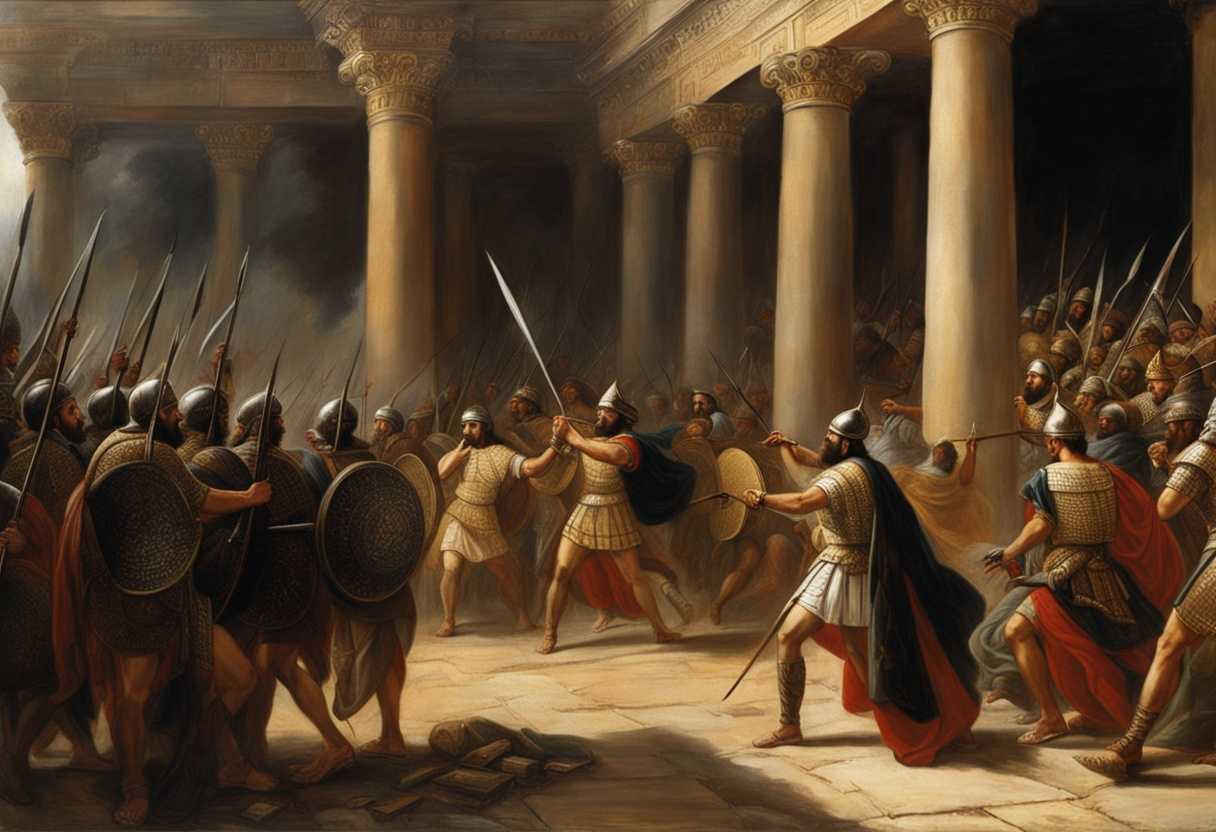
The True Meaning of Isaiah 36
The book of Isaiah was written by the prophet Isaiah, who lived during the reigns of several Judean kings in the 8th century BCE. Isaiah was known for his powerful messages of judgment and hope, often delivered through vivid imagery and symbolic actions. The Assyrian army, led by the Rabshakeh, lays siege to Jerusalem in this chapter, marking a critical moment in the history of Judah. The Rabshakeh’s taunting words and threats challenge the faith of King Hezekiah and the people, foreshadowing a pivotal confrontation between the Assyrian empire and the God of Israel. We will delve into this passage as Isaiah’s prophecies and Hezekiah’s response to the crisis shape the future of Judah.
The events described in this chapter are also echoed in 2 Kings 18-19 and 2 Chronicles 32, providing a broader context for understanding the political and spiritual dynamics at play. Through this narrative, we’ll gain insights into the importance of trust in God, the consequences of human pride, and the ultimate sovereignty of the Almighty over the affairs of nations.
Isaiah 36:1-3
Sennacherib, the king of Assyria, sent his field commander with a large army to Jerusalem during the reign of King Hezekiah of Judah, as recorded in Isaiah 36:1-3. This field commander stands outside the walls of Jerusalem and begins to speak in Hebrew to the people on the city wall, trying to instill fear and doubt in their hearts. He challenges them by asking who they are relying on for support and protection against the mighty Assyrian army. This is a classic example of psychological warfare, where the enemy seeks to weaken their opponents not just physically, but also mentally and emotionally.
The significance of this section lies in the themes of trust and faith in God despite overwhelming odds and tempting offers from the enemy. King Hezekiah faced a formidable foe in the Assyrian army, one that had already conquered many nations and seemed unstoppable. The field commander’s speech was designed to make the people of Jerusalem doubt the capability of their God to save them. However, Hezekiah’s response to this threat will show his trust in the Lord and the power of unwavering faith.
This passage serves as a reminder to believers today that in times of trouble and when faced with powerful adversaries, we must not succumb to fear or doubt. Instead, we are called to trust in the promises of God and rely on His strength to deliver us. Psalm 20:7 affirms this sentiment, stating, “Some trust in chariots and some in horses, but we trust in the name of the Lord our God. We are encouraged to put our faith in God’s unfailing protection and deliverance, just as Hezekiah chose to rely on the Lord rather than on earthly alliances or military might.
The actions of Sennacherib and his commander can also be seen as a representation of the enemies of God who seek to undermine the faith of believers. The field commander’s attempt to sow seeds of doubt and fear mirrors the tactics of the enemy of our souls, who often tries to weaken our trust in God through deception and intimidation. However, just as Hezekiah stood firm in his faith, we are called to resist the schemes of the enemy by holding fast to the truth of God’s Word and the promises He has spoken over our lives. Isaiah 36:1-3 sets the stage for a powerful demonstration of God’s faithfulness and deliverance in the face of insurmountable odds. It serves as a timeless reminder for believers to trust in the Lord wholeheartedly, even when faced with threats and challenges that seem unbeatable. We too can overcome any obstacle or adversary by placing our confidence in the Almighty who never fails to come to our aid, just as Hezekiah found victory through his faith in God.
Isaiah 36:4-10
The Assyrian field commander sent by King Sennacherib of Assyria delivers a threatening message to King Hezekiah of Judah in Isaiah 36:4-10. The commander stood outside the walls of Jerusalem and called out to those on the wall, trying to instill fear and doubt among the people. He proclaimed that the Assyrian army was invincible, having conquered many nations and their gods, and warned that they would face a similar fate if they resisted Assyria.
This passage captures a pivotal moment in the history of Judah, as it faced a powerful adversary. The Assyrians were notorious for their brutality and military might, and their threat posed a significant challenge to the faith and resilience of the people of Judah. The Assyrian commander’s words aimed to undermine the confidence of the Israelites and weaken their resolve to trust in God’s protection. However, the response of King Hezekiah and the prophet Isaiah to this threat would reveal a profound message about faith and the sovereignty of God.
The Assyrian commander’s boastful claims of conquest and might were meant to intimidate the people of Judah. He even went so far as to challenge the reliance of Judah on their God, claiming that the Assyrians had the favor of divine powers on their side. This challenge was a direct affront to the faith of the Israelites, who had been taught to trust in the Lord for their deliverance and protection. The Assyrians sought to weaken this faith and replace it with fear and submission to their own power. King Hezekiah sought the counsel of the prophet Isaiah in response to this threat. Isaiah reassured the king and the people that the Assyrian threat would not prevail, for the Lord would defend Jerusalem for the sake of His own name and His promise to King David. This declaration of faith from Isaiah was a powerful reminder to the people of Judah that their ultimate security was not in their own strength or resources, but in the faithfulness and power of God. God miraculously defeats the Assyrian army as the narrative unfolds in subsequent chapters of Isaiah, fulfilling Isaiah’s prophecy. The angel of the Lord struck down a hundred and eighty-five thousand Assyrian soldiers in one night in Isaiah 37:36-38. This decisive victory not only saved Jerusalem from destruction but also served as a powerful testimony to the enduring faithfulness and power of God in protecting His people. The message conveyed in Isaiah 36:4-10 is one of unwavering faith in the face of threats and challenges. It reminds us that our trust should always be in the Almighty God, who has the power to deliver us from any adversary. We too can find hope and assurance in God’s promises, knowing that He is sovereign over all nations and circumstances, just as Hezekiah and the people of Judah experienced divine intervention in their time of need.
Isaiah 36:11-12
The verses in Isaiah 36:11-12 recount a moment during the reign of King Hezekiah of Judah when the Rabshakeh, the Assyrian king’s representative, stood outside Jerusalem’s walls and called out to the people, attempting to instill fear and doubt among them. The Rabshakeh spoke in Hebrew, addressing the people directly, trying to weaken their trust in their king and God by exaggerating Assyria’s power and belittling the faithfulness of the Lord. This portion of the verse demonstrates the psychological tactics used by the Assyrians to undermine the faith and determination of the people of Judah.
The Rabshakeh’s words serve as a reminder of the spiritual warfare that often takes place in our lives. We can face similar tactics in our walk with God, just as the enemy used fear and manipulation to sow doubt among the Israelites. This passage prompts us to stay vigilant and rooted in our faith, aware that the enemy will seek to deceive and weaken us through lies and intimidation.
Furthermore, this incident serves as a testament to the power of faith in the face of adversity. Despite the Rabshakeh’s attempts to intimidate them, the people remained silent, as instructed by King Hezekiah, refusing to engage in negotiations or be swayed by the enemy’s words. This demonstrates the importance of standing firm in our beliefs and trusting in the Lord’s deliverance, even when faced with daunting circumstances. This passage echoes the theme of spiritual warfare and emphasizes the importance of putting on the full armor of God, as mentioned in Ephesians 6:11-17, in the broader context of the Bible. It highlights the need for believers to be prepared to face opposition and to hold fast to their faith in God’s promises, even in the midst of trials and challenges. Isaiah 36:11-12 serves as a poignant reminder of the constant battle between good and evil, faith and doubt, and the enduring strength that comes from trusting in the Lord in the face of adversity.
Isaiah 36:13-20
The Rabshakeh, a high-ranking official of the Assyrian king Sennacherib, engages in dialogue with the officials of King Hezekiah of Judah in Isaiah 36:13-20. This conversation occurs during a critical time when the Assyrian army had surrounded Jerusalem, threatening the kingdom of Judah.
Firstly, in verse 13, the Rabshakeh addresses the officials of King Hezekiah, questioning their confidence and trust in Egypt for support against the Assyrian army. This is significant as it highlights the temptation for Judah to rely on human alliances rather than on God. The Rabshakeh attempts to instill fear and doubt in the hearts of the Judean officials, highlighting the futility of relying on Egypt’s military might instead of trusting in the Lord.
Moving on to verses 14-17, the Rabshakeh continues his taunting by belittling the God of Israel and boasting about the conquests of the Assyrian empire. He challenges the faith of the Judean officials by asking them to make a treaty with Sennacherib, promising peace and prosperity if they surrender. This challenges the core of the Judean faith, as it tests their allegiance to God in the face of seemingly insurmountable odds. The Rabshakeh’s words serve as a test of faith for the people of Judah, forcing them to decide whether to trust in God’s deliverance or in the promises of a powerful enemy.
Verse 18 introduces the Rabshakeh’s attempt to speak directly to the people of Jerusalem rather than just the officials, aiming to instill fear and confusion among the general populace. He speaks to them in their language, attempting to undermine their trust in King Hezekiah’s leadership and faith in God’s protection. This tactic reveals the Assyrians’ strategy of psychological warfare, seeking to weaken the resolve of the people through fear and intimidation. The Rabshakeh boldly declares in verses 19-20 that the gods of the nations his empire has conquered did not save them, implying that the God of Judah would be no different. This statement challenges the Judeans’ belief in the uniqueness and sovereignty of their God. It forces them to confront the question of whether their God is truly powerful enough to deliver them from the Assyrian threat. This passage in Isaiah 36 serves as a powerful reminder of the importance of unwavering faith in God in the face of adversity and overwhelming odds. It underscores the dangers of relying on human strength and alliances instead of trusting in the power and faithfulness of the Almighty. The Rabshakeh’s words of intimidation and doubt are a test of the Judeans’ commitment to their God and a call to wholehearted trust in His deliverance, even when the situation appears dire. The events in this passage set the stage for the miraculous intervention of God on behalf of Judah, showcasing His ultimate power and faithfulness in the midst of their trials.
This account in Isaiah 36 echoes the theme of God’s faithfulness and deliverance throughout the Bible. It calls to mind the story of David and Goliath, where a seemingly insignificant shepherd boy defeats a mighty giant through faith in God’s strength rather than in his own. It also points forward to the ultimate victory of God over all His enemies, as described in Revelation 19, where Christ returns as a conquering King to defeat the forces of evil and establish His eternal kingdom. This passage in Isaiah serves as a powerful encouragement to stand firm in faith, knowing that God is always in control and will ultimately bring victory to His people in times of trial and opposition.
Isaiah 36:21-22
They were silent and did not answer him a word because the king’s commandment was, “Do not answer him.”‘ Then Eliakim the son of Hilkiah, who was over the household, and Shebna the secretary, and Joah the son of Asaph, the recorder, came to Hezekiah with their clothes torn, and told him the words of Rabshakeh. A moment of intense pressure and diplomacy is witnessed in this section. The Assyrian envoy, Rabshakeh, had been taunting the people of Jerusalem with threats and insults, questioning their trust in God. However, the officials of King Hezekiah—the three mentioned, Eliakim, Shebna, and Joah—chose to remain silent in response to Rabshakeh’s provocations. This silence can be seen as a mark of respect towards the king’s command and a refusal to engage in the Assyrian’s attempts to sow discord and fear among the people of Jerusalem.
Eliakim, Shebna, and Joah, as high-ranking officials in King Hezekiah’s court, play significant roles in the political and spiritual landscape of Judah during this tumultuous time. Eliakim, the son of Hilkiah, held a position of authority over the royal household, while Shebna served as the secretary (or scribe) and Joah as the recorder. Their tearing of their clothes was a sign of mourning and distress in response to the troubling words of Rabshakeh, reflecting the gravity of the situation facing the kingdom.
The actions of these officials and their subsequent report to King Hezekiah underscore the importance of remaining steadfast in faith and loyalty, even in the face of intimidation and threats. Their decision not to respond directly to the Assyrian envoy exemplifies a form of resistance that prioritizes trust in God over engaging in futile arguments or displays of bravado. This narrative serves as a reminder of the timeless message of maintaining faith and seeking guidance from God in moments of crisis, rather than relying solely on human wisdom or military strength.
This passage also sets the stage for the miraculous intervention that follows, as God delivers Judah from the Assyrian threat. The Lord defends His people and demonstrates His power through the defeat of the Assyrian army in the chapters that follow, showcasing His faithfulness to those who put their trust in Him. This victory not only secures the safety of Jerusalem but also serves as a powerful testimony to the sovereignty and protection of God over His chosen nation.
After Isaiah 36
The Assyrian army had surrounded Jerusalem, and King Hezekiah was in a desperate situation. He had tried to negotiate with the Assyrian commander, but the demands were too great. The people of Jerusalem were terrified, unsure of their fate. Hezekiah knew he had to make a choice as the sun set on that fateful day. Would he surrender to the Assyrians and save his people, or would he risk everything and trust in the Lord? The decision weighed heavily on the king’s heart, for he knew the consequences of either path could be dire.
Yet, in the stillness of the night, Hezekiah heard a voice – a whisper of hope that would change the course of history. The prophet Isaiah had a message from the Almighty, one that would shake the very foundations of the Assyrian empire and restore the faith of the people of Jerusalem.

Reverend Michael Johnson is an experienced Church Minister with a profound expertise in spirituality and guidance. With a serene presence and a compassionate heart, he has faithfully served his congregation for over 20 years, leading them on a spiritual journey towards inner peace and enlightenment. Reverend Johnson’s extensive knowledge of religious philosophies and profound understanding of human nature have made him a trusted confidant and mentor to many, as he seamlessly weaves his profound wisdom into life teachings. Reverend Johnson’s calming demeanor and empathetic nature continue to uplift and heal souls, nurturing a sense of unity and tranquility within his community.