
Isaiah 36:12 is about the Assyrian representatives taunting God’s people with the futility of relying on their God for deliverance, attempting to shake their faith and instill fear.
12 But the Rabshakeh said, “Has my master sent me to speak these words to your master and to you, and not to the men sitting on the wall, who are doomed with you to eat their own dung and drink their own urine?”
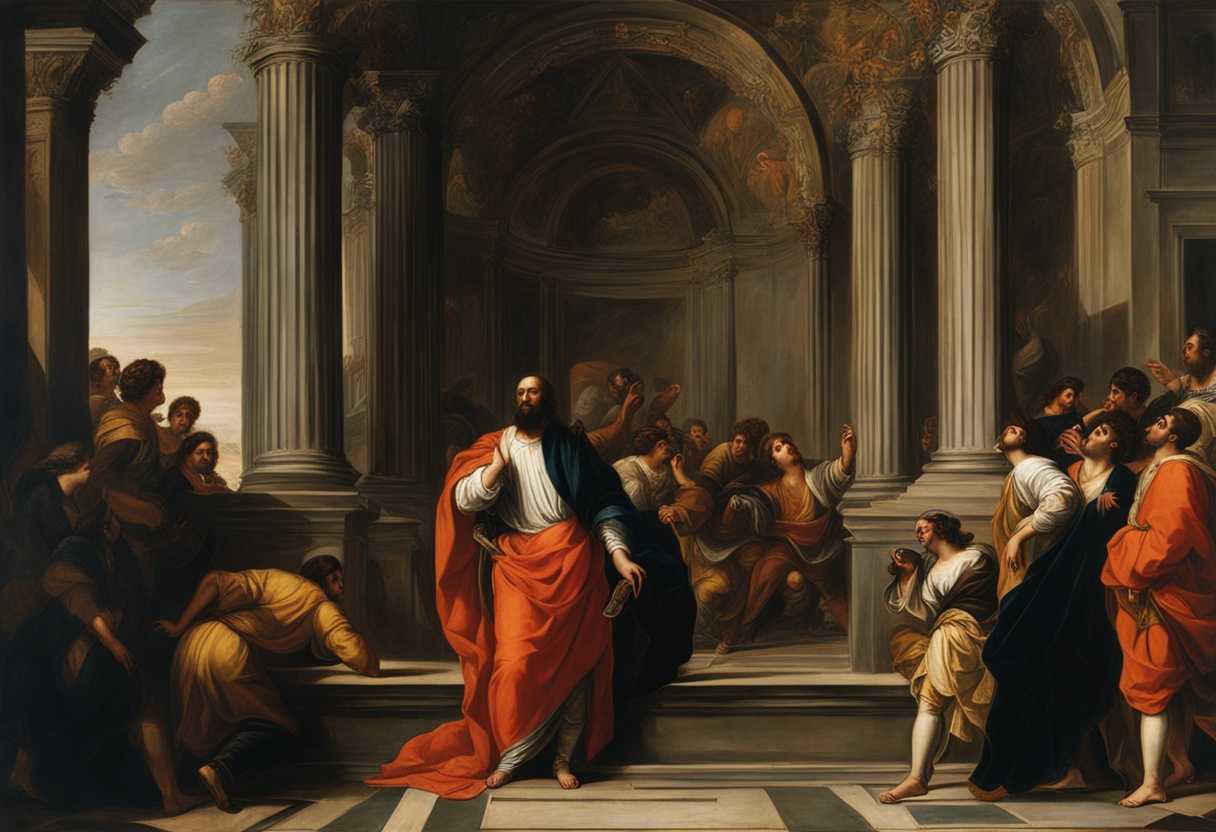
Setting the Scene for Isaiah 36:12
In Isaiah chapter 36, we find ourselves in the midst of a tense and pivotal moment in biblical history. The scene unfolds in the grand and imposing city of Jerusalem, within the walls of the royal palace. King Hezekiah of Judah, a devout and righteous ruler, is facing a grave threat from the mighty Assyrian army, led by the arrogant and boastful Rabshakeh. The Assyrians have laid siege to the city, seeking to conquer and subjugate the people of Judah.
Inside the palace, King Hezekiah is surrounded by his advisors and officials, including the prophet Isaiah. They are gathered to discuss the dire situation at hand and seek guidance from the Lord. The air is thick with tension and fear, as the fate of the kingdom hangs in the balance. Despite the overwhelming odds stacked against them, King Hezekiah and his council hold fast to their faith in God’s deliverance, even as the enemy taunts and threatens them. It is in this moment of uncertainty and danger that the true strength of their faith and resolve is put to the test.
What is Isaiah 36:12 about?
This verse serves as a powerful reminder of the dangers of placing our trust in earthly powers and resources rather than in God. The context of this verse is the invasion of Judah by the Assyrian army, and the king of Judah’s temptation to seek help from Egypt instead of relying on God for protection. We may face similar temptations in our own lives to place our trust in things like wealth, status, or human relationships rather than in God’s unfailing love and power. This verse challenges us to examine where we are placing our trust and to realign our focus on God as our ultimate source of security and provision by warning against trusting in Egypt. It prompts us to reflect on whether we are seeking worldly solutions to our problems instead of turning to God first and foremost. This verse ultimately calls us to have faith in God’s sovereignty and to trust in His ability to protect and guide us through all circumstances, no matter how uncertain or daunting they may seem.
Understanding what Isaiah 36:12 really means
Isaiah 36:12 takes us back to a tumultuous time in ancient history, where the Assyrian forces, through their representative, the Rabshakeh, sought to strike fear into the hearts of the people of Jerusalem. The Assyrians’ aim was clear: to coerce the inhabitants of Jerusalem into submission without a fight, resorting to psychological warfare and threats of siege. The vivid imagery used in the verse, “Eat their own dung and drink their own urine,” paints a grim picture of the extreme suffering and desperation that would accompany a prolonged siege. It serves as a chilling reminder of the harsh realities faced by those under siege and the lengths to which aggressors are willing to go to break their spirits.
In addressing the people directly with the phrase “With you,” the Rabshakeh underscores that the suffering would be indiscriminate, affecting all, regardless of their station in life. This tactic aimed to instill a sense of hopelessness and unity in despair among the populace. The parallel account in 2 Kings 18:27 further solidifies the narrative, emphasizing the consistency of the biblical record and the gravity of the situation faced by the people of Jerusalem. Additionally, passages like Lamentations 4:4-5 and Psalm 46:1-3 provide a broader biblical context, showcasing the enduring themes of suffering, hope, and divine protection in times of distress.
The relevance of Isaiah 36:12 extends beyond its historical context, serving as a poignant reminder of the impact of leadership decisions on ordinary lives. It prompts us to reflect on the role of compassion and wisdom in guiding communities through crises, be they ancient sieges or modern-day disasters. Just as the people of Jerusalem faced a critical juncture, individuals today grapple with the consequences of leadership choices and the resilience needed to endure hardship. By contemplating scenarios like a community facing a natural disaster, we can draw parallels to the challenges of leadership and the collective responsibility to safeguard the well-being of all.
As we ponder the lessons embedded in Isaiah 36:12, we are urged to consider the qualities of effective leadership in times of adversity. The verse underscores the importance of empathy, foresight, and courage in navigating crises and mitigating suffering. Moreover, it invites us to lean on faith and trust in God’s providence, finding solace in the assurance of divine presence even amidst the darkest moments. Through prayer, practical support, and advocacy, we can emulate the compassion and solidarity needed to uplift those enduring hardship, echoing the call to stand together in times of trial. Ultimately, by delving into the historical context, related scriptures, and contemporary implications of Isaiah 36:12, we unearth profound insights that resonate across time, offering guidance on navigating challenges with grace and fortitude.
How do we respond to threats with spiritual strength?
We can respond with spiritual strength in the face of threats by remembering that our faith in God is our ultimate source of power and protection. We can choose to put our trust in the Lord rather than relying on our own strength or the power of the world, as the verse in Isaiah reminds us. We can find peace and courage in the midst of adversity by leaning on God.
Another way to respond to threats with spiritual strength is to stay rooted in prayer and connection with God. We can find the strength and clarity we need to face any challenge that comes our way by maintaining a close relationship with Him through prayer, meditation, and seeking His guidance. Turning to God in times of trouble not only helps us navigate the difficulties before us but also allows us to experience His divine comfort and peace.
Furthermore, responding to threats with spiritual strength involves standing firm in our faith and beliefs, even when faced with opposition or danger. We can find courage and resilience by standing strong in our convictions and beliefs, knowing that God is with us every step of the way, just as the verse in Isaiah encourages us to trust in the Lord. We demonstrate our trust in God’s protection and deliverance by holding fast to our faith in the face of threats.
Application
Reader, protect your mind as you would safeguard your family from harm. Let the wisdom of Isaiah 36:12 resonate within you, urging you to shield your thoughts from negativity. Choose to nourish your soul with the goodness of God’s teachings, steering clear of the distractions that seek to sway you off course. Will you embrace this opportunity to fortify your spirit with the unwavering love and mercy of the Divine?

Reverend Michael Johnson is an experienced Church Minister with a profound expertise in spirituality and guidance. With a serene presence and a compassionate heart, he has faithfully served his congregation for over 20 years, leading them on a spiritual journey towards inner peace and enlightenment. Reverend Johnson’s extensive knowledge of religious philosophies and profound understanding of human nature have made him a trusted confidant and mentor to many, as he seamlessly weaves his profound wisdom into life teachings. Reverend Johnson’s calming demeanor and empathetic nature continue to uplift and heal souls, nurturing a sense of unity and tranquility within his community.