
Isaiah 3:6-12 is about the consequences of societal decay and moral corruption, where the Israelites are warned of the impending judgment of God for their sinful behavior and turning away from Him.
6 For a man will take hold of his brother
in the house of his father, saying:
“You have a cloak;
you shall be our leader,
and this heap of ruins
shall be under your rule”;
7 in that day he will speak out, saying: “I will not be a healer; in my house there is neither bread nor cloak; you shall not make me leader of the people.”
8 For Jerusalem has stumbled, and Judah has fallen, because their speech and their deeds are against the Lord, defying his glorious presence.
9 For the look on their faces bears witness against them;
they proclaim their sin like Sodom;
they do not hide it.
Woe to them!
For they have brought evil on themselves.
10 Tell the righteous that it shall be well with them, for they shall eat the fruit of their deeds.
11 Woe to the wicked! It shall be ill with him, for what his hands have dealt out shall be done to him.
12 My people—infants are their oppressors,
and women rule over them.
O my people, your guides mislead you
and they have swallowed up the course of your paths.
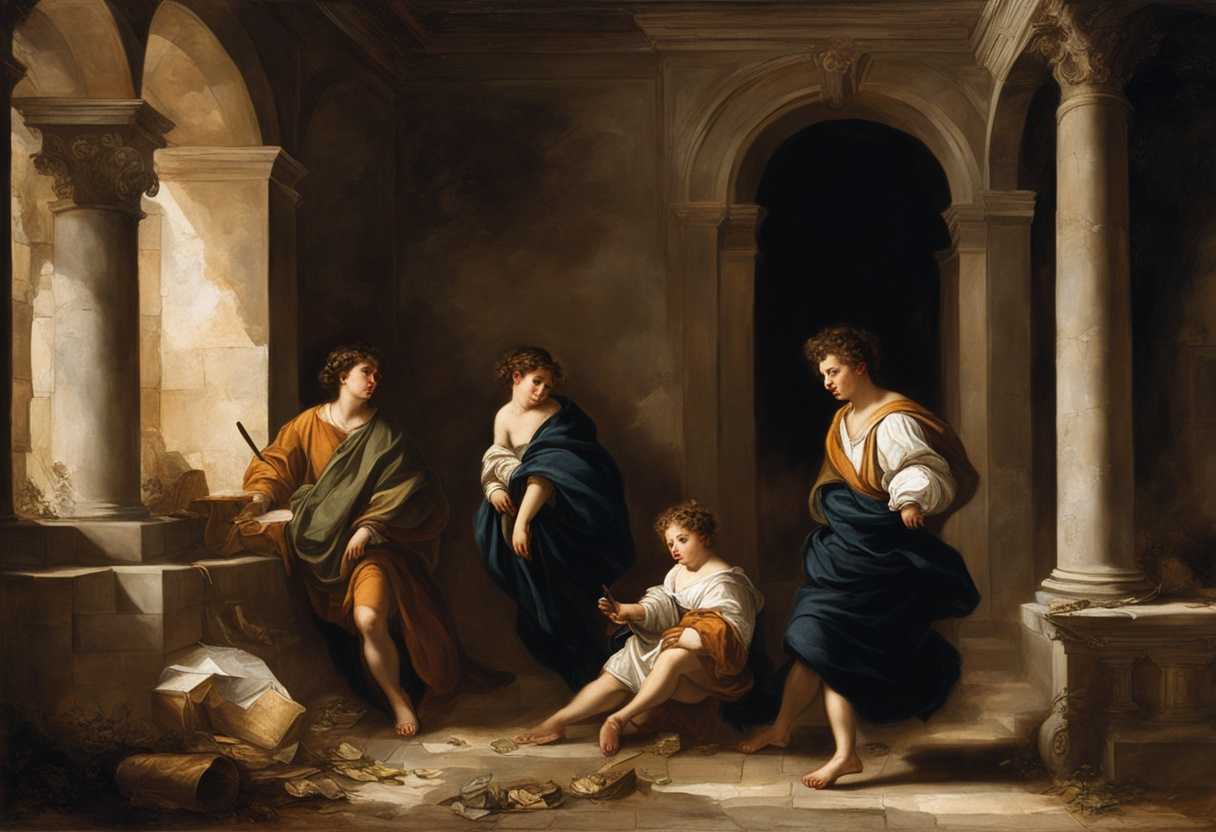
Setting the Scene for Isaiah 3:6-12
In Isaiah chapter 3, we find a scene set in the ancient kingdom of Judah during a time of great turmoil and moral decay. The prophet Isaiah, a man of God, stands in the midst of the royal court, surrounded by the rulers and leaders of the land. The atmosphere is tense, as Isaiah delivers a message of warning and judgment from the Lord.
The room is filled with the rich and powerful, adorned in luxurious clothing and jewelry, but their faces betray a sense of unease as Isaiah’s words cut through their opulence. The prophet’s voice echoes off the walls, condemning the people for their pride, greed, and injustice. The leaders shift uncomfortably in their seats, knowing deep down that they have strayed from the ways of God.
Outside, the city of Jerusalem bustles with activity, but there is an undercurrent of fear and uncertainty. The once-prosperous kingdom is beginning to crumble under the weight of its own sin. As Isaiah continues to speak, his words hang heavy in the air, a stark reminder of the consequences of turning away from God.
What is Isaiah 3:6-12 about?
A powerful warning about the consequences of a society’s actions is seen in this verse from the book of Isaiah. Isaiah is calling out the people of Jerusalem for their sinful ways and mistreatment of the vulnerable in their community. The prophet is highlighting the importance of living justly and with compassion towards others. Isaiah emphasizes the need for social justice and ethical behavior among the people by pointing out their oppression of the poor. Consider this warning’s implications. How are we treating those who are marginalized in our society? Are we upholding principles of fairness and kindness in our interactions with others? This verse serves as a reminder that our actions have consequences and that it is essential to strive for righteousness and justice in all aspects of our lives. Isaiah prompts the people of Jerusalem to reflect on how they can emulate the values of compassion and equality in their own communities.
Understanding what Isaiah 3:6-12 really means
Isaiah 3:6-12 paints a vivid picture of societal collapse and moral decay, warning the people of Judah and Jerusalem about the dire consequences of their disobedience. The passage highlights the desperate state of affairs where individuals are willing to appoint unqualified leaders out of sheer desperation. This chaos and lack of competent leadership signify a society in turmoil, staggering towards its downfall. The words and deeds of the people are depicted as being in direct defiance of God, leading to their ultimate ruin.
The blatant display of sin and the prideful parade of wrongdoing among the people are likened to the infamous city of Sodom, showcasing a society that not only engages in sin but revels in it. The warning of impending disaster and divine retribution serves as a call to repentance, reminding the wicked of the consequences of their actions. This passage resonates with timeless truths about the importance of righteous leadership and the devastating effects of moral decay on a community.
Drawing parallels to contemporary society, we witness the repercussions of poor leadership and the erosion of ethical and spiritual values. The relevance of Isaiah’s message is evident in the societal issues we face today, emphasizing the need for virtuous leaders and a return to moral integrity. The call to repentance and the reminder of divine justice remain as pertinent now as they were in ancient times, urging us to reflect on our actions and their consequences.
Imagine a community thriving under a just leader, only to descend into chaos and suffering when corrupt individuals take the reins. This anecdote mirrors the warning in Isaiah 3:6-12, illustrating the profound impact of leadership on the well-being of a society. The passage serves as a poignant reminder of the critical role righteous leadership plays in fostering a healthy and prosperous community.
In conclusion, Isaiah 3:6-12 stands as a powerful admonition and a call to action for us today. It prompts us to seek out and support leaders of integrity, to align our lives with God’s will, and to acknowledge the repercussions of our choices. By contemplating this passage and its related scriptures, we can navigate the challenges of our time with wisdom and strive towards building a more just and compassionate society.
How can we remove pride and selfishness from our hearts?
To remove pride and selfishness from our hearts, we must cultivate humility and selflessness instead. Pride often stems from placing excessive focus on oneself and seeking validation from others, while selflessness involves prioritizing the needs and well-being of others. We can diminish the hold of pride in our hearts by practicing acts of kindness, compassion, and service towards others. When we shift our perspective from self-centeredness to considering the feelings and experiences of those around us, we begin to weaken the grip of selfishness within us.
Furthermore, reflecting on our own shortcomings and limitations can also help in reducing pride. Recognizing that we are imperfect beings and acknowledging our dependence on a higher power or a greater purpose can humble us. We can gradually replace pride and selfishness with gratitude and generosity by striving for personal growth and development while remaining mindful of our interconnectedness with others. We can work towards purifying our hearts from these negative traits by seeking guidance from spiritual teachings and embodying virtues such as humility and selflessness in our interactions.
Application
Reflect on the warnings in Isaiah 3:6-12. See the impact of leadership and the consequences of straying from what is right. Be a beacon of integrity in all you do, leading by example and following the path of righteousness. Take steps today to honor God with your actions and decisions. How will you rise to be a true leader in your own life and make choices that reflect your commitment to God?

Reverend Michael Johnson is an experienced Church Minister with a profound expertise in spirituality and guidance. With a serene presence and a compassionate heart, he has faithfully served his congregation for over 20 years, leading them on a spiritual journey towards inner peace and enlightenment. Reverend Johnson’s extensive knowledge of religious philosophies and profound understanding of human nature have made him a trusted confidant and mentor to many, as he seamlessly weaves his profound wisdom into life teachings. Reverend Johnson’s calming demeanor and empathetic nature continue to uplift and heal souls, nurturing a sense of unity and tranquility within his community.