
Isaiah 56:1, 6-7 is about God’s message of inclusion and acceptance for all people, emphasizing that even foreigners and eunuchs who hold fast to God’s covenant will have a place in God’s house of prayer and worship.
1 Thus says the Lord: “Keep justice, and do righteousness, for soon my salvation will come, and my righteousness be revealed.
6 “And the foreigners who join themselves to the Lord, to minister to him, to love the name of the Lord, and to be his servants, everyone who keeps the Sabbath and does not profane it, and holds fast my covenant—”
7 these I will bring to my holy mountain,
and make them joyful in my house of prayer;
their burnt offerings and their sacrifices
will be accepted on my altar;
for my house shall be called a house of prayer
for all peoples.”
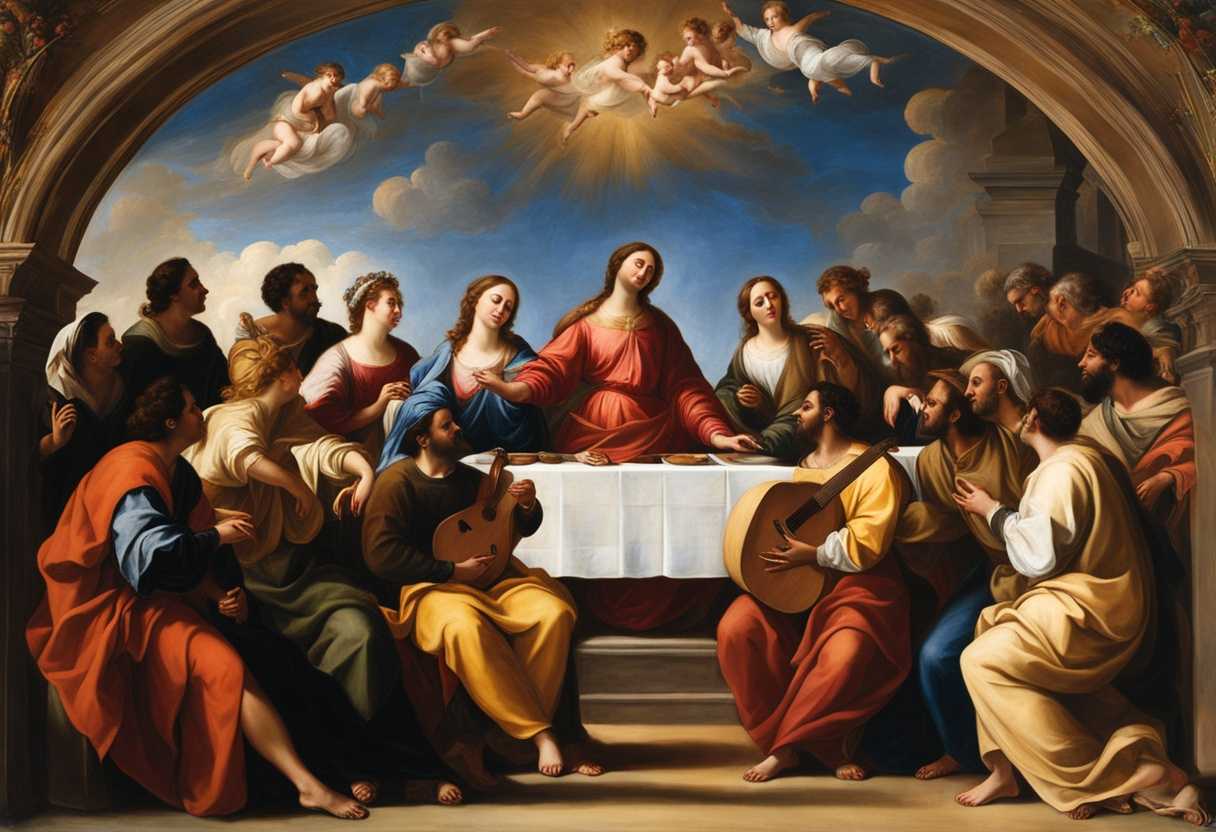
Setting the Scene for Isaiah 56:1, 6-7
In Isaiah chapter 56, we find a scene set in the temple of Jerusalem during the time of the prophet Isaiah. The temple courtyard is bustling with activity as people from all walks of life gather for worship and prayer. The sun is shining brightly, casting a warm glow over the stone walls and pillars of the sacred place.
Among the crowd, we see a diverse group of individuals who have come to seek the Lord. There are Israelites who have faithfully followed the laws and commandments, as well as foreigners who have joined themselves to the Lord. They are all standing together, united in their desire to worship and serve the one true God.
In the midst of this gathering, we see Isaiah, the prophet, standing tall and proclaiming the word of the Lord. His voice carries across the courtyard as he speaks of God’s promise to gather all people to Himself, regardless of their background or nationality. The scene is filled with a sense of unity and inclusivity, as Isaiah’s words resonate with those who have gathered to worship, reminding them of God’s love and mercy for all who seek Him.
What is Isaiah 56:1, 6-7 about?
These verses from Isaiah remind us of God’s boundless love and inclusive nature. He promises salvation not just to a select few, but to all who faithfully follow Him. This message is a beautiful reminder that God’s love knows no bounds and that His grace is available to all who seek Him wholeheartedly. Through these words, we are encouraged to understand that God’s promises are for everyone, regardless of background, status, or past mistakes.
Think about it. How amazing is it to know that our God is a God of inclusion and acceptance? These verses serve as a powerful reminder that God’s love is truly unconditional and that anyone who chooses to walk in His ways will be welcomed into His kingdom. So, let us take comfort in the fact that no matter who we are or where we come from, God’s promise of salvation is available to us if we choose to follow Him faithfully. We should embrace this message of inclusivity and share it with others, knowing that God’s love knows no bounds.
Understanding what Isaiah 56:1, 6-7 really means
Introduction to the Passage
Isaiah 56:1, 6-7 is a powerful call to righteousness and inclusivity, emphasizing God’s desire for justice and the inclusion of all people in His covenant. This passage is part of a larger section in Isaiah that speaks to the restoration and hope for all nations.
Key Phrases and Their Meanings
“Maintain justice and do what is right”: This phrase underscores the importance of living a life that reflects God’s principles of justice and righteousness. It calls believers to act with integrity and fairness in all their dealings. “Foreigners who bind themselves to the Lord”: This highlights the inclusivity of God’s covenant, extending beyond the Israelites to all who choose to follow Him. It signifies that God’s love and salvation are available to everyone, regardless of their background. “My house will be called a house of prayer for all nations”: This phrase emphasizes the universal nature of God’s house, where all people are welcome to worship and seek Him. It reflects God’s desire for unity and inclusivity in worship.
Related Biblical Passages
Matthew 21:13: Jesus quotes Isaiah 56:7 when He cleanses the temple, reinforcing the idea that God’s house is meant to be a place of prayer for all nations. Galatians 3:28: Paul speaks about the unity in Christ, where there is neither Jew nor Gentile, slave nor free, male nor female, for all are one in Christ Jesus. This echoes the inclusivity mentioned in Isaiah. Acts 10:34-35: Peter realizes that God does not show favoritism but accepts those from every nation who fear Him and do what is right, aligning with the message of Isaiah 56.
Relevance to People Today
In a world often divided by race, nationality, and social status, this passage is a reminder of God’s inclusive love and the call to justice and righteousness. It challenges believers to break down barriers and extend God’s love and justice to all people, fostering a community that reflects God’s kingdom.
Anecdote for Illustration
Consider a church that once struggled with division and exclusion. When they embraced the message of Isaiah 56, they began to welcome people from diverse backgrounds, creating a vibrant, inclusive community. This transformation not only enriched their worship but also became a powerful testimony of God’s love and justice to their wider community.
Conclusion
Isaiah 56:1, 6-7 calls us to live out God’s justice and righteousness, embracing inclusivity and unity. It challenges us to create communities where all people can experience God’s love and grace, reflecting the true nature of His kingdom.
How can we practice justice and righteousness?
Practicing justice and righteousness involves treating others fairly and with compassion. This can be done by upholding the rights of others, being honest in all interactions, and seeking to help those in need. It also requires treating all individuals with respect and dignity, regardless of their background or circumstances. We reflect the character of God and contribute to the well-being of society by demonstrating justice and righteousness in our actions and decisions. Standing up for what is right and speaking out against injustice is also practicing justice and righteousness. This can involve advocating for those who are marginalized, oppressed, or mistreated, and working to create a more just and equitable society for all. It is important to actively seek opportunities to address systemic issues and promote fairness in our communities, workplaces, and beyond. We align ourselves with God’s will and contribute to the flourishing of our world by actively pursuing justice and righteousness.
Application
Let’s open our hearts and homes to everyone, fostering a culture of acceptance and love in our communities. Embrace diversity and kindness, making space for all in our circles. Will you stand with me in spreading compassion and unity, embodying the essence of togetherness and understanding that our souls crave?

Reverend Michael Johnson is an experienced Church Minister with a profound expertise in spirituality and guidance. With a serene presence and a compassionate heart, he has faithfully served his congregation for over 20 years, leading them on a spiritual journey towards inner peace and enlightenment. Reverend Johnson’s extensive knowledge of religious philosophies and profound understanding of human nature have made him a trusted confidant and mentor to many, as he seamlessly weaves his profound wisdom into life teachings. Reverend Johnson’s calming demeanor and empathetic nature continue to uplift and heal souls, nurturing a sense of unity and tranquility within his community.