
Isaiah 58:5-6 is about shifting the focus of religious reflection from performance of rituals to genuine acts of compassion and justice towards others.
5 Is such the fast that I choose, a day for a person to humble himself? Is it to bow down his head like a reed, and to spread sackcloth and ashes under him? Will you call this a fast, and a day acceptable to the Lord?
6 “Is not this the fast that I choose:
to loose the bonds of wickedness,
to undo the straps of the yoke,
to let the oppressed go free,
and to break every yoke?
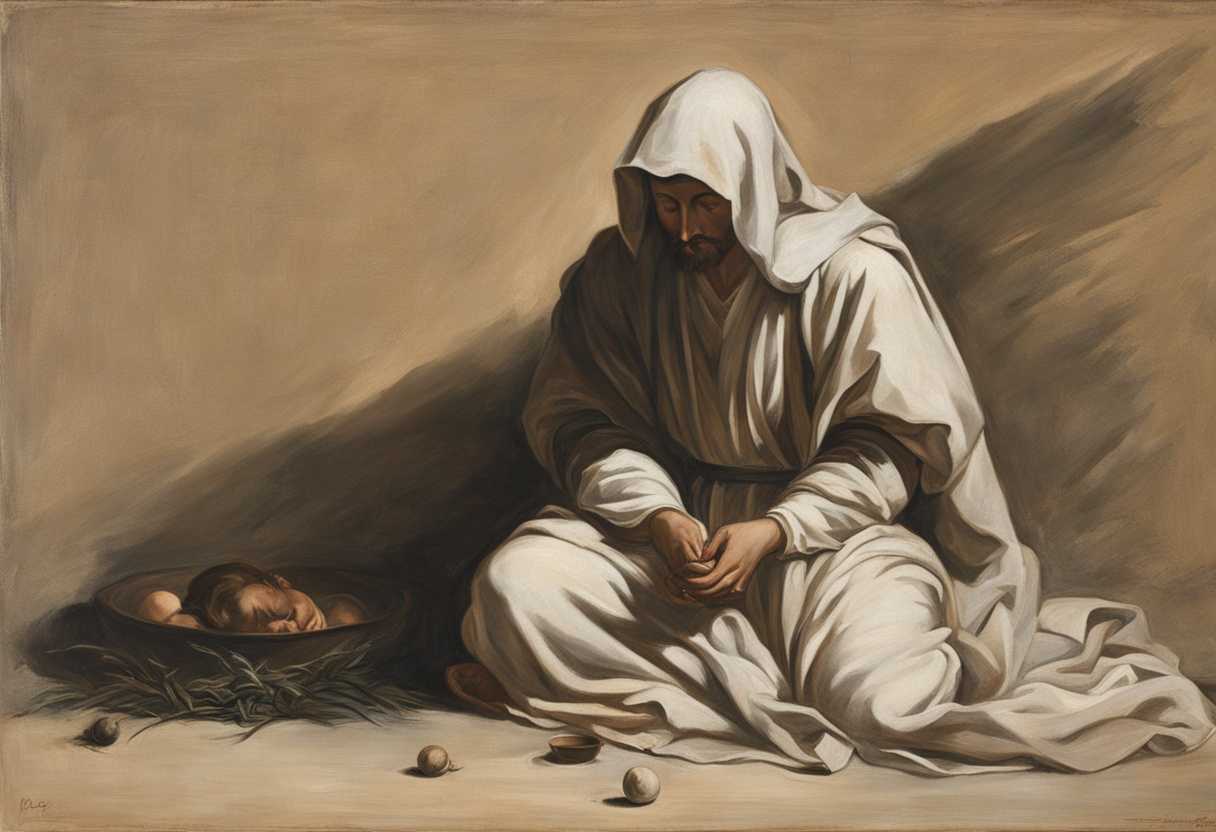
Setting the Scene for Isaiah 58:5-6
In the bustling marketplace of Jerusalem, a group of religious leaders, including priests and scribes, have gathered to discuss matters of faith and righteousness. The sun beats down on the ancient stone buildings, casting shadows over the colorful stalls selling spices, fabrics, and pottery. The air is filled with the sounds of merchants haggling and the aroma of freshly baked bread.
Among the group is Isaiah, a prophet known for his bold declarations and unwavering commitment to God’s truth. He stands tall, his eyes ablaze with passion as he addresses the crowd, calling them to repentance and true worship. The religious leaders listen intently, some nodding in agreement while others shift uncomfortably in their robes.
As Isaiah speaks, he quotes the words of the Lord, reminding the people of their duty to care for the oppressed and marginalized in society. He challenges them to look beyond their religious rituals and fasting, urging them to instead show compassion and justice to those in need. The scene is charged with tension as Isaiah’s words cut to the heart of the religious leaders, challenging them to live out their faith in a way that honors God.
What is Isaiah 58:5-6 about?
This verse reminds us that our actions speak louder than words. It’s not enough to go through the motions of religious practices if our hearts are not in the right place. God values sincerity and authenticity in our relationships with others. A genuine act of kindness or a just decision reflects a true understanding of God’s teachings and values.
Ask yourself, are you just going through the motions in your spiritual life, or are you truly embodying the values of kindness and justice in your interactions with others? It’s easy to fall into a routine of religious practices without reflecting on their impact on our behavior. This verse challenges us to look deeper and ensure that our actions align with the values we profess to believe in. Let’s strive to show kindness and justice in all aspects of our lives, not just when it’s convenient or expected. This is the true essence of living out our faith.
Understanding what Isaiah 58:5-6 really means
In Isaiah 58:5-6, we delve into a profound discourse where God, speaking through the prophet Isaiah, challenges the people of Israel regarding the essence of fasting and worship. The context reveals that the Israelites were engaging in fasting as a mere ritual, devoid of genuine repentance or a heart attuned to God’s will. The key phrases in these verses serve as poignant reminders of what true fasting entails. The rhetorical question, “Is this the kind of fast I have chosen?” prompts introspection, suggesting that their current practices do not align with God’s desires.
Furthermore, the mention of humility and self-reflection in fasting emphasizes that it is not merely about outward actions but a transformation of the heart. God questions the effectiveness of traditional signs of mourning and repentance when devoid of sincerity. The passage underscores that external displays of piety are insufficient without inner renewal. It shifts the focus from ritualistic fasting to the imperative of social justice, urging the people to “loose the chains of injustice” and “set the oppressed free.”
Drawing parallels with other biblical passages such as Matthew 6:16-18, Micah 6:8, and James 1:27, we see a consistent theme of genuine worship involving acts of justice, mercy, and compassion. These verses collectively emphasize the importance of aligning our actions with God’s heart for the marginalized and oppressed. In today’s context, where religious practices can sometimes overshadow the call to social justice, Isaiah’s message remains relevant. It challenges individuals and communities to move beyond superficial observances and engage in tangible acts of compassion and justice.
To illustrate the significance of true fasting, consider a community that outwardly observes a fasting event but neglects the needs of the homeless and hungry among them. This scenario echoes the essence of Isaiah’s rebuke, highlighting that authentic fasting encompasses not only abstaining from food but actively seeking to alleviate the suffering of others. A modern-day application could be a church combining fasting with initiatives like food drives or volunteering at shelters, embodying God’s call for justice and mercy.
In conclusion, Isaiah 58:5-6 serves as a poignant reminder of the deeper meaning of worship and fasting. It challenges us to move beyond ritualistic practices and embrace a lifestyle characterized by justice and compassion. By aligning our actions with God’s heart for the marginalized, we embody the true essence of fasting and worship, fulfilling His desire for a transformed and compassionate community.
What true fasting looks like in action?
True fasting, as described in these verses, involves not only abstaining from food but also a change in behavior. It entails a complete turning away from sinful practices and a genuine display of humility and compassion towards others. True fasting is not merely a ritualistic observance but a transformation of the heart that leads to concrete actions benefiting those in need. It is a call to engage in social justice, to break the chains of injustice, and to share what we have with the less fortunate.
This passage emphasizes that true fasting is not about seeking recognition or praise from others; instead, it is about aligning oneself with God’s will and living out the principles of justice and mercy. It requires a sincere desire to make a difference in the lives of those who are oppressed and marginalized. Believers demonstrate their commitment to righteousness and their willingness to be agents of positive change in the world by practicing true fasting.
Application
Are you hungry for a deeper connection to your faith beyond the surface? Let’s dive into our intentions when we fast and help others. It’s time to take our good intentions and turn them into meaningful actions. Let’s not only pray for a better world but actively create it in our everyday lives. Dare to make a difference by living out kindness, fairness, and care to those around us. Will you step up and be the change you wish to see in the world?

Reverend Michael Johnson is an experienced Church Minister with a profound expertise in spirituality and guidance. With a serene presence and a compassionate heart, he has faithfully served his congregation for over 20 years, leading them on a spiritual journey towards inner peace and enlightenment. Reverend Johnson’s extensive knowledge of religious philosophies and profound understanding of human nature have made him a trusted confidant and mentor to many, as he seamlessly weaves his profound wisdom into life teachings. Reverend Johnson’s calming demeanor and empathetic nature continue to uplift and heal souls, nurturing a sense of unity and tranquility within his community.