
Isaiah 6:1-4 is about the prophet Isaiah’s vision of God’s majesty, holiness, and glory, leading to his profound sense of personal unworthiness and the commissioning of his prophetic ministry.
1 In the year that King Uzziah died I saw the Lord sitting upon a throne, high and lifted up; and the train of his robe filled the temple.
2 Above him stood the seraphim. Each had six wings: with two he covered his face, and with two he covered his feet, and with two he flew.
3 And one called to another and said: “Holy, holy, holy is the Lord of hosts; the whole earth is full of his glory!”
4 And the foundations of the thresholds shook at the voice of him who called, and the house was filled with smoke.
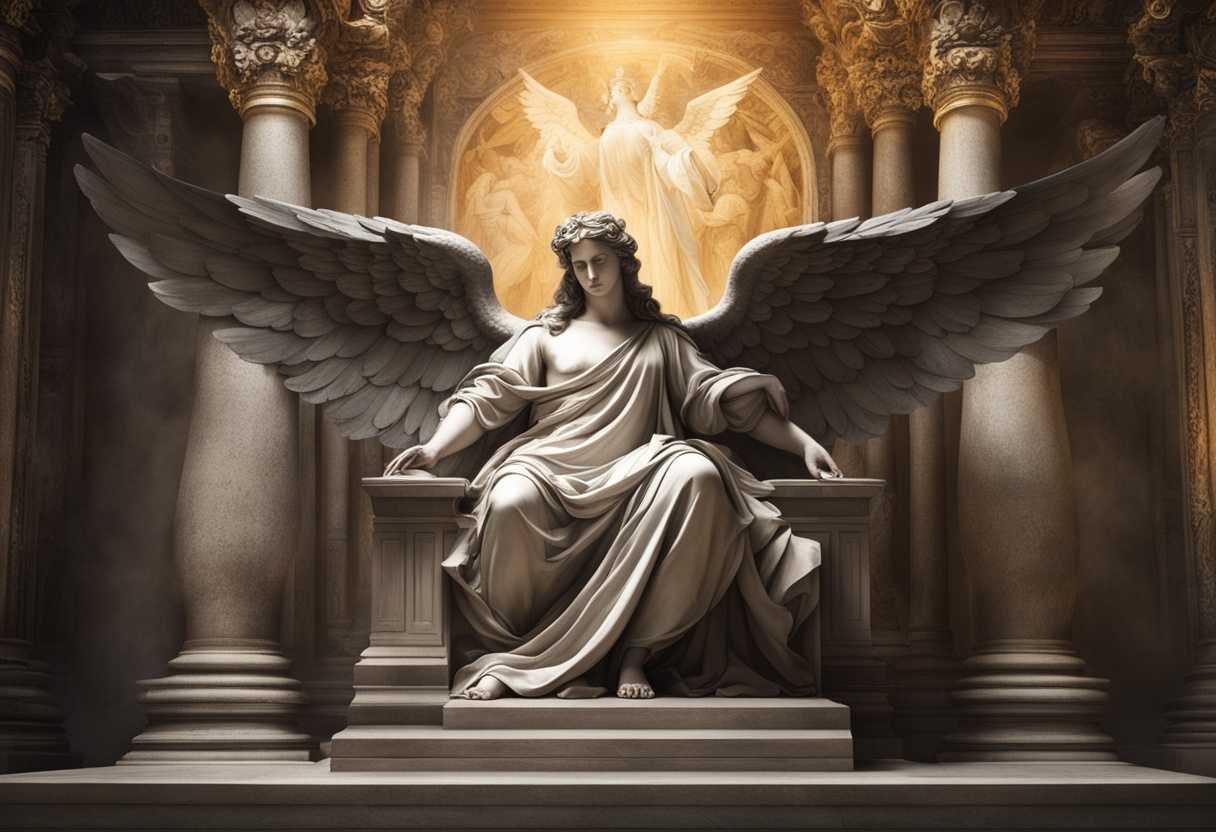
Setting the Scene for Isaiah 6:1-4
In Isaiah chapter 6, we find the prophet Isaiah experiencing a powerful vision of the Lord. The scene is set in the temple of Jerusalem, a place of great significance and holiness for the Israelites. Isaiah, a devout servant of God, has come to the temple to pray and seek guidance from the Lord.
As Isaiah is in the temple, he suddenly sees a magnificent sight. The room is filled with the presence of the Lord, with His glory shining brightly. Seraphim, angelic beings with six wings, are flying around the throne of God, singing praises to Him. The whole temple is filled with the sound of their voices, declaring the holiness of the Lord.
Isaiah is overwhelmed by the sight before him, feeling unworthy and sinful in the presence of such holiness. He falls to his knees, recognizing his own shortcomings in comparison to the glory of God. This vision marks a significant moment in Isaiah’s life, as he is called by the Lord to be a prophet and deliver His messages to the people of Israel.
What is Isaiah 6:1-4 about?
Isaiah experiences a powerful vision in this verse where he sees the glory of God in the temple. The use of seraphim, which are angelic beings depicted as having multiple wings and praising God continuously, emphasizes the holiness and majesty of God. Through this vision, Isaiah is reminded of the greatness and splendor of God, which can sometimes be overwhelming for human comprehension. Have you ever imagined being in the presence of such a divine and awe-inspiring entity?
The scene in the temple with the seraphim praising God serves as a reminder of the reverence and worship that is due to God. It highlights the importance of acknowledging God’s sovereignty and giving Him the honor and adoration that He deserves. Reflecting on this image prompts us to consider our own worship and reverence towards God in our daily lives. How can we strive to have a deeper appreciation for the holiness and greatness of God in our thoughts, actions, and words? Isaiah’s vision inspires us to approach God with humility, gratitude, and praise, recognizing His unmatched glory and majesty.
Understanding what Isaiah 6:1-4 really means
Isaiah 6:1-4 offers a profound glimpse into the prophet Isaiah’s vision of the Lord in the temple, marking the inception of his prophetic ministry. This passage holds immense significance as it lays the foundation for Isaiah’s divine calling and the messages he would convey to the people of Israel. The opening phrase, “In the year that King Uzziah died,” places the vision in a specific historical context, a time of transition and uncertainty for Israel, setting the stage for the divine encounter that follows. As Isaiah beholds the Lord seated upon a throne, high and lifted up, the imagery vividly portrays God’s sovereignty and majesty, surpassing all earthly kings and rulers.
The description of the Lord’s robe filling the temple symbolizes His overwhelming presence and glory, signifying His omnipotence and all-encompassing nature. The presence of the seraphim, angelic beings standing before God, underscores His holiness and the reverence due to Him. The repeated declaration, “Holy, holy, holy is the Lord of hosts; the whole earth is full of his glory!” emphasizes God’s absolute purity and separateness from sin, while also highlighting His omnipresence and omnipotence. The imagery of the foundations shaking at the voice of God and the temple being filled with smoke conveys the power and awe-inspiring nature of His presence, evoking a sense of reverence and awe.
Drawing parallels with related biblical passages such as Revelation 4:8, Exodus 3:5, and Psalm 99:9, we see a consistent theme of God’s holiness and the reverence required in His presence. In a world marked by uncertainty and change, the vision of God’s unchanging sovereignty and holiness offers comfort and stability. Recognizing God’s majesty and holiness can inspire awe and reverence, leading to a deeper sense of worship and commitment in our daily lives. This passage challenges us to reflect on how we respond to God’s presence and calling, urging us to approach Him with humility and reverence.
Consider a time in your life when you felt overwhelmed by challenges, akin to the uncertainty Israel faced after King Uzziah’s death. Picture encountering a profound sense of God’s overwhelming presence and sovereignty, akin to Isaiah’s experience, bringing peace and clarity amidst turmoil. For instance, a friend once shared how during a tough period, attending a worship service that exalted God’s majesty renewed their hope and strength to face challenges. Isaiah 6:1-4 beckons us to behold the grandeur and holiness of God, prompting us to respond with reverence and trust. It reminds us that regardless of circumstances, God’s glory fills the earth, and His sovereign rule remains unshaken.
What is our response to experiencing God’s holiness?
When we encounter God’s holiness, our natural response is to acknowledge our own unworthiness and sinfulness in comparison. We see this in Isaiah’s response when he saw the Lord seated on the throne – he immediately recognized his own sinfulness and declared himself undone. This is a common reaction when we truly grasp the purity and majesty of God’s holiness, as it illuminates our own shortcomings and imperfections.
Additionally, experiencing God’s holiness should lead us to a place of repentance and surrender. We should be moved to confess and turn away from our sins in the light of God’s holiness, just as Isaiah acknowledged his sinfulness. This response reflects a deep reverence and awe for God, as we recognize His perfection and our need for His forgiveness and mercy. Encountering God’s holiness ultimately should also stir within us a desire to worship and serve Him wholeheartedly. When we truly grasp the majesty and purity of God, our hearts should overflow with gratitude and adoration, leading us to live in a manner that brings honor and glory to His name.
Application
Embrace the power of divine revelation in Isaiah 6:1-4. Let the holiness of God guide your actions like a compass, directing you in the modern maze of life. Surrender yourself to His will, for in His hands, you are but a masterpiece waiting to be unveiled. Commit to serving Him wholeheartedly, finding purpose and fulfillment in your journey. Will you rise to the challenge and let His light shine through you, illuminating your path and inspiring those around you?

Reverend Michael Johnson is an experienced Church Minister with a profound expertise in spirituality and guidance. With a serene presence and a compassionate heart, he has faithfully served his congregation for over 20 years, leading them on a spiritual journey towards inner peace and enlightenment. Reverend Johnson’s extensive knowledge of religious philosophies and profound understanding of human nature have made him a trusted confidant and mentor to many, as he seamlessly weaves his profound wisdom into life teachings. Reverend Johnson’s calming demeanor and empathetic nature continue to uplift and heal souls, nurturing a sense of unity and tranquility within his community.