
Jeremiah 19:1 is about the symbolic act of smashing a clay jar as a visual representation of God’s impending judgment and destruction upon the people of Judah for their idolatry and disobedience.
1 Thus says the Lord, “Go, buy a potter’s earthenware flask, and take some of the elders of the people and some of the elders of the priests,
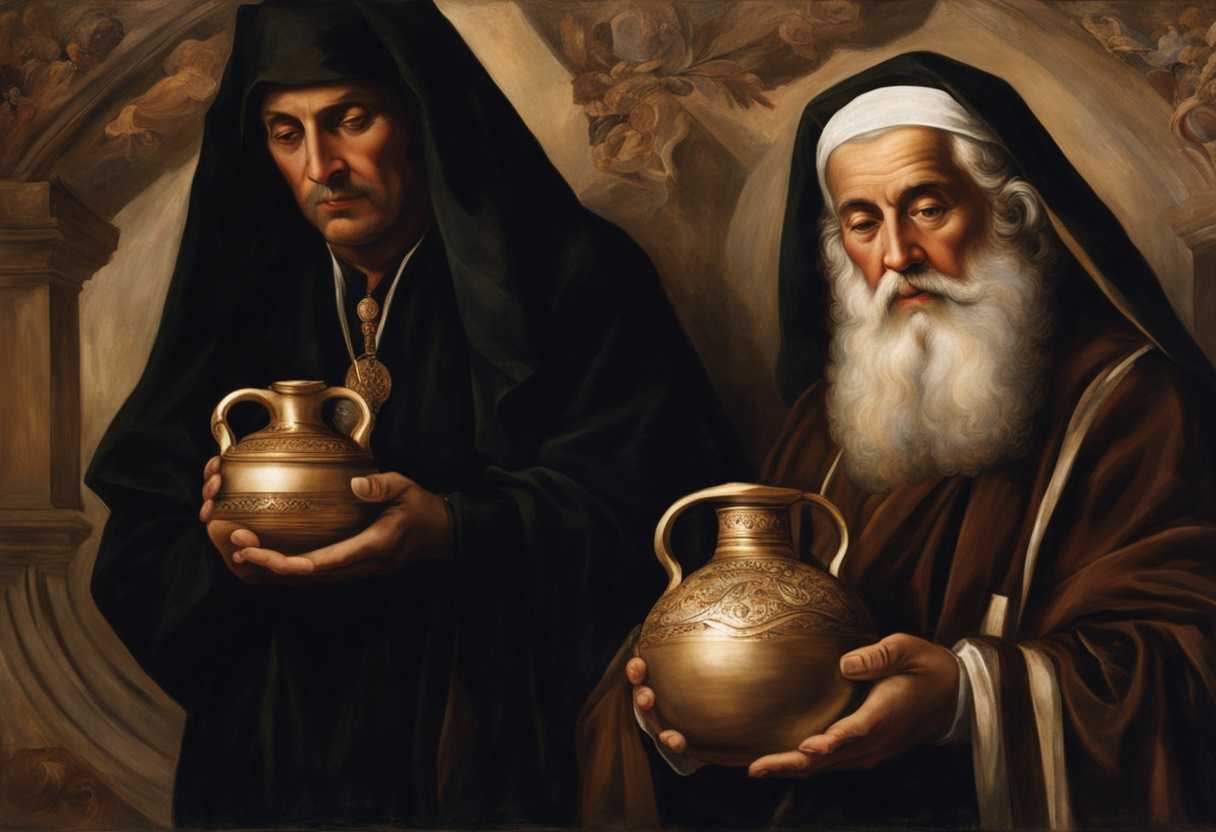
Setting the Scene for Jeremiah 19:1
In Jeremiah chapter 19, we find the prophet Jeremiah standing at the gate of the Lord’s house, which is likely the entrance to the temple in Jerusalem. He is not alone; there are also priests, officials, and people from the city gathered around him. The scene is tense and somber, as Jeremiah is about to deliver a powerful message from the Lord.
The people have come to hear Jeremiah speak because he has been warning them about the impending destruction of Jerusalem due to their disobedience and idolatry. Jeremiah is holding a clay jar, and as he begins to address the crowd, he smashes the jar on the ground, symbolizing the destruction that is about to come upon them. The shards of the broken jar serve as a visual representation of the devastation that will befall Jerusalem.
The atmosphere is heavy with the weight of Jeremiah’s words, and the people are likely feeling a mix of fear, sorrow, and disbelief. Jeremiah’s actions are a stark reminder of the consequences of turning away from God, and his message serves as a final warning before the impending judgment.
What is Jeremiah 19:1 about?
The Lord sends Jeremiah to observe a potter at work in his house in this verse. Jeremiah receives a powerful visual metaphor for God’s relationship with His people by witnessing the potter shaping and molding the clay. God shapes and molds each of us according to His divine plan and purpose, just as a potter skillfully crafts and molds the clay into a vessel of his choosing. The potter has complete control over the clay, just as God has control over our lives, guiding us with wisdom and precision.
The message conveyed in this verse reminds us of God’s sovereignty and authority over our lives. It prompts us to reflect on how God is continuously working in us, shaping us into the individuals He intends for us to become. God is emphasizing the importance of surrendering to His will and trusting in His plan for us by sending Jeremiah to the potter’s house. We are called to yield to God’s guidance and allow Him to mold us into vessels that bring glory to His name, just as the clay yields to the potter’s hands.
So, as we ponder on this verse, we are prompted to ask ourselves: Are we willing to trust in God’s hands to shape our lives, even when it might be uncomfortable or unfamiliar? Are we open to God’s molding, allowing Him to transform us according to His divine design? This verse invites us to embrace God’s sovereignty over our lives and embrace His transformative work within us, knowing that He crafts us with love and purpose.
Understanding what Jeremiah 19:1 really means
Jeremiah 19:1 is a pivotal verse within the larger narrative of the prophet Jeremiah’s interactions with the people of Judah. In this verse, God instructs Jeremiah to undertake a symbolic act, using a potter’s earthenware flask as a visual aid to convey a profound message. This act serves as a dramatic prophecy against the nation, highlighting the consequences of their disobedience and idolatry. The imagery of the potter and the clay, as seen in related passages like Jeremiah 18:1-6, emphasizes God’s sovereignty and the potential for repentance and renewal. It is a powerful reminder that God shapes and molds individuals and nations according to His will, but also allows for the possibility of transformation through repentance.
The Valley of Ben Hinnom, referenced in Jeremiah 19:1, holds historical significance as a place associated with idolatrous practices and even child sacrifices, adding depth to the gravity of the message being conveyed. This verse, along with parallels in Isaiah 30:14 and historical context from 2 Kings 23:10, underscores the timeless themes of consequences for disobedience and rebellion against God. It prompts readers to reflect on their own lives and consider the areas where they may be straying from God’s commands.
In today’s world, where moral relativism and spiritual apathy are prevalent, Jeremiah 19:1 serves as a poignant call to return to foundational truths and values. Just as the people of Judah faced repercussions for their disobedience, individuals today are reminded that actions have consequences, and God’s warnings are meant to lead to repentance and restoration. The verse challenges readers to examine their own lives and heed the warnings that God may be speaking into their hearts.
Consider a community repeatedly warned about the dangers of neglecting environmental care. Despite the admonitions, they persist in polluting and misusing resources until the consequences become unavoidable. This scenario mirrors the situation in Jeremiah 19:1, where the people of Judah are warned but continue in their disobedience, leading to severe repercussions. By contemplating this analogy, readers can grasp the urgency of heeding God’s warnings and the importance of repentance in avoiding dire consequences.
The specific instructions given in Jeremiah 19:1, such as taking elders from various segments of society to witness the symbolic act in the Valley of the Son of Hinnom, highlight the widespread nature of the disobedience among the people. The earthenware flask symbolizes the fragility of the people of Judah, easily broken and in need of divine intervention. These details provide a vivid picture of the severity of the situation and emphasize the urgency of the message being delivered. By delving into these nuances, readers can gain a deeper understanding of the gravity of the situation Jeremiah was addressing and contemplate areas in their own lives where they may need to heed God’s warnings and seek repentance.
Are we willing to choose God over worldly desires?
God calls Jeremiah to choose Him over worldly desires and follow His will wholeheartedly in this verse. God wants us to prioritize Him above all else, even if it means going against popular or tempting worldly desires. We demonstrate our faith, trust, and devotion to God by choosing Him over worldly things.
The verse serves as a reminder that our relationship with God should be the most important aspect of our lives. When faced with various temptations and distractions, we are challenged to align our hearts and minds with God’s will and purpose. It encourages us to make choices that honor and glorify God, even when it may not align with the desires of our flesh or the world. The verse ultimately invites us to reflect on where our allegiance lies and to consider if we are willing to put God above everything else in our lives. It prompts us to evaluate our priorities and make a conscious decision to pursue a relationship with God that surpasses any fleeting worldly desires.
Application
Dear friend, dive into Jeremiah 19:1 and ponder the gravity of straying from God’s path. Let this serve as a beacon, guiding you to walk closely with divine guidance. Evaluate your deeds; ensure they resonate with biblical principles. Resist the allure of worldly distractions; stand firm in your devotion. The question begs, will you heed His call today?

Reverend Michael Johnson is an experienced Church Minister with a profound expertise in spirituality and guidance. With a serene presence and a compassionate heart, he has faithfully served his congregation for over 20 years, leading them on a spiritual journey towards inner peace and enlightenment. Reverend Johnson’s extensive knowledge of religious philosophies and profound understanding of human nature have made him a trusted confidant and mentor to many, as he seamlessly weaves his profound wisdom into life teachings. Reverend Johnson’s calming demeanor and empathetic nature continue to uplift and heal souls, nurturing a sense of unity and tranquility within his community.