
Jeremiah 21:3-7 is about God’s proclamation of impending judgment upon the rulers and inhabitants of Jerusalem due to their disobedience and failure to uphold justice and righteousness, illustrating the consequences of forsaking God’s ways.
3 Then Jeremiah said to them: “Thus you shall say to Zedekiah, ‘Thus says the Lord, the God of Israel: Behold, I will turn back the weapons of war that are in your hands and with which you are fighting against the king of Babylon and against the Chaldeans who are besieging you outside the walls. And I will bring them together into the midst of this city.
4 Thus says the Lord, the God of Israel: Behold, I will turn back the weapons of war that are in your hands and with which you are fighting against the king of Babylon and against the Chaldeans who are besieging you outside the walls. And I will bring them together into the midst of this city.
5 I myself will fight against you with outstretched hand and strong arm, in anger and in fury and in great wrath.
6 And I will strike down the inhabitants of this city, both man and beast. They shall die of a great pestilence.
7 Afterward, declares the Lord, I will give Zedekiah king of Judah and his servants and the people in this city who survive the pestilence, sword, and famine, into the hand of Nebuchadnezzar king of Babylon and into the hand of their enemies, into the hand of those who seek their lives. He shall strike them down with the edge of the sword. He shall not pity them or spare them or have compassion.
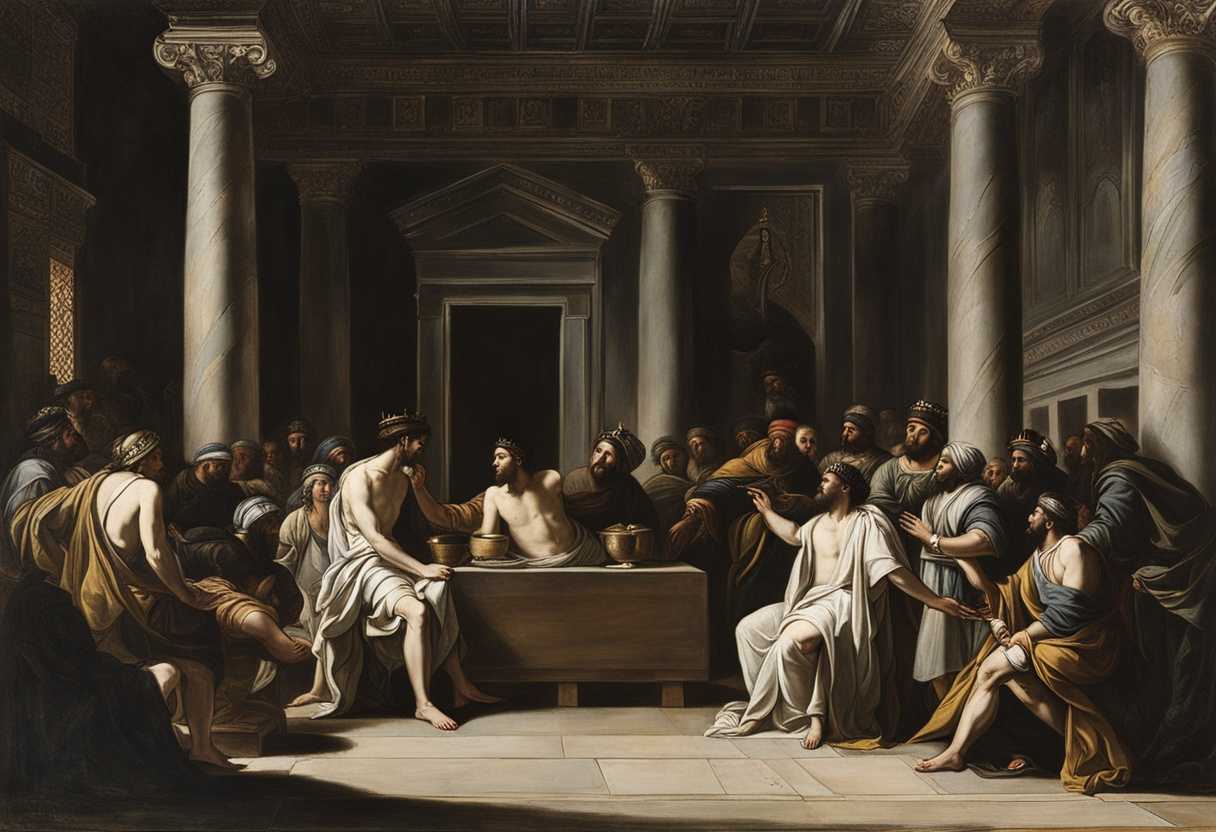
Setting the Scene for Jeremiah 21:3-7
In Jeremiah chapter 21, we find the prophet Jeremiah standing in the courtyard of the temple in Jerusalem. King Zedekiah has sent messengers to inquire of Jeremiah regarding the impending invasion of the Babylonian army. The scene is tense and filled with a sense of urgency as the city is on the brink of destruction.
Surrounding Jeremiah are the messengers from King Zedekiah, who are anxious to hear a word from the Lord through the prophet. The courtyard is bustling with activity as priests, officials, and common people mill about, seeking answers and solace in the face of the looming threat.
Jeremiah, known for his unwavering commitment to speaking the truth, stands tall amidst the chaos, ready to deliver a message from God. The atmosphere is charged with fear and uncertainty, but Jeremiah’s presence brings a glimmer of hope as he prepares to relay the divine warning and call for repentance to the people of Jerusalem.
What is Jeremiah 21:3-7 about?
God is showing us the consequences of turning away from Him in this verse. He warns us about the destruction that comes from disobedience. Just like a loving parent who sets boundaries for their child’s safety, God sets guidelines for us to follow to protect us from harm and lead us towards a fulfilling life. When we choose to disobey and walk away from His guidance, we risk facing the consequences of our actions.
However, the beauty of this verse lies in the hope and mercy that God offers us, even in the face of disobedience. He doesn’t want to see us suffer; instead, He extends a loving invitation for us to turn back to Him. Through repentance, we have the opportunity to seek forgiveness and start afresh on the right path. God’s mercy is always available to us, no matter how far we may have strayed. So, let this verse serve as a reminder of the importance of staying obedient to God’s will, but also of the incredible grace and love He offers us when we choose to return to Him.
Understanding what Jeremiah 21:3-7 really means
Jeremiah 21:3-7 presents a poignant message delivered by the prophet Jeremiah to King Zedekiah amidst the looming threat of the Babylonian siege on Jerusalem. In this historical context, the passage serves as a response to Zedekiah’s plea for divine intervention against the impending invasion led by King Nebuchadnezzar. The key phrases within these verses carry profound meanings that resonate beyond the specific historical setting. “I will turn back the weapons of war that are in your hands” highlights the futility of human efforts without God’s favor, emphasizing the need for divine intervention in times of crisis.
Moreover, the declaration, “I myself will fight against you with an outstretched hand and a mighty arm,” underscores God’s direct involvement in the affairs of humanity, showcasing His power that can both protect and bring judgment. The imagery of God striking down both man and beast in the city signifies the comprehensive nature of the impending judgment, leaving no aspect of life untouched. The statement about delivering Zedekiah and the people into the hands of their enemies underscores the inevitability of divine judgment and the consequences of disobedience, echoing the broader biblical theme of accountability for one’s actions.
Drawing parallels to related biblical passages such as Deuteronomy 28:15-68, 2 Kings 25:1-7, and Lamentations 1:1-5 provides a deeper understanding of the consequences faced by Judah due to their disobedience. These passages offer a broader context for interpreting the events unfolding in Jeremiah’s time and highlight the interconnectedness of biblical narratives. The relevance of Jeremiah 21:3-7 to contemporary audiences lies in its timeless themes of divine sovereignty, the repercussions of disobedience, and the promise of hope and redemption.
By reflecting on the passage’s implications for our lives today, we are reminded of the importance of acknowledging God’s sovereignty and the limitations of relying solely on human strength. The narrative serves as a cautionary tale, prompting us to consider the consequences of straying from God’s guidance and the need for repentance and realignment with His will. Just as Judah faced the consequences of their actions, we are called to examine our own choices and seek reconciliation with God for restoration and redemption.
In conclusion, Jeremiah 21:3-7 stands as a powerful testament to God’s authority and the significance of obedience in the face of adversity. It challenges us to evaluate our reliance on human efforts versus divine intervention, urging us to humbly seek God’s guidance in all circumstances. Like the people of Judah, we are called to heed the lessons of history, recognizing the enduring relevance of God’s word in shaping our lives and guiding our paths towards reconciliation and renewal.
What does it mean to seek justice and righteousness?
To seek justice and righteousness means to act with fairness and integrity, upholding what is right and just. It involves treating others with equity and standing up for what is morally upright. Seeking justice means not only seeking redress when wrongs occur but also actively working towards creating a just and fair society for all individuals. Seeking justice and righteousness in the context of the verse involves protecting the oppressed and marginalized, helping the poor and needy, and ensuring that everyone is treated fairly and with dignity. It requires actively engaging in acts of compassion, mercy, and fairness, not just for personal gain but to fulfill the divine mandate of justice and righteousness. We align ourselves with the will of God and contribute to building a better and more just world for all by prioritizing justice and righteousness in our actions and decisions.
Application
Embrace the divine call to seek the Lord with a pure heart and turn away from all wrongdoing. Let us bow before the Almighty, accepting His mercy and committing ourselves to His path. Will you choose to walk in righteousness and follow the Word of God uncompromisingly today?

Reverend Michael Johnson is an experienced Church Minister with a profound expertise in spirituality and guidance. With a serene presence and a compassionate heart, he has faithfully served his congregation for over 20 years, leading them on a spiritual journey towards inner peace and enlightenment. Reverend Johnson’s extensive knowledge of religious philosophies and profound understanding of human nature have made him a trusted confidant and mentor to many, as he seamlessly weaves his profound wisdom into life teachings. Reverend Johnson’s calming demeanor and empathetic nature continue to uplift and heal souls, nurturing a sense of unity and tranquility within his community.