
Lamentations 1:1-5 is about the profound grief and devastation felt by the city of Jerusalem, personified as a mourning widow, following its destruction as a consequence of the city’s sin and disobedience towards God.
1 How lonely sits the city that was full of people! How like a widow has she become, she who was great among the nations!
2 She weeps bitterly in the night,
with tears on her cheeks;
among all her lovers
she has none to comfort her;
all her friends have dealt treacherously with her;
they have become her enemies.
3 Judah has gone into exile because of affliction and hard servitude; she dwells now among the nations, but finds no resting place; her pursuers have all overtaken her in the midst of her distress.
4 The roads to Zion mourn, for none come to the festival; all her gates are desolate; her priests groan; her virgins have been afflicted, and she herself suffers bitterly.
5 Her foes have become the head; her enemies prosper, because the Lord has afflicted her for the multitude of her transgressions; her children have gone away, captives before the foe.
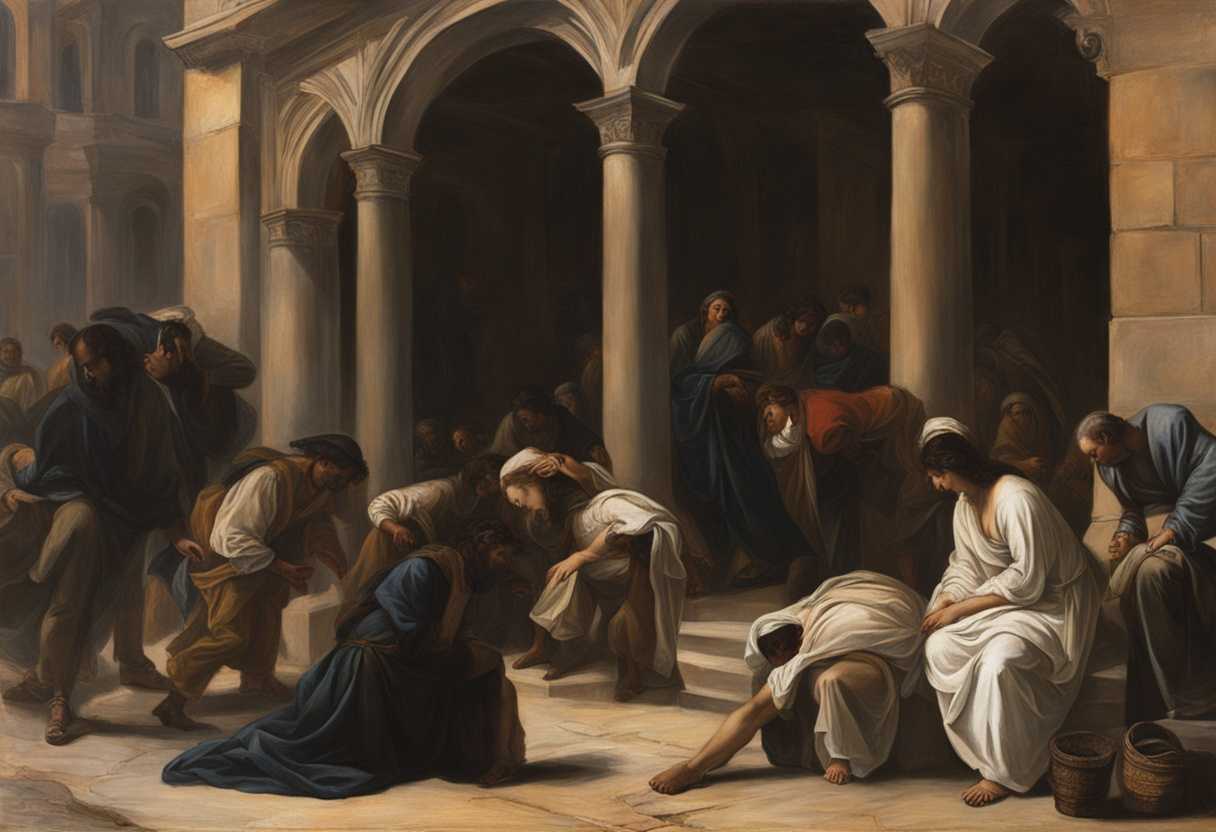
Setting the Scene for Lamentations 1:1-5
The scene described in Lamentations chapter 1 is one of deep sorrow and mourning. The prophet Jeremiah, also known as the weeping prophet, is the central figure in this passage. He is standing amidst the ruins of Jerusalem, the once glorious city now destroyed and desolate. The city walls are broken down, the temple is in ruins, and the people are in captivity. Jeremiah is overwhelmed with grief as he witnesses the devastation that has befallen his beloved city.
Surrounding Jeremiah are the remnants of the Israelites who have survived the destruction. They are a broken and defeated people, mourning the loss of their homes, their loved ones, and their way of life. The atmosphere is heavy with despair and lamentation as they come to terms with the consequences of their disobedience to God.
The setting is one of utter desolation, with the sounds of weeping and wailing filling the air. The once bustling streets are now empty, the houses lie in ruins, and the people are left to grapple with the harsh reality of their circumstances. Jeremiah’s heart is heavy as he reflects on the sins of the people that have led to this tragic outcome, and he cries out to God in anguish for mercy and restoration.
What is Lamentations 1:1-5 about?
Let’s journey into the heart-wrenching words of Lamentations 1:1-5 that vividly depict the desolation that has befallen Jerusalem. It is a poignant portrayal of a city once vibrant and thriving but now left in ruins, with its people suffering in anguish and grief. As we delve into these verses, we witness the profound sadness and overwhelming sense of loss permeating the narrative. The imagery painted is one of a forsaken city, a once glorious capital now reduced to rubble and mourning. The sorrow expressed in these words is palpable, reflecting the deep anguish of a community torn apart by tragedy.
Reflecting on these verses, we are compelled to ponder the fragility of human existence and the consequences of our actions. How can one city, once filled with life and prosperity, now lay in ruins? What lessons can we draw from this lamentation about the importance of cherishing what we have and safeguarding it from destruction? The words of Lamentations caution us, reminding us of the consequences of neglect, oppression, and the devastating impact of war.
Understanding what Lamentations 1:1-5 really means
Lamentations, often attributed to the prophet Jeremiah, offers a poignant reflection on the devastation of Jerusalem, setting a tone of deep sorrow and mourning from the very beginning. The historical backdrop of the Babylonian exile provides a context of immense suffering and loss for the people of Judah, portraying Jerusalem as a widow, once thriving but now bereft and alone.
The opening verses vividly depict the stark contrast between Jerusalem’s former glory and its current desolation, emphasizing the abrupt and drastic change in the city’s fortunes. The imagery of Jerusalem, once a queen among the provinces, reduced to a slave, powerfully symbolizes the consequences of straying from God. The description of bitter weeping at night and tears on her cheeks conveys the profound sorrow and personal nature of the suffering, evoking empathy and shared grief among readers.
Related biblical passages such as Jeremiah 9:1, Psalm 137:1, and Isaiah 1:21 echo the themes of mourning, loss, and moral decline found in Lamentations, illustrating the interconnectedness of biblical narratives. These passages serve as poignant reminders of the universal and timeless nature of themes like loss, suffering, and the search for comfort, resonating with individuals facing personal or societal challenges today.
Consider a modern scenario where a thriving community is suddenly devastated by a natural disaster, leaving streets empty and people in mourning. This contemporary parallel reflects the desolation described in Lamentations, highlighting the enduring relevance of its themes. Additionally, personal anecdotes, like that of a woman finding solace in faith and community after losing her home in a fire, illustrate the journey from despair to hope, mirroring the message of seeking comfort in God amidst desolation.
In conclusion, Lamentations 1:1-5 serves as a poignant reminder of the transient nature of human achievements and the enduring need for divine comfort. It prompts readers to empathize with those experiencing suffering and to seek God’s presence in times of desolation. Ultimately, the passage encourages a deeper reliance on God as the ultimate source of comfort and restoration in the face of adversity.
How can we cope with spiritual desolation and suffering?
When faced with spiritual desolation and suffering, it is important to acknowledge our pain and turn to God in prayer. We can express our emotions honestly and vulnerably, just as the author of Lamentations poured out their heart to God. We allow ourselves to be comforted by His presence and find hope in the midst of despair by leaning into our relationship with God and seeking solace in prayer.
Additionally, during times of spiritual desolation, it is helpful to seek support from a community of faith. Surrounding ourselves with fellow believers who can offer encouragement, guidance, and prayer can provide strength and help us navigate the challenges we face. Together, we can lift each other up, share in each other’s burdens, and journey through the darkness towards a place of healing and restoration.
Lastly, in moments of suffering and desolation, we can find comfort and peace in the promises of God. We can anchor our souls in His unchanging love and find the strength to persevere through difficult times by meditating on His word, reflecting on His faithfulness throughout history, and holding onto the hope of His redemption. Trusting in God’s sovereignty and eternal perspective can bring a sense of peace and assurance even in the midst of turmoil.
Application
In this modern world of endless distractions and chaos, let us pause and reflect on our actions and choices. Just as we strive for success in our work and happiness in our families, let us also prioritize our relationship with God. It’s time to realign our priorities and seek His guidance in all aspects of our lives. Will you take this moment to recommit yourself to living a life in accordance with God’s teachings and grace?

Reverend Michael Johnson is an experienced Church Minister with a profound expertise in spirituality and guidance. With a serene presence and a compassionate heart, he has faithfully served his congregation for over 20 years, leading them on a spiritual journey towards inner peace and enlightenment. Reverend Johnson’s extensive knowledge of religious philosophies and profound understanding of human nature have made him a trusted confidant and mentor to many, as he seamlessly weaves his profound wisdom into life teachings. Reverend Johnson’s calming demeanor and empathetic nature continue to uplift and heal souls, nurturing a sense of unity and tranquility within his community.