
Joshua 22:10-12 is about the tribes of Reuben, Gad, and the half-tribe of Manasseh returning to their land on the other side of the Jordan after helping their fellow Israelites conquer the Promised Land, symbolizing unity, fulfillment of promises, and the importance of staying true to their covenant with God.
10 And when they came to the region of the Jordan that is in the land of Canaan, the people of Reuben and the people of Gad and the half-tribe of Manasseh built there an altar by the Jordan, an altar of imposing size.
11 And the people of Israel heard it said, “Behold, the people of Reuben, the people of Gad, and the half-tribe of Manasseh have built the altar at the frontier of the land of Canaan, in the region about the Jordan, on the side that belongs to the people of Israel.”
12 And when the people of Israel heard of it, the whole assembly of the people of Israel gathered at Shiloh to make war against them.
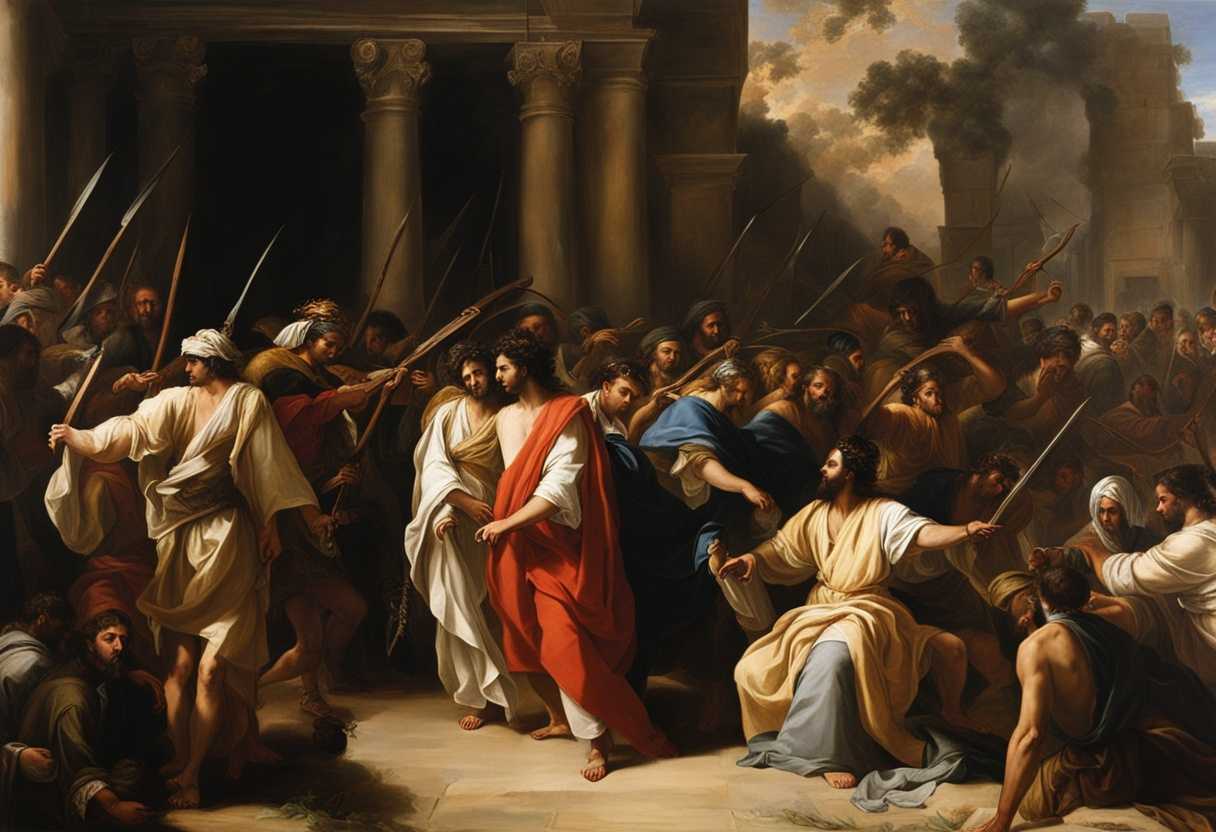
Setting the Scene for Joshua 22:10-12
In Joshua chapter 22, we find the scene where the Israelites have finally settled in the Promised Land after years of wandering in the wilderness. The tribes of Reuben, Gad, and half of the tribe of Manasseh have been granted land on the east side of the Jordan River. As the rest of the Israelites prepare to cross the Jordan and continue their conquest of the land, these tribes are instructed to return to their allotted land on the other side of the river.
In verses 10-12, we see the tribes of Reuben, Gad, and half of Manasseh standing on the western side of the Jordan River, looking across at the rest of the Israelites. They have built a large altar, which catches the attention of the other tribes. Concerned that this altar might be used for idol worship, a delegation of leaders from the other tribes, led by Phinehas the priest, is sent to confront them.
The scene is tense as the delegation approaches the tribes of Reuben, Gad, and Manasseh, demanding an explanation for the altar. The tribes explain that the altar is not for sacrifices but rather as a symbol of their unity with the rest of Israel. After hearing their explanation, the delegation is satisfied and returns to report to Joshua and the rest of the Israelites, ensuring that unity is maintained among God’s chosen people.
What is Joshua 22:10-12 about?
The eastern tribes of Israel constructed an altar near the Jordan River in Joshua 22:10-12. This act caused concern among the other Israelites who feared that it might lead to idol worship or division within the community. The altar was interpreted as a sign of rebellion against God and a departure from the worship practices prescribed by Moses. It stirred up emotions of fear, suspicion, and potential conflict among the Israelites.
Have you ever experienced a situation where a seemingly harmless action from someone else caused misunderstandings or concerns? Can you imagine the anxiety and confusion that may have arisen among the Israelites upon seeing this altar? This verse serves as a reminder of the importance of clear communication, trust, and unity within a community. It prompts us to reflect on how we perceive others’ actions and the potential impact of misunderstandings on relationships. We are urged to assess situations with wisdom, empathy, and a willingness to seek understanding before jumping to conclusions, just as the Israelites faced challenges in interpreting the intentions behind the altar.
Understanding what Joshua 22:10-12 really means
The tribes of Reuben, Gad, and the half-tribe of Manasseh, having received their land on the east side of the Jordan River, returned after aiding in conquering the land on the west side. Upon their return, they constructed a significant altar by the Jordan River, sparking concern among the other Israelites. The phrase “built an imposing altar there by the Jordan” indicates the altar’s size and visibility, underlining its importance and potential for misunderstanding. As “the whole assembly of Israel gathered at Shiloh to go to war against them,” the gravity of the situation is evident, with the other tribes prepared to take drastic measures to prevent what they perceived as a rebellion against God.
In Deuteronomy 12:13-14, the significance of worshiping God in the designated place is emphasized, shedding light on why the other tribes reacted strongly to the new altar. Numbers 32:20-22 recounts the agreement where the eastern tribes committed to aiding in conquering the land before returning to their own, showcasing their dedication to Israel’s unity and mission. This passage from Joshua 22:10-12 holds relevance for people today by highlighting how misunderstandings and assumptions can lead to conflict. It underscores the importance of communication and seeking understanding before jumping to conclusions.
Just as the Israelites prioritized maintaining unity and their covenant with God, individuals today should strive to uphold unity and understanding within their communities. Consider a scenario where a family in a neighborhood builds a large, peculiar structure in their front yard, causing tension among neighbors due to assumptions. However, upon engaging in dialogue, it is revealed that the structure is a memorial built with good intentions. This anecdote parallels the situation in Joshua 22, illustrating how initial assumptions can escalate into unnecessary conflict.
In conclusion, Joshua 22:10-12 serves as a poignant reminder of the significance of seeking understanding and fostering unity within a community. It prompts us to communicate openly, refrain from hasty judgments, and ensure that our actions align with the greater good. By reflecting on this passage, we are encouraged to prioritize harmony, empathy, and effective communication in our interactions with others, fostering a spirit of unity and cooperation.
How can we maintain unity amidst misunderstandings?
Maintaining unity amidst misunderstandings can be achieved by having open communication and seeking to understand each other’s perspectives. The tribes of Reuben, Gad, and half of Manasseh built an altar in the verses you mentioned, causing concern among the other tribes of Israel. Instead of jumping to conclusions or acting impulsively, they chose to send a delegation to inquire about the intentions behind the altar. This shows the importance of addressing misunderstandings directly and seeking clarity before making assumptions that can lead to division.
Additionally, practicing patience and grace towards one another can help prevent misunderstandings from escalating and causing rifts within the community. The tribes of Israel chose to approach the situation with a spirit of reconciliation and a willingness to hear the other side, which ultimately allowed them to resolve the misunderstanding peacefully. Unity can be maintained even in the face of disagreements or misinterpretations by extending forgiveness and understanding towards one another. Prioritizing the bond of unity and remembering to work through differences with respect and empathy can lead to stronger relationships and a more unified community in times of misunderstandings. We can navigate misunderstandings with humility, patience, and a commitment to preserving unity despite the challenges that may arise by following the example set in the verses you mentioned.
Application
In our modern world of constant connections and digital conversations, let us take a moment to reflect on the power of clear communication in our communities. Just like in a workplace or family setting, misunderstandings can arise if we do not actively strive for unity and seek clarity in our interactions. Let’s embrace open dialogue with those around us, especially our fellow believers, to prevent division and discord. How will you prioritize clear communication and foster unity in your relationships today?

Reverend Michael Johnson is an experienced Church Minister with a profound expertise in spirituality and guidance. With a serene presence and a compassionate heart, he has faithfully served his congregation for over 20 years, leading them on a spiritual journey towards inner peace and enlightenment. Reverend Johnson’s extensive knowledge of religious philosophies and profound understanding of human nature have made him a trusted confidant and mentor to many, as he seamlessly weaves his profound wisdom into life teachings. Reverend Johnson’s calming demeanor and empathetic nature continue to uplift and heal souls, nurturing a sense of unity and tranquility within his community.