
Judges 11:30-31 is about Jephthah making a rash vow to sacrifice the first thing that comes out of his house if he is successful in battle, ultimately leading to a heartbreaking consequence with his daughter being the first to greet him upon his return.
30 And Jephthah made a vow to the Lord and said, “If you will give the Ammonites into my hand,
31 then whatever comes out from the doors of my house to meet me when I return in peace from the Ammonites shall be the Lord’s, and I will offer it up for a burnt offering.”
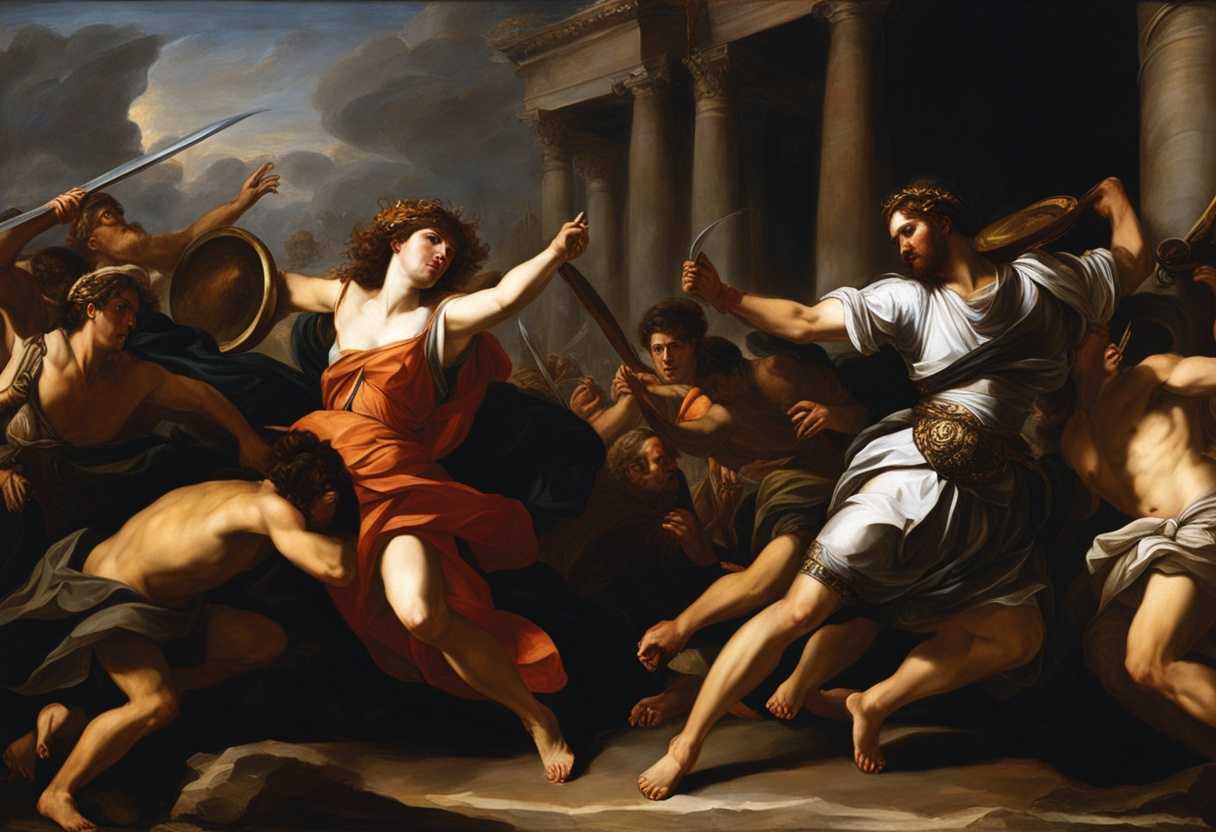
Setting the Scene for Judges 11:30-31
In the book of Judges, we find the story of Jephthah, a mighty warrior who was called upon by the Israelites to lead them in battle against their enemies, the Ammonites. Jephthah made a vow to the Lord, promising that if he was victorious in battle, he would sacrifice the first thing that came out of his house to greet him upon his return.
The scene is set on the eve of the battle, with Jephthah standing before his men, clad in armor and holding his sword high. His fellow warriors, a mix of seasoned fighters and young recruits, look to him with admiration and determination in their eyes. The camp is alive with the sounds of preparation – the clanging of swords being sharpened, the neighing of warhorses, and the murmurs of prayers being offered up to the Lord for victory.
As the sun begins to set, Jephthah raises his voice above the din of the camp, recounting the vow he made to the Lord and the stakes of the upcoming battle. His men listen in solemn silence, understanding the gravity of the situation. They know that they are outnumbered and facing a formidable enemy, but they also know that with Jephthah leading them, they have a fighting chance. And so, with hearts full of faith and courage, they ready themselves for the battle that lies ahead.
What is Judges 11:30-31 about?
This verse from the Book of Judges is a challenging one that raises important questions about the consequences of our words and actions. Jephthah makes a hasty vow in a moment of desperation, promising to sacrifice whatever comes out of his house as a burnt offering if he is successful in battle. This vow is a reflection of the cultural practices and beliefs of the time, but it also serves as a cautionary tale about the dangers of making impulsive promises without considering their implications. Reflecting on this verse prompts us to consider the power of our words and the importance of thoughtful decision-making. What motivates us to make vows or promises in difficult situations? How can we ensure that our commitments are in line with our values and beliefs? Jephthah’s story reminds us of the importance of taking responsibility for our actions and considering the potential consequences before making solemn pledges. This verse ultimately calls us to reflect on the significance of our commitments and the impact they can have on ourselves and those around us. It serves as a reminder to approach decision-making with care and mindfulness, considering the potential outcomes of our choices before making them. May we learn from Jephthah’s story to be deliberate and thoughtful in our words and actions, striving to uphold our values and ensure that our commitments are aligned with our beliefs and principles.
Understanding what Judges 11:30-31 really means
The Book of Judges provides a historical narrative of Israel’s tumultuous journey through cycles of sin, oppression, repentance, and deliverance, showcasing the pivotal role of judges as God-appointed leaders. Among these judges, Jeph kit’s story unfolds, revealing a man initially shunned but ultimately called upon to lead Israel in a crucial battle against the Ammonites. In Judges 11:30-31, we encounter a moment of profound significance as Jephthah makes a solemn vow to the Lord, seeking divine intervention and victory in the impending conflict. This vow, however, takes a tragic turn as Jephthah pledges to offer as a burnt offering whatever comes out of his house to greet him upon his return from battle.
The phrase “Jephthah made a vow to the Lord” encapsulates the gravity and seriousness of his commitment, highlighting the profound nature of promises made to God. Jephthah’s plea, “If you give the Ammonites into my hands,” underscores his reliance on God’s power and intervention in the face of formidable foes. The tragic dimension of his vow becomes apparent in the stipulation that whatever emerges from his home will be offered as a sacrifice, showcasing the extreme lengths to which Jephthah is willing to go in exchange for victory.
In Ecclesiastes 5:4-5, we are reminded of the importance of fulfilling vows made to God promptly, emphasizing the seriousness of commitments undertaken in His name. Similarly, in Matthew 5:33-37, Jesus teaches about the significance of honesty and integrity in our words, suggesting that our integrity should be such that our word alone suffices without the need for elaborate vows. These passages serve as poignant reminders of the weightiness of our promises and the need for sincerity and faithfulness in honoring them.
The relevance of Jephthah’s vow extends to contemporary society, serving as a cautionary tale about the repercussions of impulsive or ill-considered commitments. In a world where promises are often broken and vows disregarded, this narrative prompts us to reflect on the value of commitment and the integrity required to uphold our word. Jephthah’s story urges us to pause and consider the implications of our pledges, urging us to approach our commitments with thoughtfulness and foresight.
Consider a scenario where a young professional pledges a portion of their first paycheck to charity upon securing their dream job, only to realize the financial strain it would entail. This anecdote mirrors Jephthah’s predicament, illustrating the importance of weighing the consequences of our promises before making them. By reflecting on the gravity of Jephthah’s vow and its tragic outcome, we are encouraged to approach our commitments with wisdom, integrity, and a deep sense of responsibility, ensuring that our words and deeds align with God’s will and our capacity to fulfill them.
What is the value of our vows to God?
Our vows to God are valuable because they express our commitment and obedience to Him. When we make a vow to the Lord, we are declaring our dedication and loyalty to follow His will. These vows are a way for us to show reverence and respect for God and to demonstrate our desire to honor Him in our words and actions. We demonstrate our faithfulness and trust in God by fulfilling our vows to Him. Our obedience in keeping our promises to God not only pleases Him but also strengthens our relationship with Him. It shows that we take our relationship with God seriously and prioritize our commitment to Him above all else. We acknowledge His authority in our lives and submit ourselves to His divine will in honoring our vows to God.
Application
Let’s take a moment to ponder the weight of our promises, similar to Jephthah in Judges 11:30-31. Just as he stood by his commitment to God, let’s also honor our word with utmost truth and respect. Our promises are sacred, reflecting our character in the eyes of the divine. Will you choose to walk the path of integrity, staying true to your promises no matter the challenges that may arise?

Reverend Michael Johnson is an experienced Church Minister with a profound expertise in spirituality and guidance. With a serene presence and a compassionate heart, he has faithfully served his congregation for over 20 years, leading them on a spiritual journey towards inner peace and enlightenment. Reverend Johnson’s extensive knowledge of religious philosophies and profound understanding of human nature have made him a trusted confidant and mentor to many, as he seamlessly weaves his profound wisdom into life teachings. Reverend Johnson’s calming demeanor and empathetic nature continue to uplift and heal souls, nurturing a sense of unity and tranquility within his community.