
Jeremiah 28:1-4 is about the prophet Jeremiah confronting the false prophet Hananiah, who falsely predicted the quick restoration of the temple vessels, emphasizing the importance of discerning true prophets from false ones and the consequences of spreading deceitful messages.
1 In that same year, at the beginning of the reign of Zedekiah king of Judah, in the fifth month of the fourth year, Hananiah the son of Azzur, the prophet from Gibeon, spoke to me in the house of the Lord, in the presence of the priests and all the people, saying,
2 “Thus says the Lord of hosts, the God of Israel: I have broken the yoke of the king of Babylon.”
3 Within two years I will bring back to this place all the vessels of the Lord’s house, which Nebuchadnezzar king of Babylon took away from this place and carried to Babylon.
4 I will also bring back to this place Jeconiah the son of Jehoiakim, king of Judah, and all the exiles from Judah who went to Babylon, declares the Lord, for I will break the yoke of the king of Babylon.”
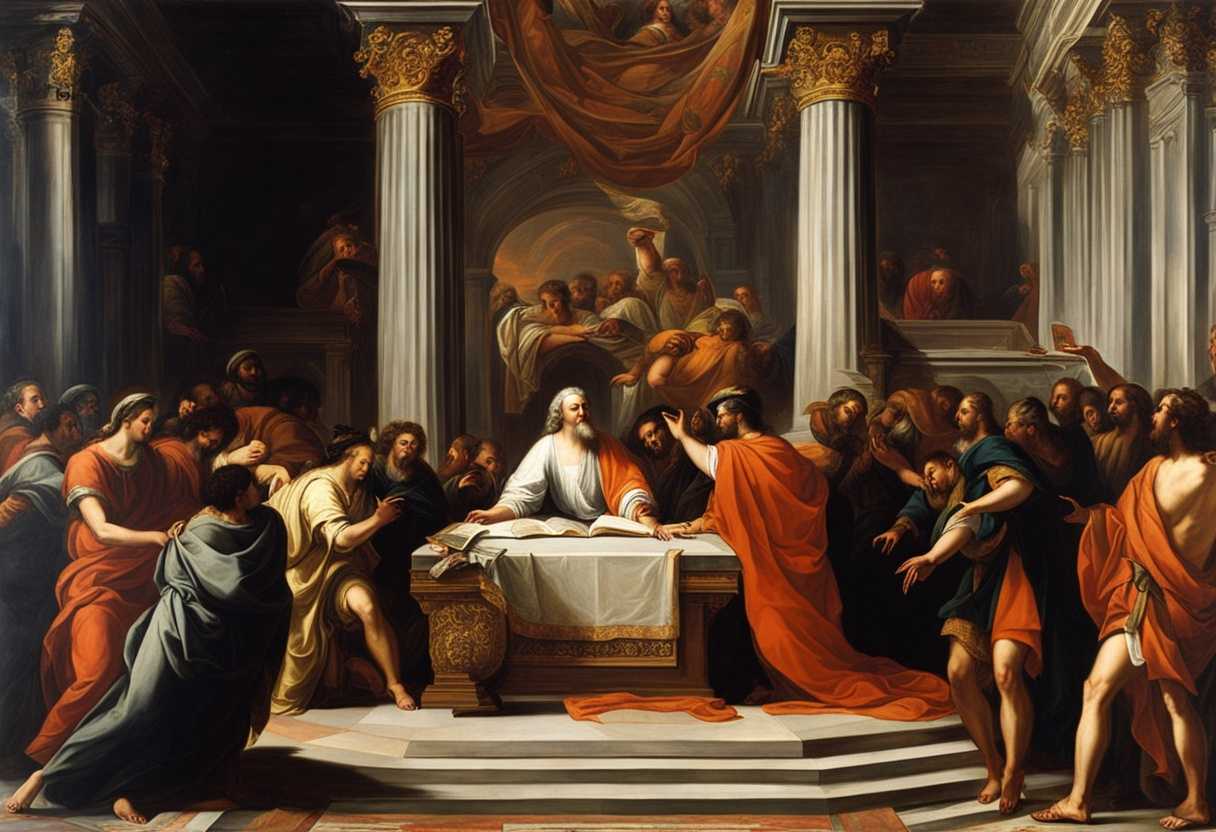
Setting the Scene for Jeremiah 28:1-4
In Jeremiah chapter 28, we find the prophet Jeremiah in the city of Jerusalem during the reign of King Zedekiah. The scene is set in the courtyard of the temple, where a confrontation takes place between Jeremiah and a false prophet named Hananiah. Hananiah had proclaimed to the people that within two years, the yoke of Babylon would be broken and the temple vessels returned. This bold declaration had caught the attention of the people, who were desperate for a message of hope amidst the impending threat of Babylonian invasion.
Jeremiah, known for his unwavering commitment to speaking the truth even when it was unpopular, confronts Hananiah in front of the gathered crowd. The tension is palpable as the two prophets stand face to face, each representing a different message – one of false hope and the other of impending judgment. The courtyard is filled with onlookers, some skeptical of Hananiah’s message, while others cling to the hope he offers.
As the exchange between Jeremiah and Hananiah unfolds, the weight of the moment is felt by all present. The clash of prophecies reverberates through the temple courtyard, leaving the people to grapple with whose words to believe in the midst of uncertainty and fear.
What is Jeremiah 28:1-4 about?
When we look at this verse, we see a clear contrast between two different messages being delivered by prophets. Hananiah predicts peace and prosperity, while Jeremiah warns of impending Babylonian captivity and destruction. This dichotomy raises important questions about discerning true prophecy and recognizing false prophets. How do we distinguish between genuine messages from God and deceptive falsehoods? What are the consequences of following misleading prophecies that offer false hope instead of preparing for harsh realities? The verse in this context serves as a cautionary tale about the dangers of blindly accepting comforting messages without critically evaluating their truthfulness. It reminds us of the importance of discernment, wisdom, and spiritual discernment when interpreting prophetic messages. We can gain deeper insights into the complexities of divine communication and the challenges of navigating conflicting messages in times of uncertainty by exploring the motivations behind these contrasting prophecies and the implications of their divergent outcomes. This verse ultimately prompts us to reflect on the significance of seeking the guidance of true prophets and aligning ourselves with authentic truths rather than convenient illusions.
Understanding what Jeremiah 28:1-4 really means
In the historical setting of Jeremiah 28:1-4, we find ourselves in a tumultuous time during the reign of King Zedekiah of Judah, where the Babylonian Empire held sway over the people. The prophet Jeremiah stands in stark contrast to the false prophet Hananiah, who offers a message of hope and imminent liberation from Babylonian rule. This dichotomy sets the stage for a crucial lesson in discerning true prophecy from falsehood, a lesson that resonates through the ages.
The specific time frame mentioned in the passage, “In the fifth month of that same year,” serves to emphasize the urgency and immediacy of the events unfolding. It underscores the gravity of the prophetic messages being delivered by Jeremiah and Hananiah. By identifying Hananiah as “the prophet from Gibeon,” the text adds a layer of credibility to his position, setting the scene for the clash between genuine and deceptive prophecy.
The phrase “I will break the yoke of the king of Babylon” symbolizes liberation and freedom from oppression. Hananiah’s promise of a swift end to Babylonian rule offers a tantalizing prospect of relief to the people of Judah. However, as history unfolds, we see the stark contrast between the false hope peddled by Hananiah and the harsh reality foretold by Jeremiah.
Drawing parallels from related biblical passages such as Jeremiah 27:2, Deuteronomy 18:20-22, and Matthew 7:15-20, we glean timeless wisdom on discerning true prophets, aligning with God’s will, and recognizing false teachings. These passages serve as guideposts for navigating the complexities of discernment in matters of faith and leadership, urging us to seek truth and wisdom in our decision-making.
The relevance of Jeremiah 28:1-4 to contemporary society is striking. Just as the people of Judah had to sift through the conflicting messages of Jeremiah and Hananiah, we too must exercise discernment in evaluating the messages of our leaders, be they religious, political, or social. The cautionary tale of false hope versus harsh reality serves as a poignant reminder to balance optimism with a realistic appraisal of our circumstances.
In conclusion, the narrative of Jeremiah 28 prompts us to reflect on the sources of our hope and the messages we choose to believe. It challenges us to seek truth, even when it is inconvenient, and to anchor our faith in God’s plan, even amidst adversity. Let us heed the lessons of discernment, hope, and faithfulness embedded in this passage, striving to walk in integrity and wisdom in our own journeys of faith and decision-making.
How can we discern true prophetic voices?
We can discern true prophetic voices by examining the fruit of their message. True prophets speak in alignment with God’s word and character, promoting righteousness, justice, and compassion. They lead people closer to God and encourage obedience to His commands, rather than promoting their own agendas or desires. A true prophet’s message will bear witness to the truth and bring about spiritual growth and transformation in the lives of those who hear it.
Additionally, true prophetic voices can be recognized by the accuracy of their prophecies. When a prophet speaks on behalf of God, their predictions will come to pass as they have spoken. This serves as a confirmation of their authenticity and shows that they are truly speaking under divine inspiration. It is important to test the spirits and discern whether a prophet’s words align with the character and will of God, as well as whether their prophecies are fulfilled as they have claimed.
Application
In the busy marketplace of ideas, be a shrewd consumer of truth. Just like at work or in family life, discernment is key in separating fact from fiction. Test the messages that come your way, ensure they resonate with your core values. Let’s embrace wisdom and strive for clarity, shielding ourselves from deceit. Will you rise above the noise and firmly hold onto what is genuine?

Reverend Michael Johnson is an experienced Church Minister with a profound expertise in spirituality and guidance. With a serene presence and a compassionate heart, he has faithfully served his congregation for over 20 years, leading them on a spiritual journey towards inner peace and enlightenment. Reverend Johnson’s extensive knowledge of religious philosophies and profound understanding of human nature have made him a trusted confidant and mentor to many, as he seamlessly weaves his profound wisdom into life teachings. Reverend Johnson’s calming demeanor and empathetic nature continue to uplift and heal souls, nurturing a sense of unity and tranquility within his community.