
Joel 1:10-12 is about a call to repentance and lamentation for the devastating impact of locusts on the land, urging the people to recognize the symbolic significance of the natural disaster in connection to their spiritual condition.
10 The fields are destroyed, the ground mourns, because the grain is destroyed, the wine dries up, the oil languishes.
11 Be ashamed, O tillers of the soil; wail, O vinedressers, for the wheat and the barley, because the harvest of the field has perished.
12 The vine dries up; the fig tree languishes. The pomegranate, palm, and apple, all the trees of the field are dried up, and gladness dries up from the children of man.
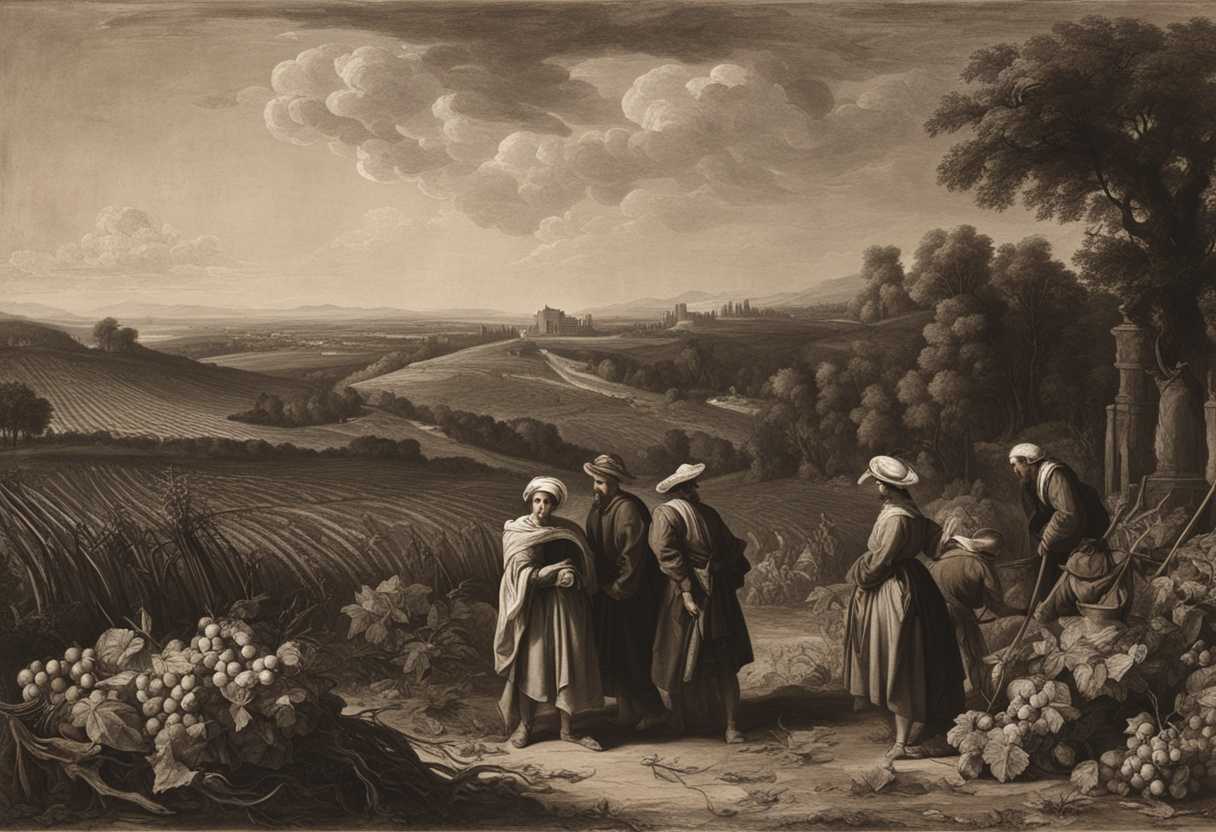
Setting the Scene for Joel 1:10-12
The scene described in Joel 1:10-12 is one of devastation and despair. The prophet Joel paints a vivid picture of a land laid waste by a locust plague. The once lush fields and vineyards are now barren, the crops destroyed, and the trees stripped bare. The people of Judah are mourning the loss of their livelihoods and are in a state of mourning.
In this scene, we see a group of farmers and vineyard workers gathered together in the midst of the desolation. They are dressed in tattered clothing, their faces etched with sorrow and worry. These individuals have come together to assess the damage caused by the locust invasion and to seek solace in each other’s company. The air is heavy with the smell of decay, and the sound of weeping and lamentation fills the air.
Surrounding them are the remnants of what was once a thriving agricultural community. The fields that were once filled with golden grain and ripe fruit now lie barren and lifeless. The once vibrant landscape is now a stark reminder of the devastation wrought by the locusts. In the midst of this scene of destruction, the people are turning to God in prayer, seeking His mercy and guidance in the face of such overwhelming loss.
What is Joel 1:10-12 about?
Imagine standing in a field that has been completely ravaged by a swarm of locusts, witnessing the once lush and abundant crops reduced to nothing but barren land. Joel’s words capture the despair and heartache of such a scene, calling for the people to repent and turn to God in the face of such devastating loss. Joel offers a glimmer of hope and redemption in the midst of destruction by emphasizing the importance of seeking God’s mercy and forgiveness.
Through Joel’s lamentation, we are reminded of the consequences of sin and the need for heartfelt repentance. The imagery of the locusts serves as a powerful metaphor for the destructive nature of our own wrongdoing and the havoc it can wreak on our lives. Joel’s message encourages us to turn away from our transgressions and seek God’s forgiveness to bring about renewal and restoration, just as God’s grace replenishes the crops and restores the land. So, let us heed Joel’s call to repentance and trust in God’s mercy to guide us through our darkest moments, knowing that redemption is always within reach.
Understanding what Joel 1:10-12 really means
Joel 1:10-12 paints a vivid picture of devastation and despair in the land of Judah, as a locust plague ravages the agricultural landscape. The prophet Joel uses powerful imagery to convey the extent of the destruction, highlighting the loss of essential crops like grain, wine, and olive oil. These items were not only crucial for sustenance but also held religious significance, adding a layer of spiritual meaning to the tragedy.
The emotional impact on the farmers and vine growers is palpable in the text, as they are called to despair and wail over the ruin of their livelihoods. This serves as a poignant reminder of the deep connection between the people and the land they cultivate, emphasizing the profound sense of loss and helplessness in the face of such devastation.
The parallels between Joel’s message and other biblical passages, such as Deuteronomy 28:38-42, Amos 4:9, and Haggai 1:10-11, reinforce the idea that the physical conditions of the land are intricately linked to the spiritual state of the people. These disasters are portrayed as divine judgments, calling the people to repentance and a return to God.
In a contemporary context, Joel’s words invite us to engage in spiritual reflection, considering our own lives and relationship with God. The passage also prompts us to think about our role as stewards of the environment, recognizing the importance of caring for the earth and its resources to prevent similar catastrophes.
The economic and emotional impact described in Joel 1:10-12 resonates with individuals facing hardship today, reminding us of the significance of community support and faith during times of crisis. Just as the farmers and vine growers in the text faced uncertainty and despair, we are encouraged to lean on each other and trust in God’s provision in the midst of adversity.
To illustrate the enduring relevance of Joel’s message, consider a modern farming community grappling with a sudden crop failure due to unforeseen circumstances. The shared experience of loss and the need for resilience in the face of adversity mirror the challenges faced by the people of Judah, highlighting the universal themes of dependence, reflection, and communal support.
In conclusion, Joel 1:10-12 serves as a poignant reminder of the intricate relationship between our spiritual lives and the physical world. It calls us to introspection, responsible stewardship, and reliance on God in times of trouble. Through its timeless message of repentance and resilience, this passage continues to resonate with readers today, urging us to seek spiritual renewal and community solidarity in the face of life’s trials.
How can we turn to God in times of devastation?
We can turn to God in times of devastation by recognizing His sovereignty and seeking His mercy and guidance. The events described in Joel 1:10-12 depict a situation of widespread destruction and loss, symbolizing the devastation that can occur in our lives. We can humble ourselves before God in response to such calamity, acknowledging His power and our dependence on Him for help.
Through prayer and a repentant heart, we can seek God’s presence and comfort in the midst of chaos. We can also express our remorse for any wrongdoings and ask for God’s forgiveness and restoration, just as the people in Joel’s time turned to fasting, mourning, and offering sacrifices. We open ourselves to God’s grace and mercy by turning to Him with a contrite spirit, allowing Him to work in our lives and bring about healing and renewal. In times of devastation, we can ultimately find hope and strength in God’s faithfulness and promises. We can experience His love and provision even in the darkest moments by trusting in His sovereignty and seeking His presence through prayer and repentance. God will be our refuge and fortress, guiding us through the storms of life and giving us the peace that surpasses all understanding as we turn to Him with faith and humility.
Application
Just as the locust swarm devastated the land in Joel’s time, destructive forces can jeopardize our modern-day gardens of peace and joy. Take a stand against the pests that threaten to consume your spiritual well-being. Reflect on Joel’s message and act decisively to safeguard your inner sanctuary. Will you allow these pests to overrun your spiritual garden, or will you take action to preserve its beauty and serenity?

Reverend Michael Johnson is an experienced Church Minister with a profound expertise in spirituality and guidance. With a serene presence and a compassionate heart, he has faithfully served his congregation for over 20 years, leading them on a spiritual journey towards inner peace and enlightenment. Reverend Johnson’s extensive knowledge of religious philosophies and profound understanding of human nature have made him a trusted confidant and mentor to many, as he seamlessly weaves his profound wisdom into life teachings. Reverend Johnson’s calming demeanor and empathetic nature continue to uplift and heal souls, nurturing a sense of unity and tranquility within his community.