
John 11:48 is about the religious leaders’ fear that Jesus’ growing popularity and miracles will lead to a threat to their own authority and position.
48 If we let him go on like this, everyone will believe in him, and the Romans will come and take away both our place and our nation.”
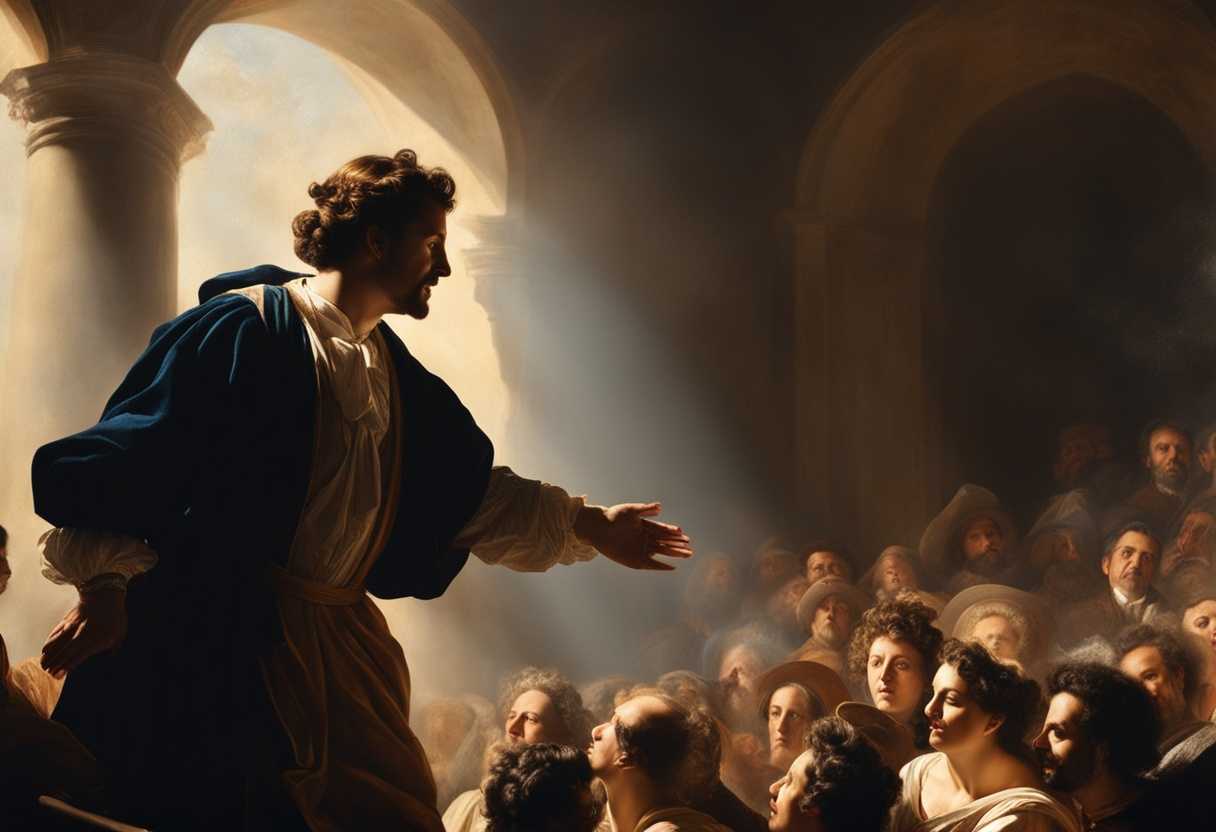
Setting the Scene for John 11:48
In John chapter 11, we find a poignant scene unfolding in the town of Bethany. The main characters in this scene are Jesus, his disciples, Mary, and Martha, the sisters of Lazarus. The atmosphere is heavy with grief as Lazarus, a dear friend of Jesus, has passed away. The sisters are mourning the loss of their brother, and the community has gathered to console them in their time of sorrow.
Jesus arrives in Bethany after Lazarus has been in the tomb for four days. The sisters, Mary and Martha, express their faith in Jesus, believing that if he had been there, their brother would not have died. Jesus is deeply moved by their grief and the mourning of those around him. He asks to be taken to the tomb where Lazarus has been laid to rest. The scene is filled with a mix of emotions – sorrow, hope, and anticipation – as everyone waits to see what will unfold next in this miraculous story of resurrection and faith.
What is John 11:48 about?
This verse speaks to the power dynamics at play during the time of Jesus’ ministry. It highlights the fear that religious leaders, who held significant influence and authority over the people, felt as Jesus’ popularity among the masses grew. These leaders saw Jesus as a threat to their own power and control, as his teachings challenged traditional beliefs and structures.
Imagine the tension and insecurity these religious leaders must have felt as they witnessed Jesus gaining a following and influencing people with his radical message of love and compassion. Why did they feel so threatened by Jesus’ popularity? What did his rising influence signify for their own positions of power and authority over the people? This verse invites us to reflect on the complexities of human nature, power dynamics, and the fear that can arise when established systems are challenged. The timeless struggle for power and control that has existed throughout history reminds us as we ponder this verse. It prompts us to consider how we navigate our own relationships with authority and influence, and how we respond to challenges to the status quo. This verse ultimately serves as a poignant reminder of the importance of humility, integrity, and self-reflection in positions of leadership and authority.
Understanding what John 11:48 really means
In John 11:48, we find the Jewish leaders grappling with the implications of Jesus’ increasing influence following the resurrection of Lazarus. Their concern stems from a fear of losing control over the people and the potential political and social upheaval that could result from Jesus’ miracles and teachings. The phrase “If we let him go on like this” reveals their anxiety about their diminishing authority and their inability to halt Jesus’ growing impact. This sentiment is further emphasized by their worry that “everyone will believe in him,” indicating their apprehension about Jesus being accepted as the Messiah by the masses.
Moreover, the leaders express a deep-seated fear that “the Romans will come and take away both our temple and our nation.” This fear reflects their concerns about Roman intervention and the consequent loss of their religious and national identity. The parallel passage in John 12:19 underscores the leaders’ frustration as they observe the widespread following Jesus is garnering, heightening their sense of powerlessness in the face of His influence. Acts 4:16-17 portrays a similar struggle as the authorities seek to suppress the spread of Jesus’ teachings to maintain their control over the people.
The relevance of this narrative extends to contemporary society, where individuals often grapple with a fear of change and the unknown. Like the Jewish leaders, people today may resist relinquishing control and trusting in God’s plan, opting instead for the security of the familiar. This verse challenges us to confront our fears and embrace faith over control, recognizing that true faith necessitates surrendering our own agendas in favor of God’s greater purpose.
To illustrate this point, consider a small business owner faced with a burgeoning competitor threatening their market share. Rather than succumbing to fear and a desire to control the situation, the owner could view the competition as an opportunity for growth and innovation. By trusting in their abilities and integrity, they can navigate the challenges with faith that their hard work will prevail. Similarly, the Jewish leaders could have viewed Jesus’ miracles as a manifestation of God’s work, rather than a threat to their authority.
In conclusion, John 11:48 serves as a poignant reminder of the perils of fear and the significance of faith. It prompts us to release our grip on control and place our trust in God’s unfolding plan, even when it leads us into uncharted territory. Just as the Jewish leaders struggled with relinquishing power, we are called to embrace faith over fear, recognizing that God’s purposes often transcend our limited understanding.
How do our actions align with our professed beliefs?
The chief priests and the Pharisees are discussing their concern over Jesus’ growing popularity and the potential threat He posed to their authority and the stability of the nation in this verse. Despite their professed beliefs in God and the importance of serving Him, their actions reveal a different priority – their own power and control. They were willing to go to great lengths to maintain their position, even if it meant betraying their supposed faith.
This scenario serves as a reminder for us to reflect on our own lives and actions. Do our choices and decisions align with our professed beliefs and values, or do we prioritize our own desires and ambitions above all else? It is essential to regularly evaluate our actions and motivations to ensure that they are in harmony with what we claim to stand for. We can strive to live a life that reflects our true convictions and faith, rather than being swayed by external influences or selfish interests.
Application
Think about John 11:48. The leaders feared losing their power. Are you letting fear hold you back from God’s plan, just as they did? In your work or with your family, are you just protecting your status? Break free from that mindset. Embrace what God has in store for you, even if it means stepping out of your comfort zone. Are you ready to prioritize God’s will over your own ambitions?

Reverend Michael Johnson is an experienced Church Minister with a profound expertise in spirituality and guidance. With a serene presence and a compassionate heart, he has faithfully served his congregation for over 20 years, leading them on a spiritual journey towards inner peace and enlightenment. Reverend Johnson’s extensive knowledge of religious philosophies and profound understanding of human nature have made him a trusted confidant and mentor to many, as he seamlessly weaves his profound wisdom into life teachings. Reverend Johnson’s calming demeanor and empathetic nature continue to uplift and heal souls, nurturing a sense of unity and tranquility within his community.