
John 19:4-7 is about Jesus being presented as king to the people by Pontius Pilate, who, despite finding no fault in him, faces pressure from the Jews and ultimately condemns Jesus to crucifixion, highlighting the theme of Jesus’s divine nature and the fulfillment of prophecies.
4 Pilate went out again and said to them, “See, I am bringing him out to you that you may know that I find no guilt in him.”
5 So Jesus came out, wearing the crown of thorns and the purple robe. Pilate said to them, “Behold the man!”
6 When the chief priests and the officers saw him, they cried out, “Crucify him, crucify him!” Jesus said to them, “Take him yourselves and crucify him, for I find no guilt in him.”
7 The Jews answered him, “We have a law, and according to that law he ought to die because he has made himself the Son of God.”
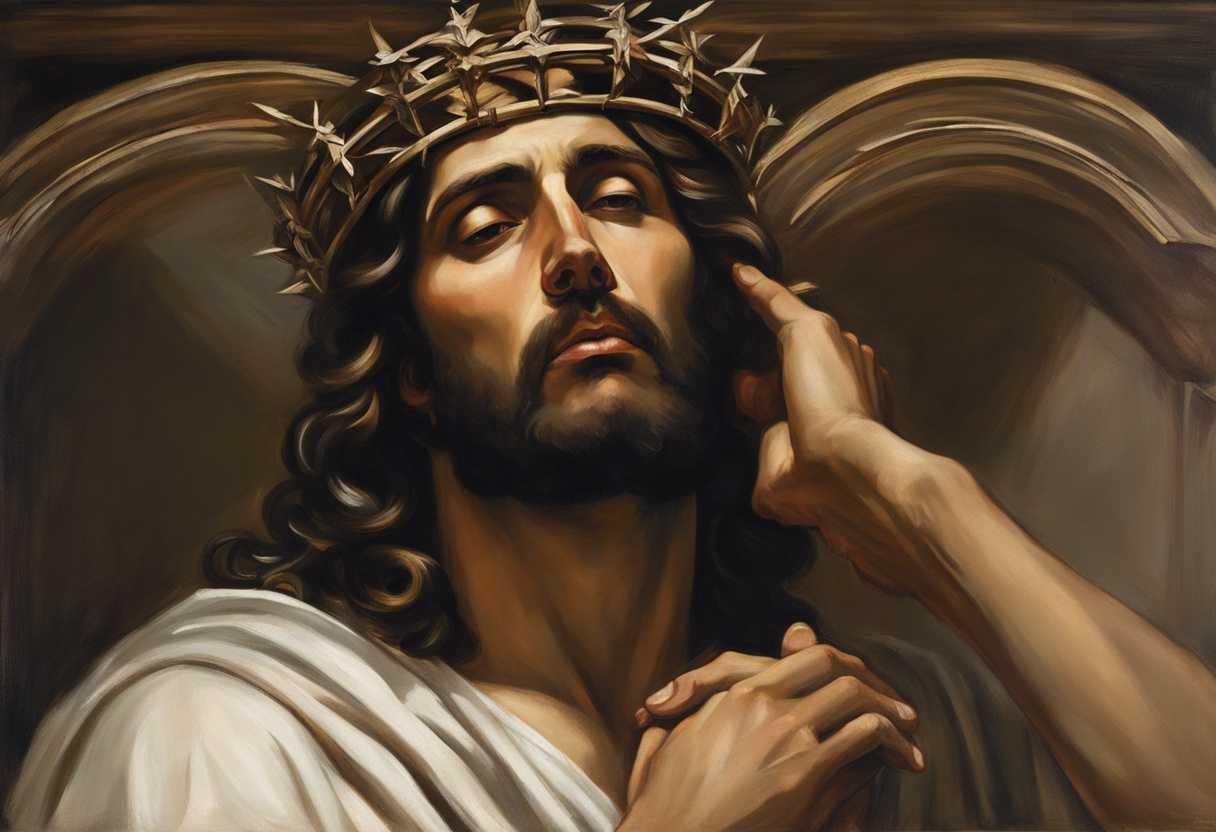
Setting the Scene for John 19:4-7
In John chapter 19, we find the scene set in Jerusalem during the time of Jesus’ trial before Pontius Pilate. The main characters in this particular passage are Jesus, Pilate, and a crowd of Jewish religious leaders and people who have gathered outside Pilate’s headquarters. Jesus has been brought before Pilate by the religious leaders, who are seeking his crucifixion.
The atmosphere is tense as Pilate questions Jesus about the accusations brought against him. The crowd is restless and agitated, calling for Jesus to be crucified. Pilate, sensing the growing hostility, tries to find a way to release Jesus but ultimately succumbs to the pressure from the crowd and orders for Jesus to be flogged. The scene is chaotic, with emotions running high and the fate of Jesus hanging in the balance.
The setting is likely a courtyard outside Pilate’s residence, filled with a mix of Roman soldiers, Jewish religious leaders, and curious onlookers. The tension between the different groups is palpable, as Pilate struggles to maintain order and make a decision that will satisfy the crowd while also grappling with his own conscience.
What is John 19:4-7 about?
Pilate is declaring Jesus as innocent to the crowd in this verse. This moment carries profound symbolic meaning as it highlights the innocence and righteousness of Jesus. Pilate, who had the power to condemn Jesus to death, acknowledges that Jesus is not guilty of the crimes he’s being accused of. This declaration is a powerful moment that emphasizes the unjust treatment that Jesus is about to endure despite being innocent.
Imagine standing in the crowd as Pilate makes this declaration. How would you feel witnessing this acknowledgment of Jesus’ innocence, yet knowing that the crowd is demanding his crucifixion? This verse serves as a reminder of the unjust judgments that can be made when fear and societal pressure take precedence over truth and righteousness. It challenges us to reflect on our own actions and judgments, urging us to prioritize justice and compassion even in the face of opposition.
Understanding what John 19:4-7 really means
In the intense scene of Jesus’ trial before Pontius Pilate, we witness a clash of political and religious powers that reverberates with significance. Pilate, the Roman governor, proclaims Jesus innocent, yet the crowd, goaded by the chief priests and officers, demands His crucifixion. The weight of this moment becomes clearer when we consider the volatile mix of political intrigue and religious fervor in first-century Judea.
Pilate’s words, “I find no basis for a charge against him,” echo with the stark injustice of the situation. Despite recognizing Jesus’ innocence, Pilate succumbs to the pressure of the religious elite and the crowd’s clamor for blood. This declaration underscores the moral dilemma faced by those in positions of authority when confronted with truth that challenges the status quo.
The involvement of the chief priests and officers signifies the entrenched establishment threatened by Jesus’ teachings. Their accusation that Jesus claimed to be the Son of God strikes at the heart of the conflict, challenging both Roman authority and Jewish religious beliefs. This pivotal claim forces individuals to confront the question of Jesus’ identity and the implications of accepting or rejecting His divinity.
Drawing parallels to contemporary issues, we see reflections of injustice and innocence in the lives of many today. Individuals facing unjust accusations or suffering despite their innocence resonate with the plight of Jesus before Pilate. This passage serves as a poignant reminder of the importance of standing up for truth and justice, even in the face of overwhelming opposition.
The narrative of Jesus’ trial also highlights the enduring tensions between religious convictions and political powers. Just as Jesus’ teachings clashed with the established order of His time, modern struggles at the intersection of faith and governance continue to challenge individuals and societies. The timeless relevance of this conflict prompts us to consider how we navigate similar challenges in our own contexts.
In contemplating the profound injustice Jesus endured, we are urged to reflect on our responses to truth and righteousness. Like Pilate, we may find ourselves grappling with difficult decisions that test our convictions. Jesus’ unwavering commitment to His identity as the Son of God inspires us to stand firm in our beliefs, even when faced with opposition or persecution.
As we ponder the implications of this passage for our lives, we are encouraged to be voices for justice and compassion in a world that often resists transformative truths. Just as Jesus confronted the powers of His day with divine compassion and mercy, we are called to emulate His example in our interactions with others. May we draw strength from His unwavering commitment to truth and righteousness as we navigate the complexities of our own faith journeys.
How do we respond to truth with humility?
When faced with truth, humility calls for a willingness to accept and acknowledge it, even if it contradicts our own beliefs or desires. It requires an openness to being corrected and a readiness to learn and grow from the truth presented to us. Responding with humility means setting aside our pride, ego, and preconceived notions to make room for the truth to take root in our hearts and minds.
Humility in the face of truth also involves recognizing our own limitations and imperfections. It involves understanding that we are not always right and that there may be things we do not know or understand fully. We demonstrate a willingness to seek understanding, to be guided by what is right and just, and to align ourselves with the greater wisdom that lies beyond our own limited perspectives by approaching the truth with a humble attitude. Responding with humility to truth ultimately allows us to grow in wisdom, character, and virtue as we strive to align ourselves with what is good, true, and just.
Application
As you dive into John 19:4-7, immerse yourself in the profound sacrifice Jesus made for us all. His love and grace are a beacon in our modern world. Let His teachings guide you in your path, honoring His sacrifice with every step you take. Will you now follow His example, sharing His message of love and salvation with others?

Reverend Michael Johnson is an experienced Church Minister with a profound expertise in spirituality and guidance. With a serene presence and a compassionate heart, he has faithfully served his congregation for over 20 years, leading them on a spiritual journey towards inner peace and enlightenment. Reverend Johnson’s extensive knowledge of religious philosophies and profound understanding of human nature have made him a trusted confidant and mentor to many, as he seamlessly weaves his profound wisdom into life teachings. Reverend Johnson’s calming demeanor and empathetic nature continue to uplift and heal souls, nurturing a sense of unity and tranquility within his community.